Humans
 PUBLISHED
 3
3



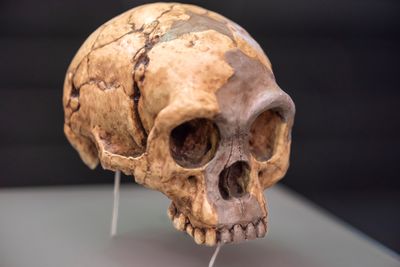


Homo floresiensis, an extinct species of small archaic humans popularly known as hobbits, wasn't as technologically sophisticated as previously thought, an analysis of bones from their home island of Flores suggests.
Rather than having the skills to hunt the local species of elephants, as it was presumed they did, the hobbits likely made use of the parts Komodo dragons left behind. The findings puncture a story many would prefer to believe, but they resolve the paradox of a small brain producing behaviors associated with high intelligence.
Sometimes a nickname can lead you astray in how we see someone, and the scientific world isn't always immune. H. floresiensis was announced to the world around the same time the Lord of the Rings films were released, so a human species half our height was inevitably called “hobbits.” Perhaps that has subliminally encouraged the view, among the general public if not anthropologists, that this was an intelligent and technologically sophisticated species.
Alas, new evidence calls this into question, casting doubt on previous claims that hobbits used fire and collectively hunted large animals.
The discovery of a new hominin is always exciting. Finding one on such a hard-to-reach island adds an extra thrill. Yet H. floresiensis appeared more intriguing still, because one of the first skeletons was intermingled with a dwarf elephant (Stegodon florensis insularis). The researchers who made this discovery concluded that hobbits had hunted Stegodons.
After generations experiencing island dwarfism, Stegodons were much smaller than modern elephants, but to people as small as the hobbits, hunting them would have required courage, tools, and organization. That suggested the hobbits’ miniature skulls contained highly capable brains, a view reinforced by apparently charred remains at the same Liang Bua site, but appearances can be deceptive.
Elizabeth Veatch at the University of Tübingen, Germany, is part of a team that examined marks on the stegodon bones found among H. floresiensis fossils at Liang Bua. Similar studies elsewhere have looked at the marks left by big cat, wolf, or bear teeth, but none of these co-existed on Flores with the hobbits. Instead, the authors conducted their own research feeding goat carcasses to Komodo dragons, since these were Flores’s only large predators at the time.
“Komodo dragon tooth scores tend to be shallower and shorter compared to cutmarks, with a greater profile angle (i.e., wider) and maximum width,” the authors write.
After comparing the marks the dragons left on bones of their prey with Stegodon bone fragments from Liang Bua, the authors concluded dragons had eaten the tastiest and most nutritious parts. Dragons, not hobbits, were feeding first.
The idea that hobbits were roasting their meals over an open fire also takes a hit when considering only one out of 3,155 Stegodon fragments from the site appeared to have been burnt. The authors attribute this charring to the presence of H. sapiens in the area long after the hobbits were gone. The many rat bones at the site were similarly unburnt.
Putting these findings together leads the authors to think the Stegodons were either killed by Komodo dragons or died some other way, with the dragons using their keen sense of smell to get to the meal first.
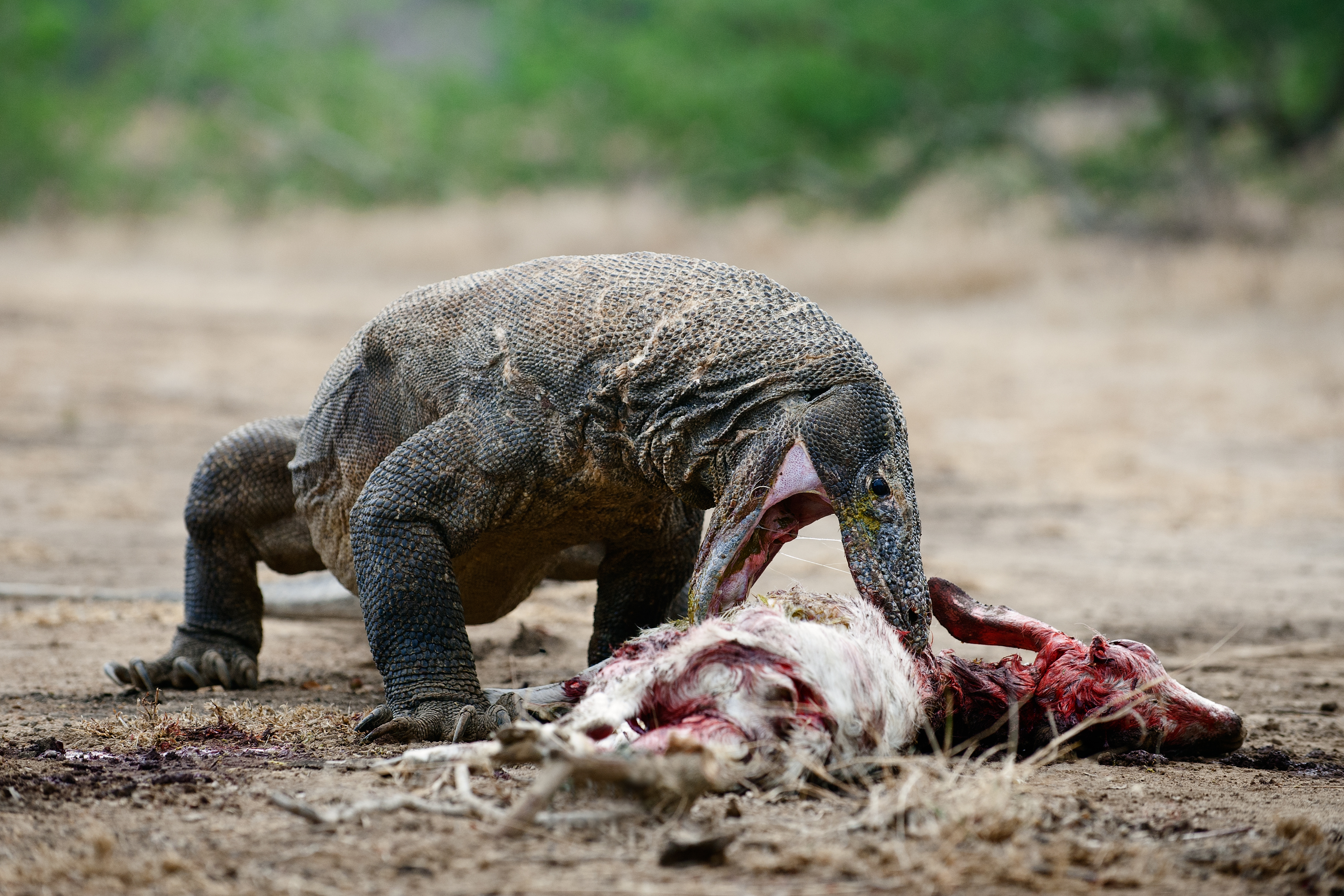
Scaring a Komodo dragon away from its meal – let alone a number of them – would have taken as much courage as walking into Mordor. As far as we know, hobbits didn't possess throwing spears, let alone bows and arrows. Therefore, the authors suggest, the hobbits were scavengers, taking what was left after the dragons had supped. In the rare cases where they found a dead Stegodon first, they probably carried away choice bits before the dragons arrived.
Indeed, the authors question whether hunting stegodons would have been worthwhile for hobbits. We know humans have long hunted elephants and their even larger relatives, but not only did this require technological advances hobbits don't appear to have had, it was also likely a rare occurrence.
Although a single elephant or mammoth kill will feed a tribe for a long time, the effort and risk involved make hunting zebra and similarly sized herbivores a better bet, at least until the invention of firearms, previous studies have concluded.
Reaching Flores meant the hobbits’ ancestors must have crossed the Wallace Line, since the island was never connected to the Asian mainland. This boundary is formed by the deep waters of the Lombok Strait and is thought to prevent species from easily passing between Asia and Oceania, resulting in the two regions having very different ecosystems.
However, Veatch told IFLScience: “Recent research is suggesting that [ocean barriers] are probably not the boundaries we thought they were. In the case of the Wallace Line, we see animals that are well adept at swimming, such as rodents and proboscideans, cross over to Flores, but the Flores hominins most likely arrived accidentally via rafting on loose vegetation from a tsunami or something similar.”
The limited fauna of Flores left hobbits without many options for food, but the authors propose the giant rats (Papagomys armandvillei) that co-existed with the hobbits were probably a better target for hunting. Presumably hobbits did not have a prejudice against eating rodents, whether or not they were of unusual size. Elephant, then, was most likely an occasional treat to be scavenged when dragons had eaten their fill.
Veatch told IFLScience: “We currently know very little about the diet of H. Floresiensis, but they were likely omnivores relying on a combination of animal resources, fruit, vegetation, and possibly insects.”
The findings fit with the conventional view that regular use of fire is a relatively recent development, following the arrival of large-brained hominin species, although like some birds, earlier hominins probably used it opportunistically. H. floresiensis isn't the only species that has challenged that view, with claims also being made for fire use in H. naledi, but so far the evidence has failed to convince most palaeoanthrologists.
Thomas Sutikna at Wollongong University in Australia said the reassessment also casts doubt on the view that H. floresiensis evolved from H. erectus, and instead it may have branched off earlier from modern humans’ line.
“As our excavations have continued and expanded, we have learned that many of our initial interpretations about H. floresiensis, for example, its geological age, its stratigraphic context, and now its behavior were incorrect," Sutikna said in an emailed statement. "This study helps clarify key aspects about H. floresiensis behavior that are important for understanding how this species lived on Flores for countless generations.”
The study is published in Science Advances.