Humans
 PUBLISHED




What you'll discover in this article:
- A pottery tradition that started 3,600 years ago at an Arabian oasis eventually developed into a "brand" by about 3,200 years ago.
- Known as the Qurayyah Painted Ware (QPW), these ceramics had a clear visual identity and were highly sought after.
- However, as author Marta Luciani told IFLScience, it "was an ancient brand in a pre-capitalistic world," so not quite with the reach or scale we see in modern brand launches.
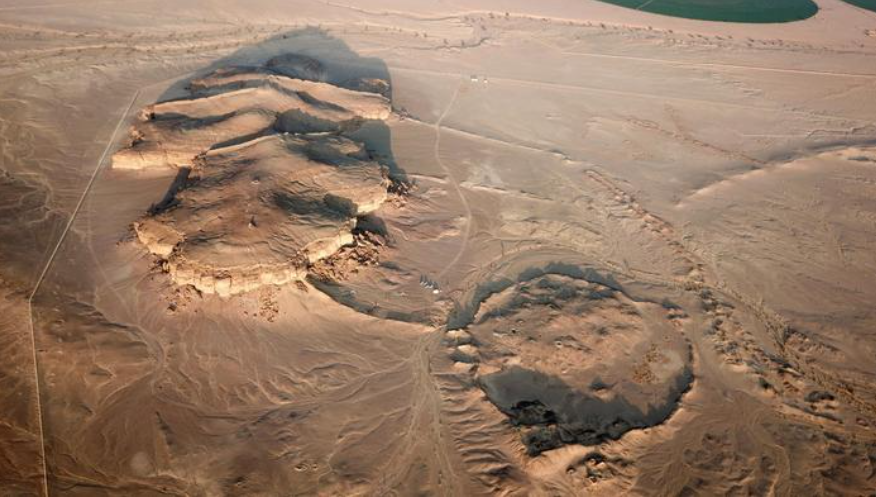
Bronze Age potters in northwestern Arabia may have created an ancient brand, thousands of years before the development of the marketing industry or capitalist system as we know it. Established at the Qurayyah oasis in Saudi Arabia, these standardized products first appeared 3,200 years ago and were recognized and sought after by customers from foreign lands for more than 1,000 years.
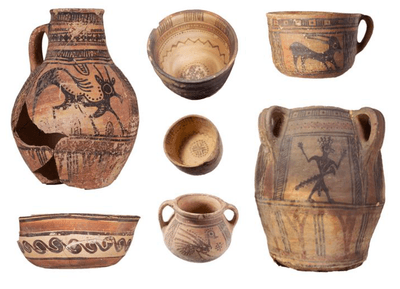
Known as the Qurayyah Painted Ware (QPW), the ancient ceramics were characterized by their distinctive two-color design and featured images of animals and human rituals. Produced at a centralized kiln at the oasis, the commodity appears to have been developed some 3,600 years ago, although it took another four centuries before the product began to resemble an actual brand.
The first brand identity
“Qurayyah Painted Ware resembles modern notions of brands in possessing visual identity, material consistency, technological continuity, centralized production, export circulation, local imitations, intentional commercial scope and cultural reputation,” explained Marta Luciani from the University of Vienna.
"However, it was an ancient brand in a pre-capitalistic world, so for example the geographical reach or the advertisement and publicity campaign orchestrated for the launch of a modern brand were surely different,” she told IFLScience.
In a new study, Luciani and her colleagues conducted technological, petrographic and geochemical analyses on dozens of QPW shards from the kiln at Qurayyah. This enabled them to reveal a highly standardized mode of production, with the materials, design and manufacture of separate products showing remarkable consistency.
The researchers were also able to confirm that the ceramics from Qurayyah match those found at other ancient sites hundreds of kilometers away, including the Timna sanctuary of the Egyptian goddess Hathor, which is located in the southern Levant. These findings suggest that QPW production was deliberately scaled up with the intention of exporting the brand across borders.
The must-have accessory
Imitation copies found across the region, as well as the discovery of genuine QPW in elite burials, attest that the brand was widely recognized and held a level of prestige.
“The fact that they imitated Qurayyah's pottery in different ancient settlements – including Barqa el-Hetiye in Jordan and Al-'Ula in Saudi Arabia – goes to show that this specific brand, and the oasis where it was produced, must have enjoyed a high reputation,” says Luciani.
“We can imagine that this had an extremely positive economic impact for the oasis' potters,” she adds.
According to the researchers, QPW remained in production until the sixth century BCE – well into the Late Iron Age – revealing a longevity that dwarfs all of the brands that adorn billboards and television screens today.
The study has been published in the journal PLOS ONE.