Humans
 PUBLISHED


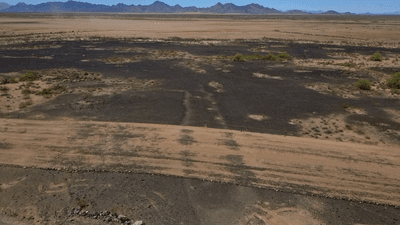


President Donald Trump's border wall project has bulldozed through an ancient geoglyph in the Arizona desert. A new analysis of samples from the site suggests that it may be far older than the pyramids of Ancient Egypt.
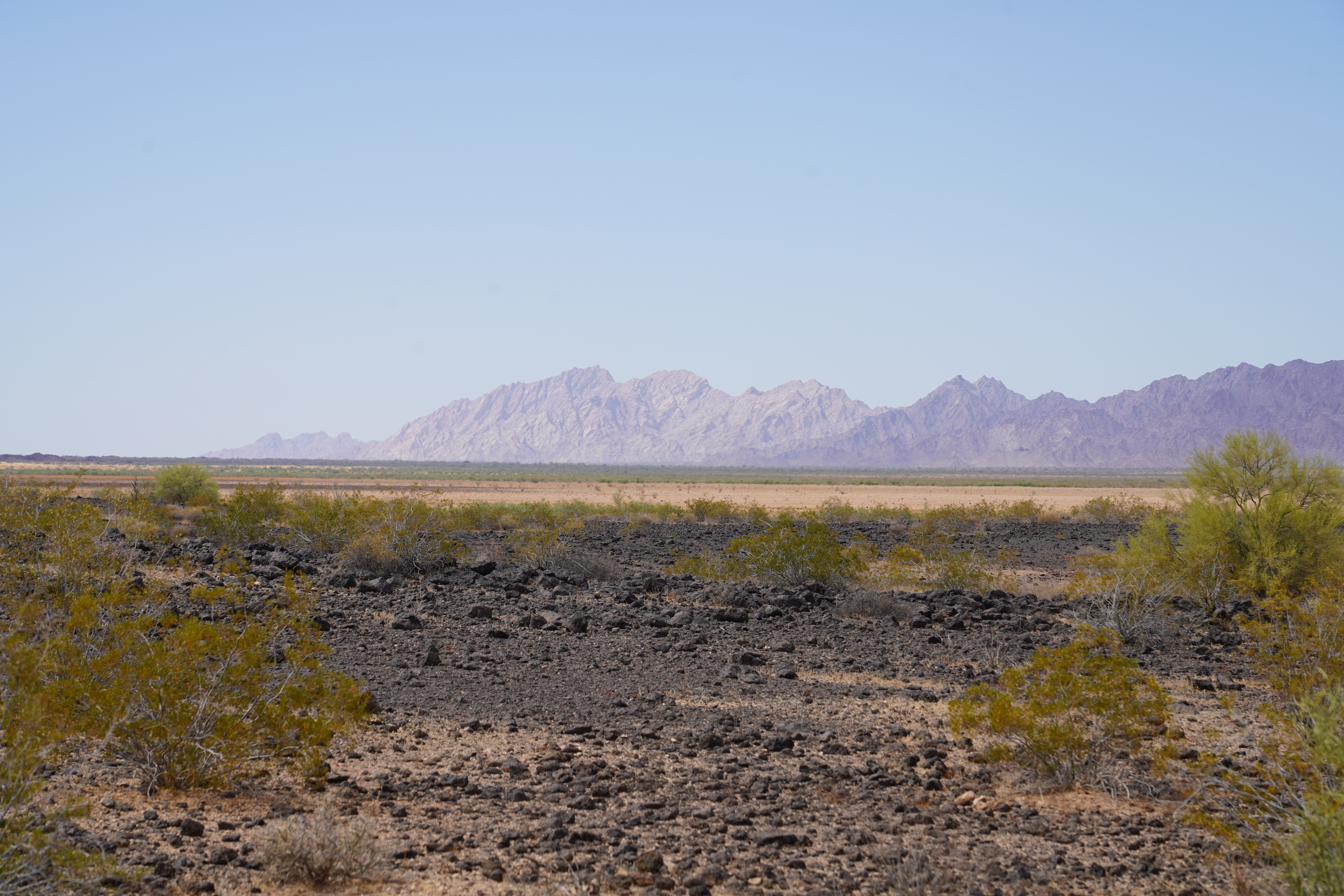
On April 23, 2026, contractors working on construction of the border wall with Mexico ran over Las Playas Intaglio, a giant carving of a fish cut into the Sonoran Desert, doing irreparable damage to an ancient symbol held sacred by local Indigenous tribes.
"This was a devastating and entirely avoidable loss," Tohono O'odham Chairman Verlon Jose said in a published statement at the time, per the Tucson Sentinel.
"There is nothing more important than our history, which is what makes us who we are as O'odham. The site was also an irreplaceable piece of the United States' history, one none of us can ever get back."
The value of the site goes well beyond its age. At some point in our history (we'll get to when in a second) humans deliberately altered the landscape, scraping away the dark surface layer of an ancient lava field to create a giant and recognizable symbolic representation of an animal.
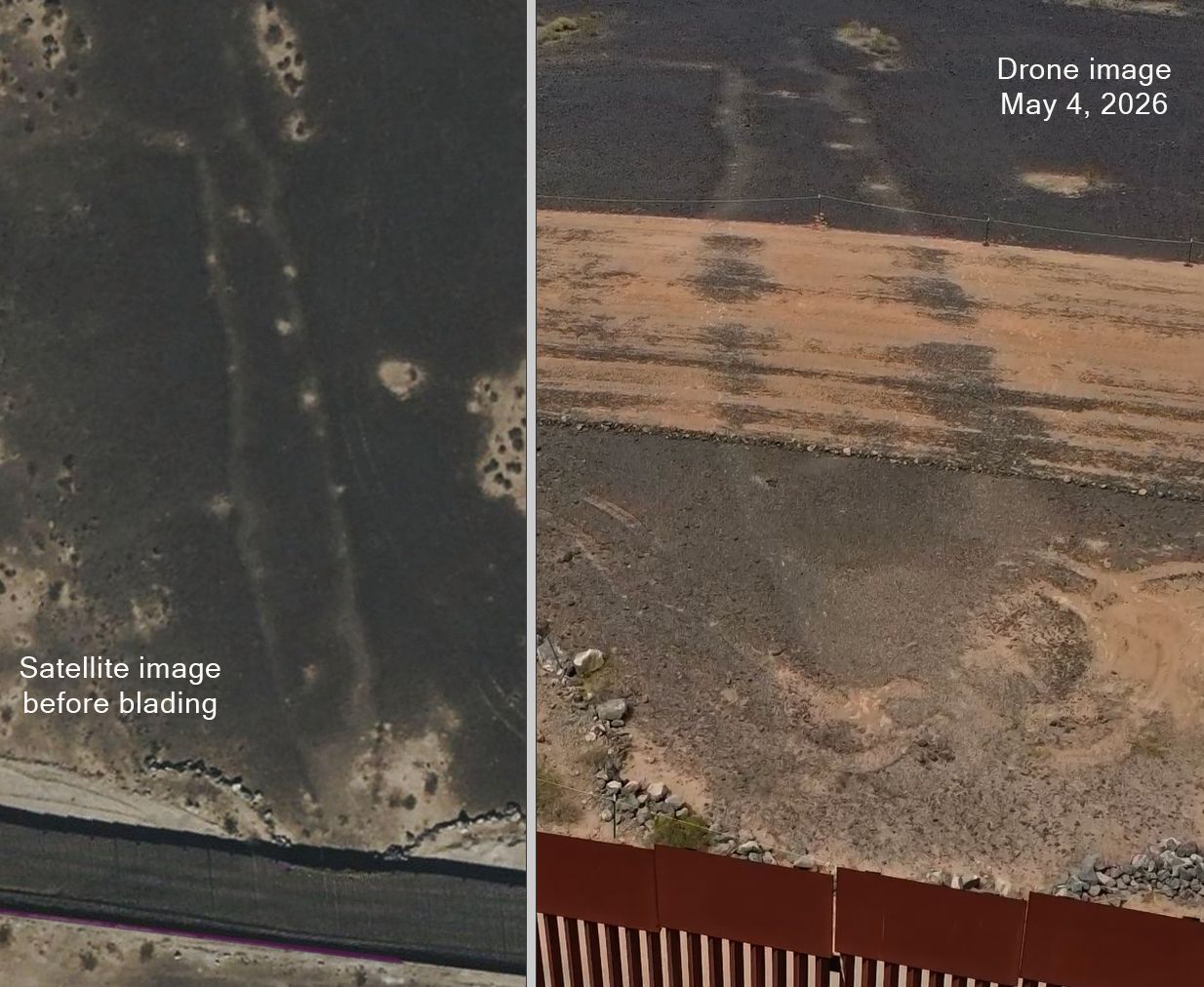
It is an 83-meter (272-foot) long record of human thought and activity, a physical trace of people who otherwise might not be well represented in the archaeological record.
But according to new research the carving may also be far older than we realized, perhaps being the oldest scientifically dated geoglyph in the Americas. According to that new research, the geoglyph was there 2,000 years before the pyramids of Egypt were built, and 1,500 years before construction even began at Stonehenge.
Researchers David S. Whitley and Ronald I. Dorn used varnish microlamination dating on samples that had been collected from the site in 1979. The technique compares microscopic layers of rock varnish – or the thin outer layer that builds on rock exposed to the Sun – to the regional record of climate conditions.
"This technique is based on the fact that major shifts between wet and dry paleoclimatic periods result in alternating black manganese (Mn)-rich, orange (Mn-low), and yellow (Mn-very low) microstratigraphic laminations in rock varnish, respectively," the pair explain in the article summarizing their research.
"These differentially colored micro-laminae are visible in ultrathin sections under optical microscopy. Based on the establishment of and a comparison with a regional microlamination sequence, an individual analyzed sample can be assigned a correlative chronometric age in a fashion similar to that used in dendrochronology, though without the temporal resolution of that technique."
Using this technique, the pair put the age of the geoglyph at an estimated 6,500 to 7,300 years old, though as this layer formed after the geoglyph was created, they believe it could be older still.
“This discovery makes an already devastating loss even more profound. It’s a cultural and historical atrocity,” Russ McSpadden, Southwest conservation advocate at the Center for Biological Diversity, said in a statement.
“The Trump administration’s destruction of this 6,500-year-old site is a wound to the deep history of Indigenous communities and impoverishes all of humanity. No administration has the moral authority to bulldoze an irreplaceable piece of the human story.”
Again, beyond the age of the geoglyphs, Whitley and Dorn stress they remain important to Tohono O’odham, Hia-Ced O’odham, and other Tribes for whom Arizona’s Cabeza Prieta National Wildlife Refuge is an ancestral home.
While the damage has been done to this geoglyph, there are concerns about other ancient sites being damaged by the border wall project, including Quitobaquito Springs, a sacred place at the Organ Pipe Cactus National Monument.
“Imagine the worldwide outrage if a government bulldozed part of Stonehenge to build a wall,” McSpadden added.
“This sacred place is even older. Indigenous heritage deserves that same commitment to protection. Congress needs to demand records and testimony establishing who authorized and carried out the work. People deserve to know what warnings were given and why safeguards, if they existed, failed.”
The summary article is published in The SAA Archaeological Record.