


 Humans
 PUBLISHED



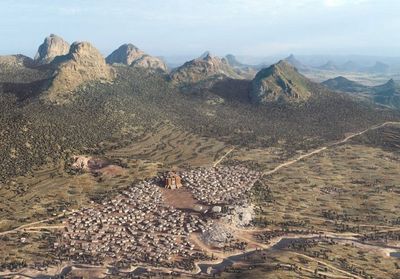


If you wandered the Ethiopian highlands around 2,800 years ago, you might have been fortunate enough to stumble across an ancient cityscape dominated by a mini-skyscraper.
A team of German archaeologists and civil engineers has taken a fresh look at the remarkable architecture of Grat Be'al Gibri, or Grat Be’al Geubri, an ancient palace built around 800 BCE in the Tigray Region of northern Ethiopia.
That's roughly the same time Homer was musing about the worst cruise ever and the Phoenicians were getting to grips with the alphabet.
Today, much of Grat Be'al Gibri lies in ruins, little more than a set of cobbled steps and a few pillars. In its heyday, however, it is believed to have been a towering, multi-storey structure at the centre of the grand city of Yeha.
How tall was the Ancient Palace Grat Be’al Gibri?
Archaeological work suggests the building had a ground plan of approximately 60 by 60 meters (196 by 196 feet), making it the largest known palace in East Africa at the time.
Pillars at the entryway are thought to have been 10 meters (33 feet) tall, which, along with the remnants of stairs, implies it had at least three stories. The actual height, however, has proved difficult to pin down because much of the structure was destroyed by fire.
Ancient sources from the wider Arab world claim this part of East Africa once had buildings with up to 20 stories, while rock art in South Arabia depicts palace-like complexes with at least nine stories.
But would these feats of engineering have been achievable in an age before reinforced concrete or structural steel beams? It’s not impossible, says a new study.
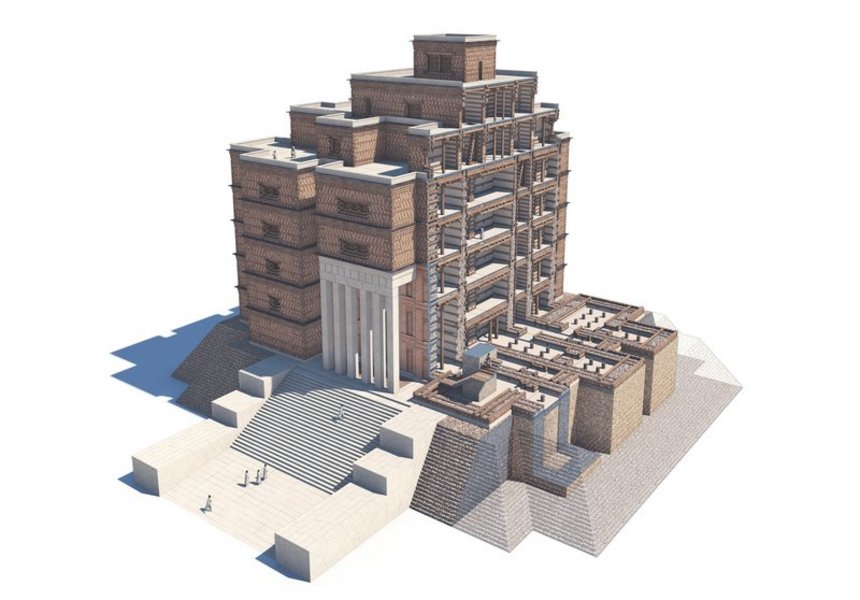
The site's layout hints that its designers combined stone and timber in a distinct pattern, laying wooden beams flat within the rubble masonry, like reinforcing ribs.
This technique is similar to the "timber-laced masonry" found across parts of southern Arabia and northeastern Africa during this period. It’s also a style that has enjoyed something of a renaissance in modern architecture, with hybrid timber construction now being used for sustainable high-rise buildings in cities around the world.
So, the research team took this technique into account, gathered measurements of wall sections from the remains of Grat Be'al Gibri, including a wall corner and a doorway, and plugged the data into a 3D model to examine its load-bearing capacity.
A 19-story megastructure?
In a series of virtual reconstructions, the palace was pushed to its limit to work out the maximum number of stories it could reach before it toppled over. Because the researchers couldn't be certain which types of wood and other materials were used, they ran several simulations
According to a press release describing the work, the researchers found one scenario where the structure could achieve a height of 19 stories. Even in their least favourable simulation, it still reached 16 stories before collapsing.
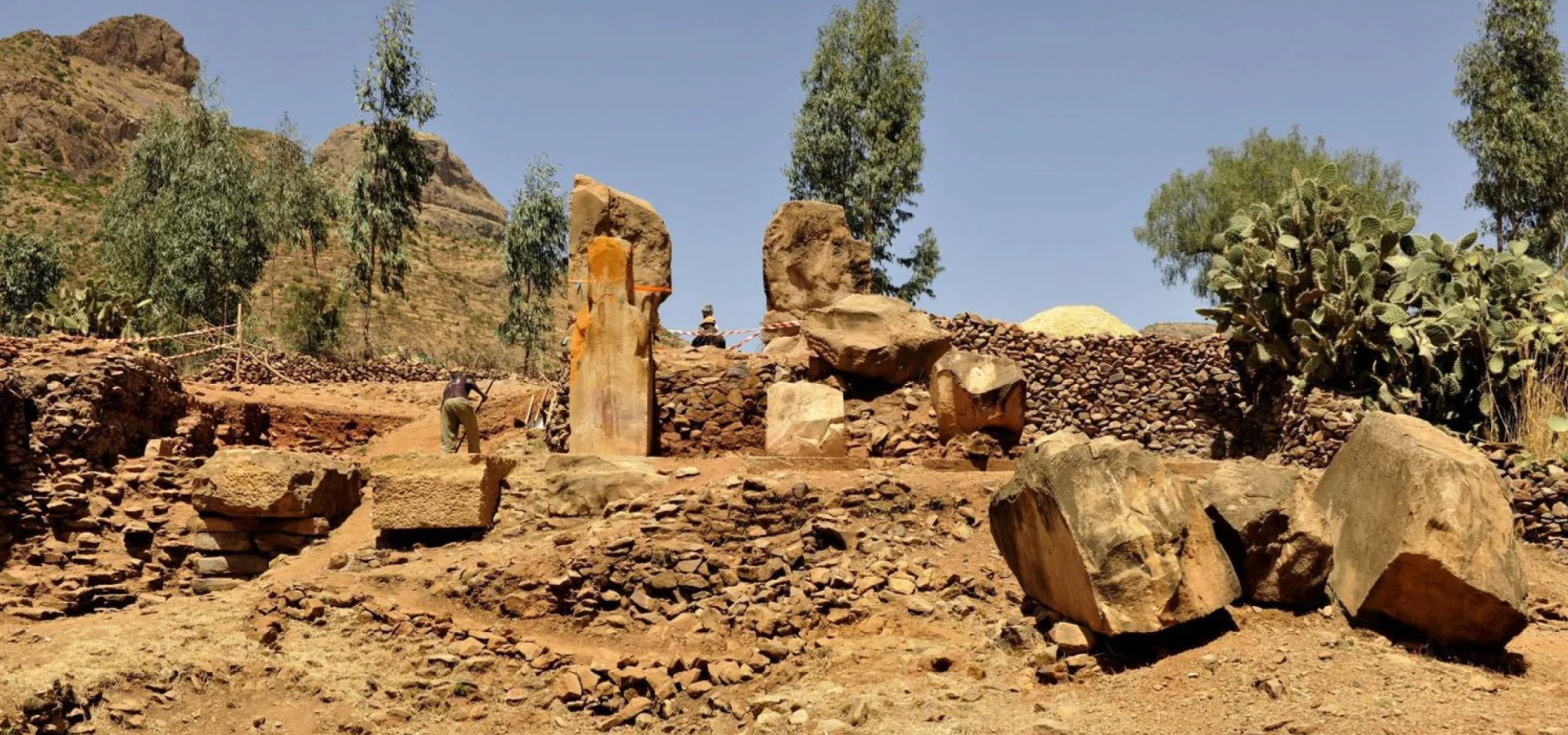
These values, while they neatly fit with the evidence from written sources, are very much at the top end of what would have been possible at this site.
At present, there's no way of knowing whether Yeha's architects and engineers really exploited the full potential of their methods and materials.
The land of 13 months of sunshine
But, it isn't impossible. And, given Ethiopia's rich history, it perhaps shouldn't be too surprising.
The country is the oldest independent nation in Africa and considered to be one of the world's oldest continuous civilizations, with a number of unique twists and cultural quirks.
Known as the "land of 13 months of sunshine” thanks to its unique calendar, the East African nation has a rich archaeological record dating back more than 3 million years, from ancient hominin remains to the oldest Christian basilica in sub-Saharan Africa.
Grat Be'al Gibri itself sits within Yeha, an ancient site that’s currently on UNESCO’s “Tentative List” of sites that could be nominated for World Heritage status in the years ahead. With this fresh knowledge of the 2,800-year-old skyscraper, that nomination looks all the more promising.
The study is published in the journal Heritage.




 1
1