Humans
 PUBLISHED





What you'll discover in this article
- A new 2 million-year-old adult Homo erectus fossil confirms that our ancestors were in South Africa 200,000 years before anywhere elsewhere.
- H. erectus and Paranthropus fossils from the same site over a period of 100,000 years confirms the two hominins lived side-by-side.
- “We are not looking through a window, we’re looking through a pinprick,” Dr Jesse Martin told IFLScience.
An analysis of 18 fossils found at Drimolen Main Quarry, South Africa, reports the oldest Homo erectus fossils ever found, as well as others which challenge standard accounts of human evolution.
Extraordinarily, some of these fossils were originally found as far back as 1992, yet had been left waiting for a scientific report despite their enormous significance.
Before our own species, Homo sapiens, spread out around the world H. erectus was easily the most successful member of our family. Specimens have been found across Africa and much of Eurasia, a range far greater than previous relatives.
Indeed, given that H. erectus survived as a species for almost two million years, it’s questionable whether our greater range in space makes us the champions of our genus, given our relatively short history.
Naturally this has made paleoanthropologists very curious about H. erectus’ origins. There has been considerable rivalry between researchers in South and East Africa on this topic, while a 1.8-million-year-old fossil from Georgia has even led some to propose for an origin outside of Africa entirely.
The oldest Homo erectus fossils ever found
In 2020 a team led by Dr Jesse Martin of La Trobe University described what appeared to be a 2 million-year-old H. erectus fossil, DNH 134, from Drimolen.
However, this was from a young child and Martin admitted to IFLScience the immaturity created some doubts about the species definitve identification. Now the description of another specimen from the same site gives much greater confidence.
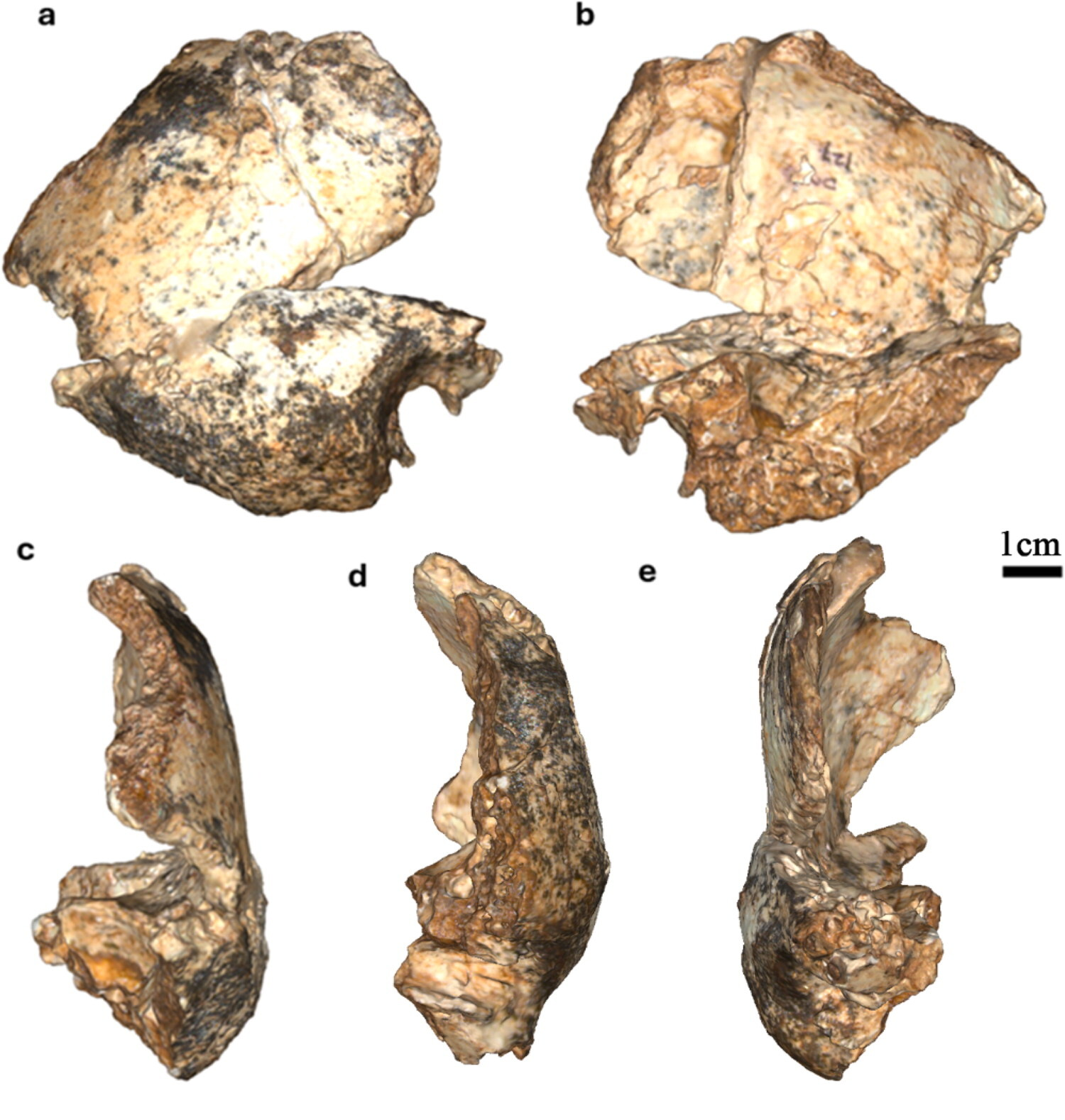
“Homo erectus is the first species of hominin that researchers broadly agree fits within our own genus Homo and is likely directly ancestral to us,” Martin said in a statement.
“This paper publishes a new adult fossil attributed to Homo erectus, DNH 127, providing further confirmation that this species first appeared in southern Africa 2 million years ago.”
While the Drimolen finds may appear to tilt the claim for H. erectus’s origins back towards Southern Africa, Martin told IFLScience its likely we’ve actually been looking in the wrong place anyway.
“South Africa and Eastern Africa compete for [the title of H. erectus’s place of origin]”, Martin told IFLScience. “Eastern Africa has a fragment that might be erectus 1.9 [million years old], but the things they are confident of are 1.6 [million].”
“However, we would expect the oldest specimens would have features that are ancestral to erectus, and we haven’t seen it,” Martin said. “The irony of the competition is that erectus probably evolved somewhere else, and arrived in Southern Africa first.”
That doesn’t make a non-African origin plausible, as a species evolving in Asia or Europe would leave plenty of fossils along the way, but Martin notes that very little effort has been made to find signs of our ancestors in West or Central Africa.
There are certainly places in Africa where geology hasn't favored fossil preservation from the right time period, yet Martin says this is far from the whole story.
“In a sense it is a by-product of colonialism,” he explains. “It’s not shocking that the place we found these [fossils] is a short drive from the capital of South Africa.”
Meanwhile, no one has put up the money to go searching in caves even across neighboring nations that could contain much older specimens.
“We are not looking through a window,” Martin said, ”we’re looking through a pinprick. We have a good temporal window, but no sense of geographical variation.”
Paranthropus as well
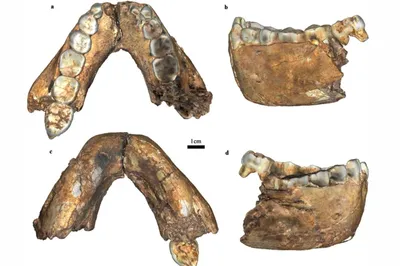
The Drimolen site also contains fossils of similar age from another hominin species.
These include those from Paranthropus robustus, a relative so close to H. erectus that some paleoanthropologists argue it should also be included in our genus. The finds are another example of something we have been come to realize a lot recently, that multiple hominin species lived alongside each other for long periods of time.
“These two human species shared the same landscape and are both preserved in Drimolen cave,” Martin said. “While we know that Homo erectus and the lineage leading to us was ultimately the successful one, 2 million years ago P. robustus outnumbered Homo erectus at Drimolen by more than 10 to one.”
“During this period it was our ancestors that looked like the outside long-odds chance to survive.”
The site also proves P. robustus was capable of adapting to local conditions.
“This paper confirms that the P. robustus fossils from the 2-million-year-old Drimolen Cave are slightly but importantly different from the P. Robustus fossils at the 1.8-million-year-old Swartkrans cave,” Martin continued.
They found that over the 200,000 years between these two sites, the teeth of Paranthropus became larger in conjunction with the jaw muscles used for chewing.
An extraordinary abundance
The site at Drimolen is extraordinarily rich in fossils, preserving not just bones but also some of the world's oldest bone tools and some of South Africa's oldest stone tools.
“Per square meter Drimolen has to be a candidate for the densest hominin fossils in the world,” Martin told IFLScience.
While the site is not much bigger than an average suburban block, Martin contrasted this with sites in East Africa that have similar numbers of fossils but over vastly greater areas. That density may tell us something.
“We have more baboons than hominins at Drimolen, but not by much,” Martin said, adding this may challenge the idea, developed from the scarcity of hominin fossils in East Africa, that early humans were few and far between. Instead, our ancestors’ lifestyle may just have been poorly suited to being preserved under East African conditions.
The two sets of fossils could easily have been the subjects of separate papers, but Martin told IFLScience that after the long delay his team were keen to get everything published quickly so other researchers could take a look.
The study is open access Annals of Human Biology.