Nature
 PUBLISHED





For at least a century, we've known that avocado plants come in two types: one that's male in the morning and female in the evening, and another that's female in the morning and male in the evening.
Farmers and hobbyists have used this knowledge to successfully breed the fruit. But they haven’t known much more about the process, or even how to tell which of the two types their sapling will turn out to be when it matures. That’s now changed.
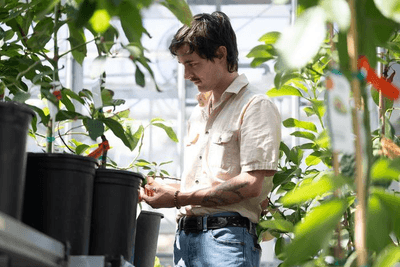
“Our study provides a genetic explanation for a century-old mystery of avocado pollination,” Dr Jeffrey Groh at Berkeley, first author of a recent study of avocado genetics, said in a statement.
“Flowers are not just static decorations; they are highly evolved and dynamic structures. We can see this in the pulsating rhythm of avocado flowers opening and closing throughout the day. Through the power of genetics, we can detect traces of this rhythm far into the ancient past.”
Most plants are hermaphrodites; that is, they both produce and accept pollen. From an evolutionary perspective, this has considerable advantages. If you’re the only one of your kind on an island or an isolated hill, you can, with a bit of help from the wind or some bees, reproduce solo.
There are drawbacks to this nifty trick, however. If you think a Targaryen approach to keeping it in the family is bad, it's lot worse for offspring whose mother is also their father.
Just as animals that reproduce asexually are more vulnerable to disease and parasites and less adaptable to changing conditions, self-fertilization for plants is best used sparingly.
There are a few plants that have separate males and females and rely on neighbors of the other sex to reproduce, but avocados are a special case that has the best of both worlds.
Avocado trees come in two forms, known with great originality as A-type and B-type. At any one time, each has some flowers producing pollen (male) and some ovules (female) to receive it.
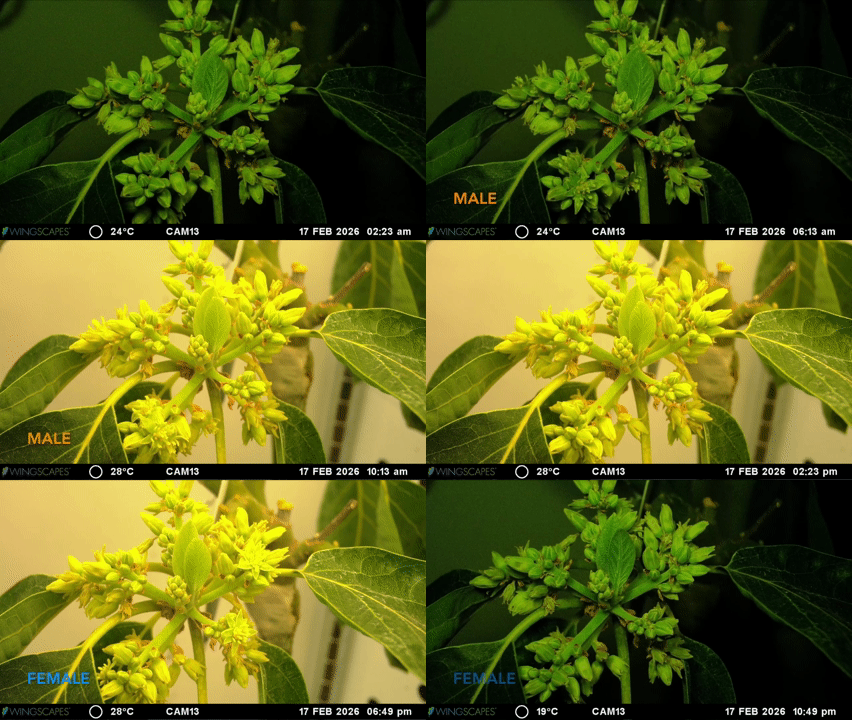
JeffGroh.png "This bunch of avocado flowers will open twice, once as male and once as female. Depending on the type and the time of day, all of one sex are closed and the other sex are open")
B-type avocados open their male flowers in the morning, then close them and open the female flowers in the afternoon. A good night’s rest follows, after which they do the same thing the next day.
A-type does the reverse. “Thus, a hermaphroditic tree will be functionally male or female at different times of day,” Groh and co-authors write. It’s like a sped-up version of kemmer in the science-fiction classic The Left Hand of Darkness.
“If every plant was male at the same time, and then female at the same time, there’d be no exchange of pollen,” said Professor Graham Coop at the University of California, Davis.
“Having these two types that reciprocally and synchronously flower male and female allows avocados to exchange and use pollen throughout the whole day.”
When pollen makes it across the temporal gap to pollinate the same tree, there is a reduced chance of viable offspring, frustrating backyard gardeners with a single tree but keeping the species healthier than bananas, for example.
Although avocado farmers have been carefully growing a mix of A-type and B-type trees for centuries, ignorance of the underlying genetics has made their job harder.
Since A- and B-type trees look the same before maturity, farmers have to raise plants for up to 12 years before potentially realizing they don’t have their A:B ratio right.
By comparing the DNA of 374 individual avocado plants, Groh, Coop, and their colleagues identified a gene called SDMYB that determines the plant's type, operating in a manner a little like the sex chromosomes of most mammals.
Two alleles (versions) of the SDMYB gene exist, and A-type avocados carry one of each. B-type plants, on the other hand, are homozygous – meaning both their copies of the gene are the same version. The alleles control the expression of a protein responsible for flower-opening rhythms.
“One allele of this gene is dominant, and it shows a unique pattern of temporal regulation that is closely linked to the difference in the timing of flowers opening and closing between A- and B-types,” said Groh.
Although there are other plants with the same SDMYB alleles, none has proved as popular with humans as avocados.
By looking at when species with and without this SDMYB combination diverged from one another, the team determined that the mechanism evolved around 42 million years ago.
Flower power
This kind of sex separation by time has evolved several times in other plant families, including cinnamon, but that process uses different genes, sometimes with plants swapping sex once a season rather than once a day.
This way of juggling hermaphrodism is highly effective if done right, but for plants, opening and closing different flowers is a bit like humans trying to pat their head and rub their midriff at the same time.
Avocados are particularly good at getting it right, despite having a vast number of flowers to juggle. Part of their secret is that, instead of permanently male or female flowers, each flower opens just twice, on successive days and at different times, first as female and then as male.
A large avocado tree will stagger more than a million flowers across a growing season, with A-type opening on the first morning and the second afternoon, while B-type does the reverse. Farmers will now be able to gene-test young plants to know which type they are.
“This has been a major impediment for avocado breeders. Previously, you could not tell whether a plant was an A- or a B- type until it flowered, and avocado plants may take up to 10 or 15 years to flower in the first place,” said Coop.
The study is open access in Proceedings of the National Academy of Sciences.