Humans
 PUBLISHED


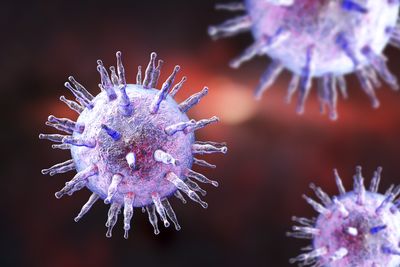


All non-African populations alive today carry between two and four percent Neanderthal DNA, which continues to shape our biology in a number of ways. Unfortunately, not all of these are positive, and new research shows that genes inherited from our extinct cousins may hinder our immune system’s ability to fend off certain viruses.
Previous research has shown that Neanderthal alleles – or genetic variants – actually boost our defenses against RNA viruses, which tend to cause acute, localized infections. DNA viruses, on the other hand, often lurk in our bodies for long periods, producing delayed, systemic, and chronic effects.
To find out how our Neanderthal ancestry impacts our response to DNA viruses, researchers looked for correlations between these archaic alleles and DNA viral loads among large numbers of people whose data has been recorded in the UK Biobank. In particular, the study authors focused on viral loads for Epstein-Barr virus, Human Herpesvirus 7 and three separate torque teno viruses.
All five of these DNA viruses tend to remain in people’s systems for many years without causing symptoms, but viral loads give a good indication of how well a person’s immune system is able to prevent these pathogens from replicating.
Overall, the team found that Neanderthal DNA was correlated with higher viral loads for all five of these viruses. Refining their findings, the researchers were able to identify 18 different genetic regions where archaic alleles appear to be particularly linked with an increase in viral load.
The majority of these were found within the Major Histocompatibility Complex (MHC), which is a group of genes that code for cell surface proteins that help the immune system identify and destroy infected cells. Two further clusters of Neanderthal alleles were located on chromosome 17, while one Denisovan haplotype – or group of genetic variants – within the MHC was also associated with higher viral loads.
"Our results suggest that Neanderthal-derived variants may not provide effective defense against several DNA viruses in people today," said study coauthor Michael Dannemann, an associate professor of evolutionary genomics, in a statement. "This stands in striking contrast to their previously reported beneficial effects on RNA virus immunity."
This may be because Neanderthals were adapted to fend off viruses that existed during the Paleolithic, which may have been very different to those circulating today. Genetic variants that were beneficial in the battle against these ancient pathogens may therefore be ineffective against modern viruses.
"The directional effects on DNA virus load observed in our study may therefore not necessarily reflect those in [Neanderthals] tens of thousands of years ago, when different viral strains were circulating," write the study authors. Moreover, because our archaic genes seem to be more suited to fighting off RNA viruses than DNA viruses, the study authors conclude with the suggestion that Neanderthals might have been specifically adapted to the former rather than the latter.
"Our results might indicate that [Neanderthal] immune systems were optimized for acute rather than chronic infections," they write.
The study is published in the journal Genome Biology and Evolution.