Nature
 PUBLISHED


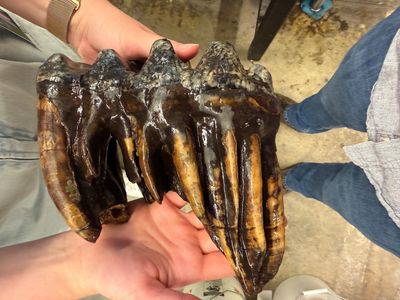


What would you like to discover by accident? A T. rex footprint, a nugget of gold that weighs the same as an adult man or perhaps a hoard of Viking silver? For one researcher in the middle of a threatened California red-legged frog survey, an oddly shaped rock turned out to be an exceptionally preserved, fossilized adult Pacific mastodon tooth.
The discovery was made in a creek bed in a nature preserve in San Mateo County during a field survey looking to improve the habitat of the threatened frog, the largest native frog in the Western US, and certainly surprised its discoverer.
“As a geologist, I've gone out and seen stuff in the field, but definitely nothing as exciting as this,” said Brigid Lynch, a geomorphologist with Balance Hydrologics, in a statement from the Midpeninsula Regional Open Space, which manages the preserve.
My, what big teeth you have
“The tooth itself is in immaculate condition. It's the most complete mastodon molar from our area, and the most spectacular mastodon molar that I've ever seen. I had chills and shivers up and down my spine,” said Wayne Thompson, paleontologist and owner of Pacific Paleontology, who consulted on the find.
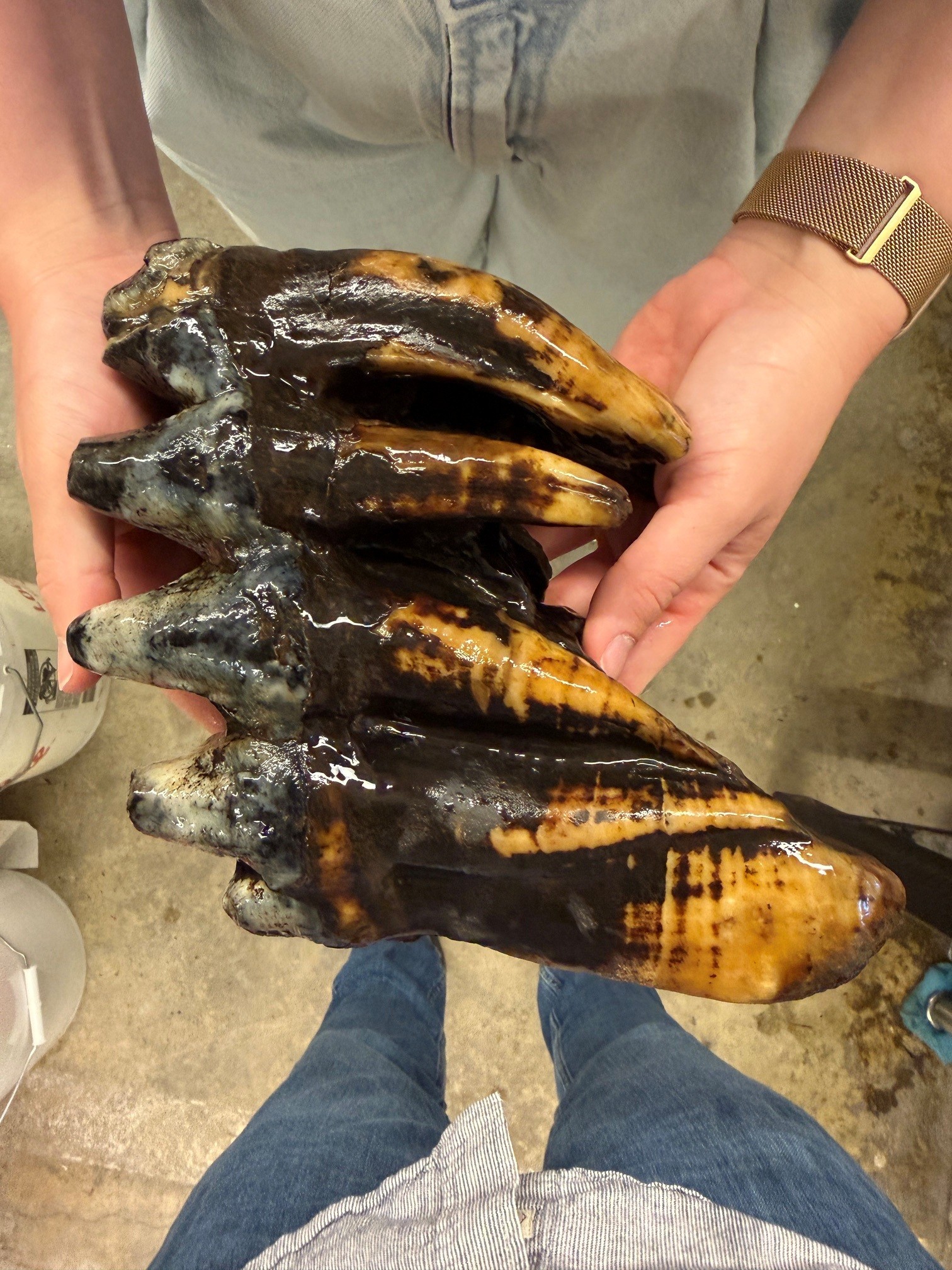
The Pacific mastodon (Mammut pacificus) is the newest identified mastodon species, recognized in 2019. It lived alongside the American mastodon (Mammut americanum) and was related to modern-day elephants but went extinct around 11,000 years ago. They were found in the American West, including California, Oregon, and parts of Mexico.
Compared to the American mastodon, the Pacific mastodon has narrower teeth, thicker leg bones and a difference in tusks. As herbivores, they used those large teeth to chew vegetation from the Pleistocene, 2.5 million years ago to the end of the last Ice Age, feeding on fruits and leaves of trees that they stripped from trees using their strong trunks.
.jpg "Rendering of a Pacific mastodon showing them in comparison to a human and where the tooth would have been inside the skull.")
Mastodon vs mammoth
Mammoths, on the other hand, were grass grazers. They also would have eaten flowering plants like dandelions and herbaceous plants that grew in these conditions.
Size-wise, mammoths were much larger than mastodons. Male mastodons are thought to have grown up to 3 meters (10 feet) and weighed around 8-9 tons, while the largest male Columbian mammoths grew up to 4.5 meters (14 feet) and weighed up to 13 tons.
A glimpse back in time
The fossil tooth has now been donated to Stanford University’s Doerr School of Sustainability, where carbon dating will be carried out on the molar to determine its exact age.
In geological time, the mastodons lived not that long ago, when species that are still alive today, like gray foxes, Steller’s jays, and spotted owls all would have coexisted together in that environment.
“Fossils are our only opportunity to see into past biodiversity,” explained Christine Garcia, Curator and Manager of the Geoscience Specimen Collection at Stanford.
“We can study fossils to better understand Earth’s past, past wildlife and the ecosystem they were a part of, and to help us make better predictions and better decisions about how to help our ecosystems and biodiversity thrive into the future.”
“It's another puzzle in the Ice Age saga that we can put into place,” Thompson said.
Two years ago, a very rare complete mastodon jaw was found by a New Yorker in their backyard, while an almost entire skeleton was unearthed in Iowa after a strange, long bone poking out of a creek bed was spotted by a local resident in Wayne County.