Nature
 PUBLISHED


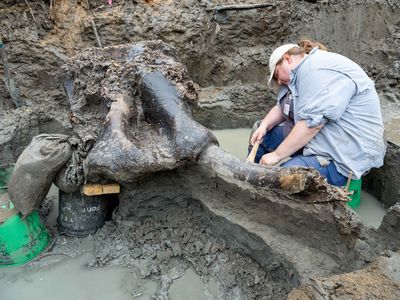


Archaeologists have been furiously digging to unearth a stunning mastodon skeleton in Iowa. It’s the first time that well-preserved remains of the prehistoric beast have been scientifically excavated in the state – and what a beauty it is.
Researchers at the University of Iowa Office of the State Archaeologist were first contacted in the fall of 2022 after a local resident of Wayne County stumbled across a strange, long bone poking out of the creek bed.
A preliminary probe revealed that the bone was the femur of an extinct mastodon. They also discovered part of a tusk, which they believed to be still attached to the skull, sparking interest in a full scientific investigation. After securing the necessary funds, archaeologists returned to the site in August 2024 and commenced a 12-day dig, excavating the skull and several more bones.

Their radiocarbon dating of the remains suggests the mastodon lived around 13,600 years ago, roaming North America towards the end of the last Ice Age when the animals fell into extinction.
Mastodons were large mammals similar to both modern-day elephants and mammoths that stomped around North America from around 3.5 million years ago until 10,500 years ago. One of the key differences between mastodons and mammoths was their teeth: mastodon teeth had unusual cusps specially adapted for eating woody plants, while mammoths possessed teeth that were flatter and ridged, perfect for munching grasses.
The discovery in Iowa is especially exciting as it coincides with the era in which humans had settled in the region. This overlap is significant because it's well-documented that mastodons were hunted and butchered by these early inhabitants of North America.
The archaeologists have already discovered several human-made artifacts at the site, including stone tools. While they are a few thousand years younger than the mastodon skull, it hints that some fascinating discoveries could be revealed by further research.
“We’re really hoping to find evidence of human interaction with this creature — perhaps the projectile points and knives that were used to kill the animal and do the initial butchering. There’s also potential evidence on the bones themselves — there could be identifiable cut marks,” John Doershuk of the University of Iowa Office of the State Archaeologist (OSA) said in a statement.
Once it's been fully studied and preserved, OSA is planning on putting the bones on display at the Prairie Trails Museum in Corydon for the public to peruse.