Humans
 PUBLISHED

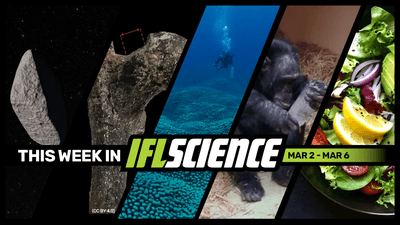


This week, researchers may have found remains of the oldest human ancestor in a very unexpected place, a 100-meter-plus coral colony on the Great Barrier Reef is the longest ever documented, and the largest-ever study into the health impacts of different diets has uncovered some surprising results. Finally, there has been just one documented case of a person being hit by space junk, but is the risk increasing?
Create an IFLScience account to get all the biggest science news delivered straight to your inbox every Wednesday and Saturday.
Dangerous Asteroid 2024 YR4 Won't Smash Into The Moon In 2032 After All
We have never been as disappointed in an asteroid as we have been with 2024 YR4. This space rock, a bit wider than an Olympic swimming pool, became a serious threat to Earth in early 2025. Refinement of its orbit put our planet in the clear but gave the asteroid a 4.3 percent chance of hitting the Moon in 2032, which would have put on a spectacular display for our planet. Now, two independent analyses confirm that it won’t happen. Read the full story here
The Oldest Human Ancestor May Have Just Been Found Somewhere Very Unexpected
It has long been thought that hominins – the taxonomic tribe to which humans belong – first appeared in Africa around 7 million years ago. However, researchers may have just found the remains of an even older member of our lineage in Bulgaria, thus rewriting the story of humanity’s origins. Read the full story here
A Football Pitch-Sized Coral Colony Is The Great Barrier Reef – And Probably The World’s – Largest
A mother-daughter team of citizen scientists has discovered a single coral colony on the Great Barrier Reef stretching more than 100 meters, making it the longest ever documented, and all caught on video. The finding helps reveal the circumstances that favor coral resilience in light of the mass bleachings of recent years. Read the full story here
Humans Have Been Fascinated With Crystals For 800,000 Years – We May Now Know Why
From Viking sailors to New Age spiritualists, people have always been slightly obsessed with crystals, and it turns out that chimpanzees are no different. Observing our simian cousins go absolutely bananas over these shiny minerals, researchers believe they may now be able to explain the magpie-like behaviors of prehistoric humans who lived around 800,000 years ago. Read the full story here
Veggie And Vegan Diets Lower Risk Of Several Cancers – But New, Biggest-Ever Study Raises A Few Surprises
Of all the lifestyle factors that are known to influence health, diet is probably one of the most talked about – and argued about! Many believe that a more plant-based diet – whether vegetarian or vegan – is better for general health, but what about cancer risk specifically? The largest-ever study on this question has just been completed, and some of the results might just surprise you. Read the full story here
TWIS is published weekly on our Linkedin page, join us there for even more content.
Feature of the week:
Only One Person Is Known To Have Ever Been Hit By Space Junk – But For How Long?
Modern life provides enough for us to worry about without having to add space junk to that list. Unfortunately, it is becoming more and more of a concern, certainly to our civilization's use of space, and with a creeping risk that one day soon, a piece of space junk will hit someone and harm them. Read the full story here
More content:
Have you seen our e-magazine, CURIOUS? Issue 44, March 2026, is available now. This month, we asked, “Are We Really More Microbe Than Human?” – check it out for exclusive interviews, book excerpts, long reads, and more.
PLUS, the We Have Questions podcast – an audio version of our coveted CURIOUS e-magazine column – continues. In episode 18, we ask, “What Do Other Worlds Smell Like?”
Our Break It Down podcast now has a new monthly format, coming at you in both audio and visual. So tune in each month for some of the wildest science stories and adventures we’ve been on. Kick off this month with “AI Assassins, Inside A De-Extinction Lab, And Life On Mars?”
The Big Questions podcast season 5 has now concluded, but here’s one more bonus episode to help see you into 2026: Can Magic Be Used As A Tool In Science? You can catch up on the whole of season 5 here.