Space and Physics
 PUBLISHED
 1
1


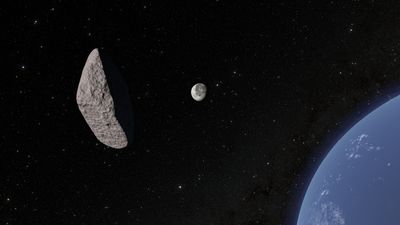


We have never been as disappointed in an asteroid as we have been with 2024 YR4. This space rock, a bit wider than an Olympic swimming pool, became a serious threat to Earth in early 2025. Refinement of its orbit put our planet in the clear but gave the asteroid a 4.3 percent chance of hitting the Moon in 2032. Now, two independent analyses confirm that it won’t happen.
Experts from NASA’s Center for Near-Earth Object Studies collected observations of the asteroid using JWST. In spring last year, the space rock disappeared from view. It was thought the next opportunity to observe it would be in 2028, but researchers at Johns Hopkins University Applied Physics Laboratory realized there was a chance JWST could observe it between February 18 and 26 this year.
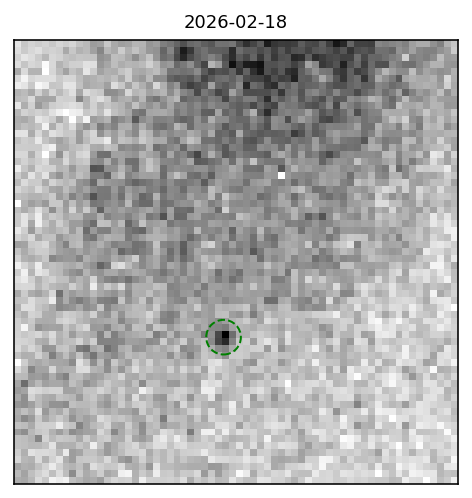
With the new observations, the astronomers were able to refine the orbital uncertainty for the future. On December 22, 2032, the space rock will miss the Moon by 21,200 kilometers (13,200 miles) with an uncertainty of 700 kilometers (435 miles), more or less.
A consistent number was reached independently by astronomers Sam Deen and Derek Lam, which they shared in an unreviewed preprint paper. The pair found a close approach to the Moon of about 22,000 kilometers (13,670 miles). They obtained that number using pre-discovery observations. The asteroid, which is 60 meters (197 feet) across, was spotted in data from 2016, long before its December 27, 2024 discovery.
There are plenty of reasons to be disappointed, mostly because it would have provided an incredible look at what impacts from asteroids actually do in a real setting. Had it impacted on the nearside of the Moon, it would have provided us with the first-ever close-up view of a large impact, with a flash seen from Earth and likely creating a crater around 1 kilometer (0.62 miles) across. The energy would be equivalent to about 6 million tons of TNT and the debris, though mostly falling back onto the Moon, may have created a meteor shower lasting for days as seen by Earth.
A lot of scientists were excited about it.
“It would be visible from Earth and there would even be new lunar meteorites that would arrive on Earth (nothing dangerous), but there is no guarantee,” Richard Moissl, the head of ESA’s Planetary Defence Office, told IFLScience back in February 2025. “Definitely, a new observable moon crater would be the outcome!”
“Science-wise [the impact] would be great. It would be this natural experiment. People who study impact craters around the Solar System would get to see one in action,” planetary scientist Dr Andrew Rivkin, from Johns Hopkins University in Maryland, told IFLScience last year ahead of the JWST observations of this object.
“And you know people who study the Moon, if they were able to put seismometers in places on the Moon, they could learn about all sorts of things about the lunar interior. It would be this potentially amazing opportunity if nature cooperates.”
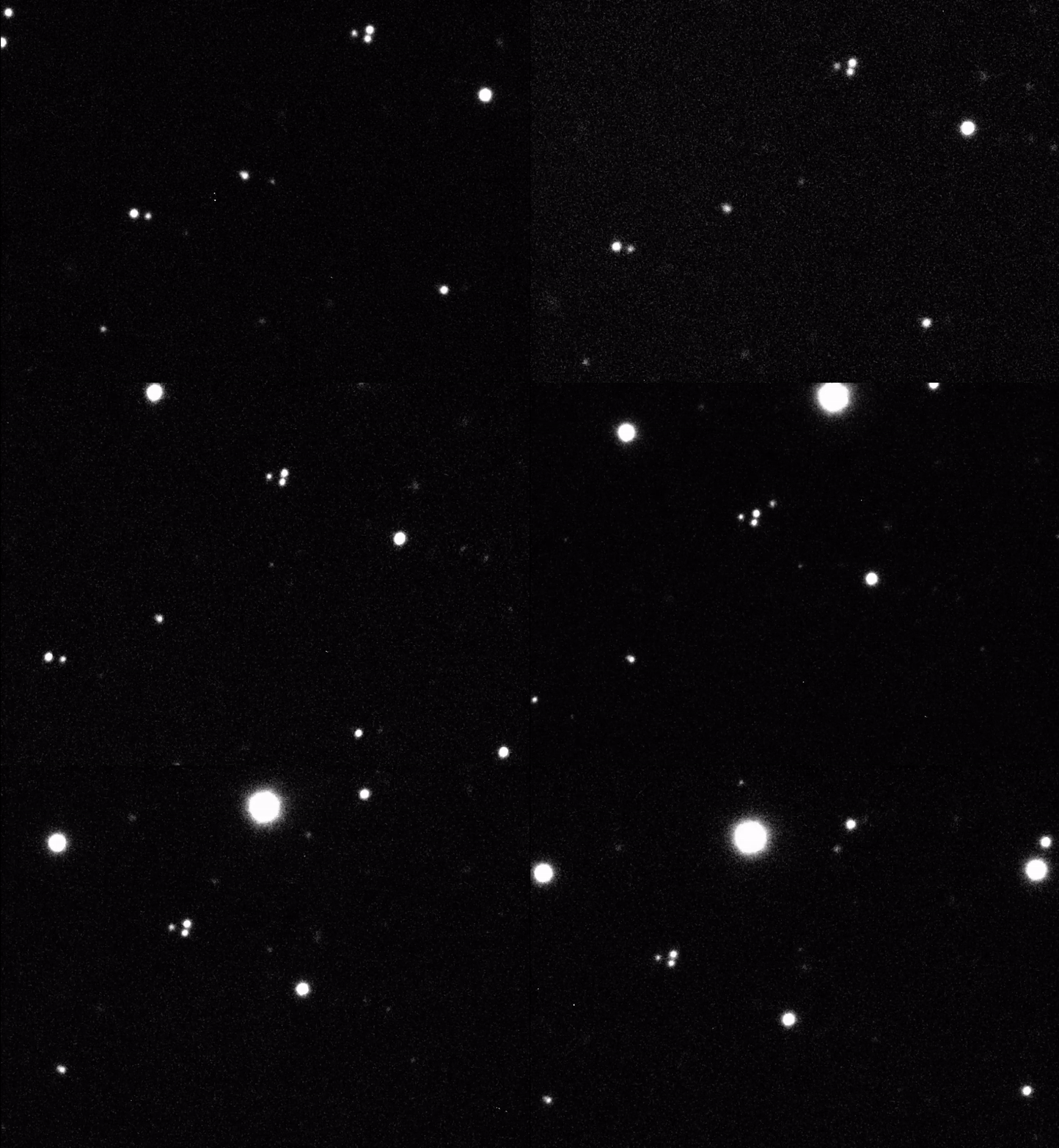
At the same time, we want to stress that whatever dissatisfaction we might feel about this object, we should truly be happy that the Planetary Defense system is working. There are plenty of reasons to be concerned about the threat from asteroids and comets, and yes, some scientists are not sleeping peacefully, but in this case the system worked.
“This is a sign that the system and the process we have is working. We found this object and people were able to make a bunch of measurements of it. It is not going to hit us in 2032, but if we had found that it was going to hit us, we would be well positioned to do something about it,” Rivkin explained.
“We want to continue the searches, we want to continue doing the work we're doing, but the public can know that we have set up a scheme and the scheme is working!”
The next close passage to Earth will be in 2028, which will provide even more constraints on this space rock that for a few weeks in 2025 had us worried, and for many months had us excited for a cosmic impact.
The preprint, which has not been peer reviewed, has been posted to arXiv.