Space and Physics
 PUBLISHED
 1
1


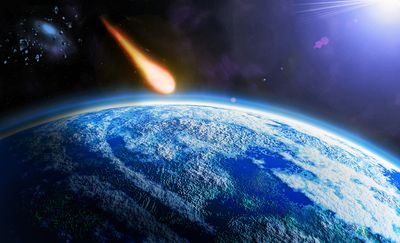


In a recent interview, NASA’s Acting Planetary Defense Officer Dr Kelly Fast told The Times that space agencies have no current way to stop an asteroid should it pose an imminent threat to Earth. Her colleague, Dr Nancy Chabot of Johns Hopkins University, added that it “Keeps me up at night” that there is no rapid response available should a threatening space rock be found. The conversations have gained plenty of media coverage, but how worried should we be?
Protecting the Earth from space rocks is often talked about as a priority because of the threat they pose to our survival as a species. However, while it is easy to go there when thinking about the threats from space rocks, that’s probably a distraction.
The Earth has not been hit by a dinosaur-killer-sized object for 65 million years. It also seems it was the impact, not the long time since, that was the anomaly. Although some previous extinctions have been attributed to impact events, that’s not the favored explanation for any of them. Since the late heavy bombardment finished, objects big enough to cause a global catastrophe haven’t hit the Earth often. The record from Mars, the Moon, or Mercury doesn’t suggest we’ve been particularly lucky either.
There’s another reason to think the sort of existential threat portrayed in Deep Impact or Don’t Look Up is unlikely. Those films portray a comet as the source of our doom, but the vast majority of impacts come from inner Solar System asteroids. If there was an object large enough to wipe out humanity on an Earth-crossing orbit, we’d probably have found it by now. We can’t rule out the prospect of a threatening comet in the next century, but the chances are probably literally less than a million to one.
The real danger: city-killers
What Chabot and Fast are worried about are so-called “city-killer” asteroids. The name is a clear indication of what these could do if they landed in the wrong spot. The chances of one splashing in the ocean are much higher, but objects need to be considerably larger before their tsunamis would pose a long-range threat.
We know of thousands of objects in the inner Solar System that are 100 meters (330 feet) or wider. None of these are on a collision course with Earth any time soon, but we also know we haven’t found them all. The case of asteroid 2024 YR4, only discovered in the last two years and still with a respectable chance to hit the Moon, is a sign that there are more to come.
Fast described her job as “Find asteroids before they find us”, which might turn into “Getting asteroids before they get us” should one prove threatening enough.
The DART mission proved that, with sufficient warning, we could move an asteroid off its collision course with us. Chabot’s insomnia relates to the fact that we have no similarly equipped spacecraft ready for launch should a threat be discovered. An even better option might be to stow one at L2 waiting for its moment.
If we had such a defense mission ready, we would still need to detect a threat months, and sometimes years, before a likely impact to counter the threat. That’s because blowing an asteroid up with nuclear weapons is not considered the best approach in most cases, much as Hollywood loves it. Instead, the goal would be to hit the threat hard enough to create a slight deflection, as DART did.
Slight changes of orbit add up over long periods, but if implemented too late, they might only make an asteroid hit a different part of the planet. That’s likely to prove even worse, because the nation that got hit might not take it lying down.
So even having a DART-type spacecraft ready would be no guarantee of safety. Nevertheless, there’s general agreement that it would greatly improve our chances compared to our current state, where an incipient threat would spark a scramble to build and launch a mission. “We could be prepared for this threat,” Chabot told The Times. “We could be in very good shape. We need to take those steps to do it.’
The DART mission took three years to build. Having done it once, the second time would be faster, and no doubt we could go faster still if the pressure was in, but no one knows how fast we could go. That’s why those involved in planetary defense want to start now.
Nevertheless, there’s still a strong case that asteroid impacts loom larger in our collective consciousness than they should, relative to other dangers.
Space rocks hit the atmosphere regularly, but the last one capable of causing serious damage was in 2013 at Chelyabinsk. We’re lucky no one was killed in that event, and the property damage was substantial, but even somewhere more populated probably would not have suffered enough to justify a multi-billion-dollar defense mission.
The last impact that might deserve the city-killer label was at Tunguska in 1908. It is thought objects of this size hit every two to three centuries. We lack the records to know how often such events have happened previously. Estimates of the frequency produce widely varied answers, but objects meeting the more common city-killer definition, at least 100 meters (330 feet) wide, probably hit the Earth less than once every 10,000 years.
Better knowledge is coming
It’s estimated there are 25,000 asteroids more than 140 meters (500 feet) wide on orbits that bring them into our vicinity and we’ve only found 40 percent of them. Some of these known objects were found randomly when they photobombed astronomers’ investigations of something more distant. Far more were found during systematic surveys, which repeatedly photograph patches of sky and look for anything that moves between shots.
The proportion of dangerous objects whose orbits we know is about to rise very fast. The Vera Rubin telescope combines the wide field of view of telescopes used in previous surveys with a capacity to spot faint objects comparable to some of the world’s largest instruments.
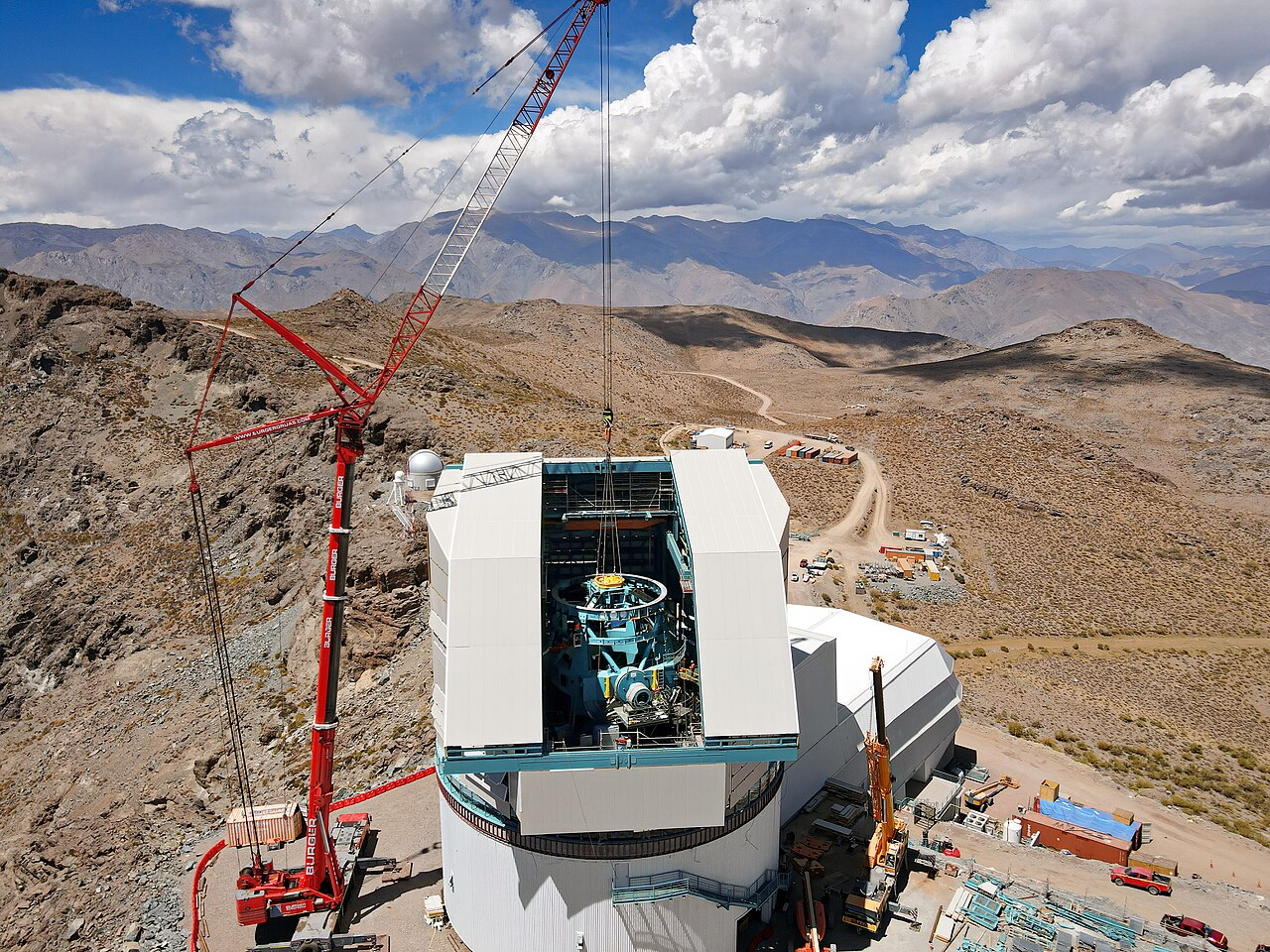
The brief trial run of the telescope last year found more than 2,000 objects, although most of these are much more distant.
Once detected, there are plenty of narrow-field telescopes that can track the orbits of anything that looks alarming. Although a few will remain ambiguous, most of the objects Vera Rubin finds will quickly be ruled safe for centuries to come, just as has happened for most of those we have already discovered once their orbits were plotted.
The Vera Rubin does have blind spots, however. In particular, it won’t be able to find objects with an orbit that keeps them mostly on the Sunward side of us so that they’re seldom visible at night. A solution to address this has been proposed, but it’s not clear how soon it will be implemented.
It would be a tragic irony if we were struck by a city-killer asteroid in the last few years before we identify 99 percent of threats. One thing that has prevented the creation of a defense mission in case we do identify the threat is that every space agency knows that if a city-killer hits, it probably won’t be one of their cities. Getting everyone to agree on joint funding for the benefit of all is no easier for space missions than for stopping climate change.
A billionaire who wants to be favorably remembered could do a lot worse than contribute the money to get DART II ready for launch, but even those who own their own launch vehicles haven’t been keen.
Moreover, compared to the near-certainty that several cities will suffer devastating earthquakes over the next decade, let alone the multiple catastrophic consequences of global warming, it’s far from clear that asteroids are the reason most of us should lose sleep.