Health and Medicine
 PUBLISHED
 2
2


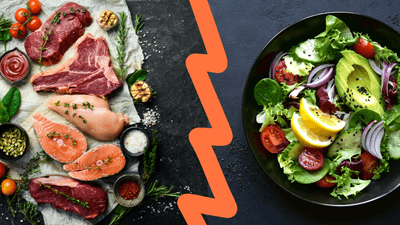


Of all the lifestyle factors that are known to influence health, diet is probably one of the most talked about – and argued about! Many believe that a more plant-based diet – whether vegetarian or vegan – is better for general health, but what about cancer risk specifically? The largest-ever study on this question has just been completed, and some of the results might just surprise you.
Five different diet types were included: meat eaters, poultry eaters (who did not consume red or processed meat), pescatarians, vegetarians, and vegans. Previous studies have lacked sufficient representation of vegetarians, so these researchers pooled data from over 1.8 million people from across three continents.
Among each diet type, the risks of 17 different cancers were compared.
For some, no difference was found between vegetarians and meat eaters, including: colorectal cancer, stomach cancer, lung cancer (in people who had never smoked), bladder cancer, and leukemia.
Vegetarians were found to be at decreased risk of five different cancers compared with meat eaters:
- Pancreatic cancer: 21 percent lower risk
- Breast cancer: 9 percent lower risk
- Prostate cancer: 12 percent lower risk
- Kidney cancer: 28 percent lower risk
- Multiple myeloma: 31 percent lower risk
However, vegetarians were also found to have almost double the risk of squamous cell carcinoma of the esophagus compared with meat eaters.
The result that may be most surprising was that the vegan population was found to be at a significantly greater risk of colorectal cancer compared with meat eaters. However, the authors did note that further studies with a larger vegan cohort are needed to fully confirm the results.
“Among the 72,000 vegetarians and vegans included in our study, the numbers of cases for some cancers were small, which limits the certainty of some findings. Moreover, nutrient intakes and overall diet quality vary substantially within and between vegetarian populations,” said first author Yashvee Dunneram in a statement.
“Our next challenge is to collect more data on vegan diets and more data from other parts of the world.”
Among the other findings, pescatarians had a lower risk of colorectal, breast, and kidney cancer, while poultry eaters were at decreased risk of prostate cancer.
“To increase your overall protection from cancer, our advice is to build meals around wholegrains, pulses, fruit and vegetables, and avoid processed meat and limit red meat,” said Dr Helen Croker from World Cancer Research Fund International, which provided financial backing for the study.
“We funded this research because people deserve evidence they can trust as they consider eating less meat and this study provides the most comprehensive evidence yet on vegetarian and non-meat diets and cancer risk.”
Other experts who were not directly involved in the study have also been weighing in on the results.
“The findings align with established guidance which recommends limiting intakes of red and processed meat, and including more wholegrains, fruit and vegetables in the diet. It also suggests that more work is needed to understand the potential impact of limited dietary intakes on risks of different cancers,” said Dr Hilda Mulrooney of London Metropolitan University to the Science Media Centre.
“One notable finding was that cancer risk appeared to increase in line with the amount and type of meat consumed,” commented Dr Nerys Astbury, who is a colleague of some of the study authors from the University of Oxford but was not a member of the team.
It’s now widely accepted, for example, that eating more processed meat is linked to a higher risk of some cancers, but Dr Astbury pointed out that the study found those who ate only poultry were at a lower risk of cancer than those who ate all meats, and those who ate only fish decreased their risk even more compared with the poultry eaters.
Switching completely from a meat-based diet to a fully plant-based diet may not be feasible for a lot of people, but decreasing red meat consumption in favor of poultry and fish may be more achievable and could still have tangible benefits, if these results are to be believed.
But what about that surprising finding about vegan diets and colorectal cancer risk? Many would assume that a vegan diet – which would typically be more fiber-rich than a meat-heavy diet – would automatically offer some protection against this particular cancer, so what gives?
“The higher risk of oesophageal squamous cell carcinoma in vegetarians and bowel cancer in vegans may relate to lower intakes of certain nutrients more abundant in animal foods,” explained study principal investigator Aurora Perez Cornago. “Additional research is needed to understand what is driving the differences in cancer risk found in our study.”
As is so often the case with matters of health and lifestyle, the reality is more complex than first appearances might suggest.
Dr Astbury had another warning on that front: “An important point to consider is that the data used in this study come from groups of people who were recruited at least 10 years ago – and in some cases as far back as the 1980s. Eating habits change over time.”
While the vegans and vegetarians of yesteryear would have had few dietary options beyond whole foods, nowadays there’s been an influx of processed and ultra-processed meat and dairy alternatives hitting the market.
“More research is needed to understand whether modern vegetarian and vegan diets – which often include ultra-processed alternatives – have the same health effects as the more traditional, whole-food versions of these diets,” concluded Dr Astbury.
The study is published in the British Journal of Cancer.