Health and Medicine
 PUBLISHED
 2
2


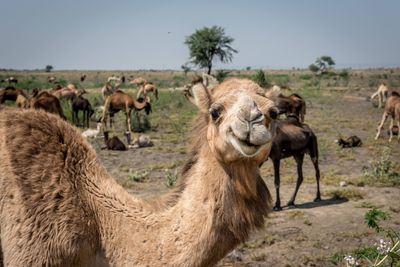


When it comes to our favorite milky products, it’s a cow world. Across the globe, bovine milk is still extremely popular with many people. But could there soon be an alternative product on the market? Camel milk (stay with me here) may actually be more beneficial for humans than dairy milk, as it is hypoallergenic and could potentially protect the gut from harmful enzymes, helping to promote healthier digestion.
What’s wrong with good old-fashioned cow milk, I hear you potentially ask? Cow milk is often perceived as an excellent source of protein, due to its high essential amino acid content and high digestibility. This is good, but the benefits are not experienced by everyone. For some people, cow milk products can cause health problems due to allergies or lactose intolerance. Cow milk is also high in saturated fat, which can contribute to heart disease, type 2 diabetes, and possibly even Alzheimer’s.
In contrast, new research from Edith Cowen University (ECU) has found that camel milk contains more naturally occurring bioactive peptides compared to bovine milk.
“This is a good thing. We now know that camel milk has the potential to be hypoallergenic compared to cow’s milk, but also that it has higher potential to yield bioactive peptides which can have antimicrobial properties and anti-hypertensive properties,” lead author Manujaya Jayamanna Mohittige explained in a statement.
“These bioactive peptides can selectively inhibit certain pathogens, and by doing so, create a healthy gut environment and also has the potential to decrease the risk of developing cardiovascular disease in future.”
But before we throw all our cow milk out of the window and banish bovine beasts from the land, there’s still some work to do. Chiefly, as Mohittige notes, the potency of the bioactive peptides in camel’s milk still needs further testing.
Still, the current research confirms past findings indicating that camel milk does not contain major milk allergen β-lactoglobulin (β-Lg), which is a viable alternative for people with a β-Lg allergy. At the same time, the literature seems to indicate that camel milk is lower in lactose levels compared to cow milk.
Previous research has shown that cow milk typically contains between 85 and 87 percent water, with 3.8 to 5.5 percent fat. It also contains 2.9 to 3.5 percent protein and 4.6 percent lactose.
In contrast, camel milk is 87 to 90 percent water, and its protein content varies from 2.15 to 4.9 percent, while fat content ranges from 1.2 to 4.5 percent. The lactose levels are also between 3.5 and 4.5 percent.
Cow’s milk currently accounts for about 81 percent of the world’s milk production, but there are signs that this is changing. At present, camel milk only accounts for around 0.4 percent of the current production across the world, sitting at fifth place behind buffaloes, goats, and sheep.
However, as Mohittige says, “[c]amel milk is gaining global attention, in part because of environmental conditions. Arid or semi-arid areas can be challenging for traditional cattle farming, but perfect for camels”.
Looking at camel dairies in operation in Australia, product volumes are still low. Compared to cows' hefty 28 liters of milk produced each day; camels can only squeeze out around 5 liters of milk.
More milk and dairy-related stories, including the wonders of whale cheese, horse milk ice cream, polar bear milk's flavor, and the dangers of drinking raw milk, can be slurped up here.
The paper is published in Food Chemistry.