Health and Medicine
 PUBLISHED




What you'll discover in this article
- The ongoing Ebola outbreak in the DRC grew at an unprecedented rate during its first 100 days, accumulating several times more cases than any past outbreak over the same period.
- Since August, there has been a modest reduction in the number of new cases, leading some DRC health officials to suggest the outbreak has now passed its peak. Health organizations have since pushed back, saying it's too early to call.
- Speaking to IFLScience, Dr Paul Hunter said: "From this state there are three possibilities: either case numbers start increasing again, they continue at about the same level, or they start declining. I couldn’t guess which of those outcomes is most likely."
The Democratic Republic of the Congo (DRC) is in the midst of its 17th and largest Ebola outbreak, which is also the largest and deadliest outbreak globally of the Bundibugyo variant of the disease and the second-largest Ebola outbreak of any kind of all time.
As detailed in a new report from the US Centers for Disease Control and Prevention, the rate of transmission is unprecedented compared with prior Ebola epidemics, reaching nearly 5,500 cases just 100 days after the outbreak was first declared on May 15. No previous Ebola outbreak since the disease’s discovery in 1976 has reached even 800 cases during its first 100 days.
Earlier this month, health officials in the DRC stated the situation was starting to improve and had reached peak transmission, with the number of new cases slowing for the first time since the outbreak began. However, the UN and World Health Organization (WHO) have since cautioned that it is too early to be certain if this trend will continue.
As of the latest situation report from the WHO, there have been 7,258 confirmed cases in the country and 3,510 deaths. The report also notes that the outbreak recently expanded to a seventh province, Sud-Ubangi, which borders the Central African Republic and the Republic of the Congo.
The overall rate of transmission nationally remains high, with 1,674 new confirmed cases in the 21 days before the most recent report at time of writing. This represents a modest decline of 6.1 percent over the preceding 21 days.
Either case numbers start increasing again, they continue at about the same level, or they start declining. I couldn’t guess which of those outcomes is most likely.
Dr Paul Hunter
Citing similar figures on Saturday, September 12, Congolese Health Minister Samuel Roger Kamba was cautiously optimistic that the epidemic had reached a turning point.
“We are fighting a very dangerous virus that is killing many of our people. Today, we can say that the outbreak is under control,” he reportedly said. “At one point, we were recording about 120 cases per day; today, we’re seeing about 80 per day. So the number of new cases is decreasing every day.”
Speaking at a UN press conference in Geneva on September 15, WHO Special Ebola Coordinator Julien Harneis acknowledged some progress but emphasized that the outbreak in the DRC remained deadly and "massive."
Despite new cases declining overall and particularly in the outbreak epicenter of Ituri province, other regions have seen an increase in transmission, he said. This is most notable in Nord-Kivu, which is experiencing a "sharp and sustained" increase according to the most recent WHO situation report.
In addition, despite a national drop in deaths of 14.7 percent compared with the previous 21 days, deaths in Nord-Kivu increased from 213 to 299 over the same period. That's a substantial rise of 40.4 percent. The province now accounts for around one-third of new Ebola cases and one-third of new deaths from the disease nationally.
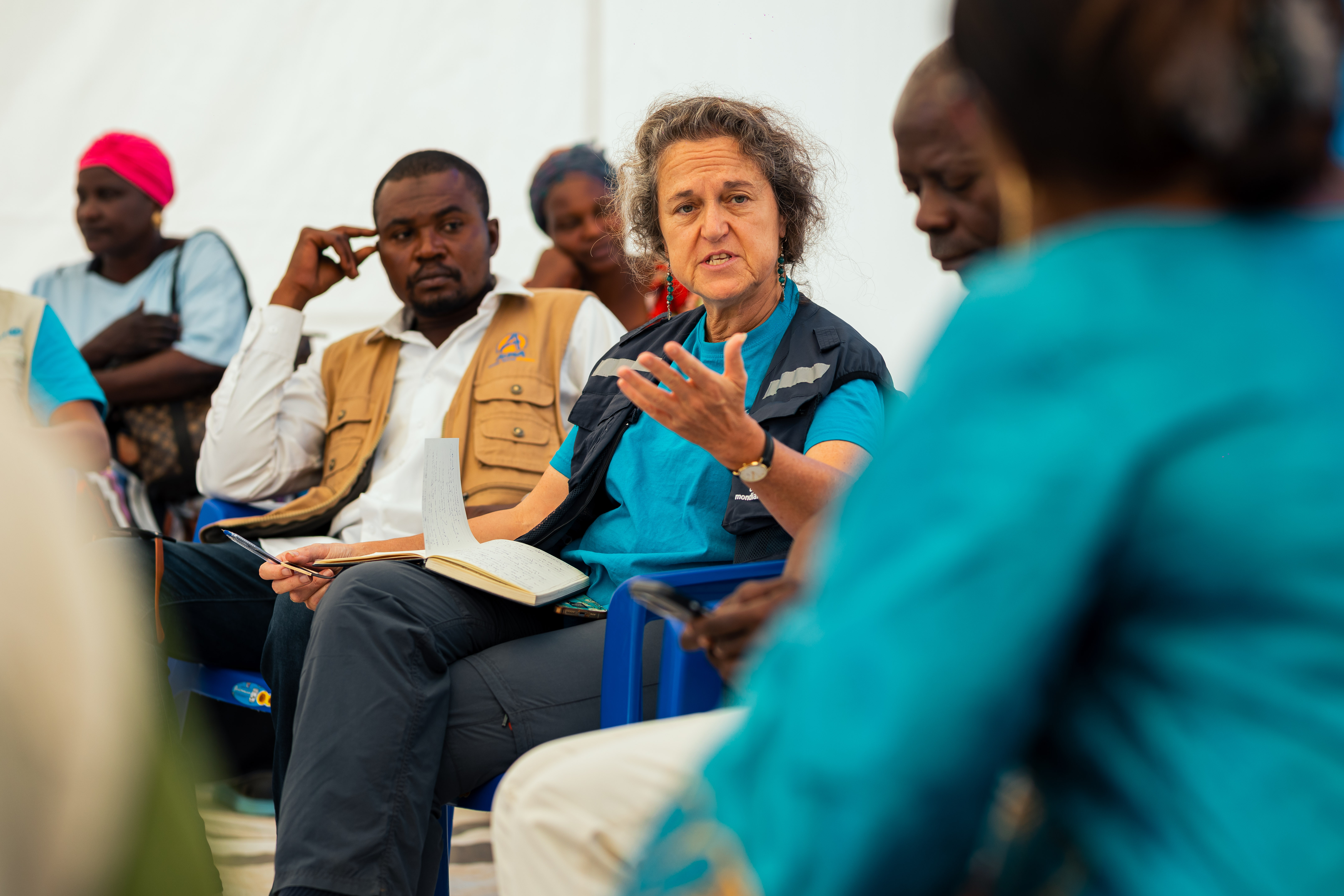
Also speaking at the press conference, Dr Olivier le Polain at the WHO commented that the epidemic remained "intense and geographically spread out," with the situation across the country continuing to be "very mixed."
He said it would be appropriate to consider different areas not as a single challenge but as separate epidemics, and he cautioned that such situations may show early signs of improvement only to scale up again at a later date. Polain projected that it would still take "many months" to bring the situation under control.
Africa CDC director-general Jean Kaseya said the data did not yet confirm that the outbreak had peaked or that transmission was consistently under control.
"We are still committed to support the government, and I want to congratulate for the progress made so far. We saw a decrease in some areas, but we say the situation is still serious," said Kaseya according to Reuters.
"There is no evidence that case numbers are declining"
Speaking to IFLScience, Dr Paul Hunter at the University of East Anglia in the UK echoed this sentiment.
"There is no evidence that case numbers are declining," he said. "From this state there are three possibilities: either case numbers start increasing again, they continue at about the same level, or they start declining. I couldn’t guess which of those outcomes is most likely."
"The concern is that if you say things have peaked when they haven’t, two things happen. The first is that control efforts start becoming less urgent, and the second is, if cases start increasing again (possibly because control measures have been relaxed), you lose credibility with the public."
"Many years ago I was leading the management of a very large food poisoning outbreak in the North West [of England], and one of my colleagues told the newspapers that the outbreak was now under control as case numbers were falling. The next day new cases doubled."
According to the WHO situation report, the DRC government recently adopted a revised plan prioritizing surveillance and contact tracing to tackle the outbreak. It is estimated that this will cost US$1.3 billion to implement.
On August 17, 70,000 doses of Ervebo vaccine were delivered to the country, with 50,000 doses reserved for healthcare workers and 20,000 to be used in a phase three clinical trial of the effectiveness of the vaccine against Bundibugyo (Ervebo is proven to be effective against the more common Zaire strain of the virus, but its effectiveness against Bundibugyo remains unknown).
Initial results from a trial of a Bundibugyo-specific vaccine using Oxford's ChAdOx1 vaccine platform are expected by the end of the month.