


 Health and Medicine
 PUBLISHED


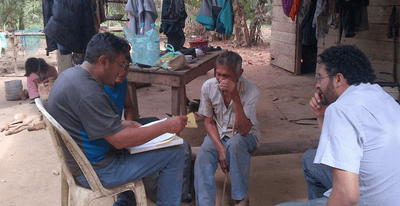


Around 11 percent of people aged 65 and older in the US live with some form of dementia. Meanwhile, that figure may be as low as 1 to 2 percent among some Indigenous communities in the Bolivian Amazon. It’s a startling comparison, but the raw numbers don't tell the whole story.
In a new study, researchers from the US gathered new data on the cognitive health of two Indigenous groups in the Bolivian Amazon, the Tsimané and the Mosetén, tracking them over several years.
The groups have previously drawn scientific attention for their strikingly low dementia rates and incredibly healthy hearts, but this longitudinal approach revealed another side to the story.
The team followed 730 adults from Tsimané and Mosetén communities with a mean age of 67.3 years. Over five years, 22 new dementia cases were identified, an overall incidence of 7.4 cases per 1,000 person-years, which is lower than rates in North American and northern European populations.
However, they also found a significant difference in survival rates.
Among the Tsimané and Mosetén, people with dementia had a six-fold higher risk of death than those with normal cognition. That’s a fairly stark difference to US populations, where survival time after dementia diagnosis is around two to three times shorter on average.
In other words, the Tsimané and Mosetén do have lower rates of new dementia cases, but the very low prevalence is partly explained by the fact that people with dementia in these communities appear to die very quickly.
The reason behind the shortened life expectancy is not clear yet, but the researchers suspect it’s a reflection of their constantly on-the-go lifestyle in the harsh jungle.
“When you have to grow, gather or hunt nearly every calorie you eat, dementia can rapidly become life-threatening because it takes away the independence that daily survival requires,” Ben Trumble, a professor in Arizona State University's School of Human Evolution and Social Change and co-author of the study, said in a statement.
Further clues may be found in their blood. Preliminary blood analyses from Tsimané and Mosetén people with dementia found certain biomarkers linked to neurodegeneration, such as elevated levels of neurofilament light chain proteins.
Unexpectedly, though, the samples showed no sign of the abnormal proteins typically found in Alzheimer's disease, such as amyloid or phosphorylated tau.
This hints that dementia among these Indigenous communities may be related to the breakdown of blood vessels in the nervous system, rather than to the buildup of amyloid and tau that characterizes Alzheimer's.
“In most Tsimané with cognitive impairment or dementia, the pattern of atrophy in the brain is not typical of Alzheimer’s disease. Rather, there are changes indicative of vascular contributions to cognitive impairment and dementia,” explained Margaret Gatz, a professor of psychology and gerontology at the University of Southern California and lead author of the study.
The team also identified that the APOE4 gene variant, a well-known genetic risk factor for Alzheimer’s found in many other populations, was associated with dementia in the study.
However, this alone can not explain how dementia manifests in the Tsimané and the Mosetén communities, the researcher explained.
Instead, the team says they hope to follow up with another research project that looks at the complex interplay between various different factors associated with dementia.
“Our next step is to disentangle the relative contributions of genetics, lifestyle, diet, social engagement, physical activity and immune exposures to dementia risk,” Trumble said.
“If we can identify the factors protecting people in the Bolivian Amazon and understand the biological mechanisms behind them, we may be able to turn those insights into new ways of preventing dementia here at home,” he added.
The study is published in Alzheimer's & Dementia: The Journal of the Alzheimer's Association.




 2
2