Space and Physics
 PUBLISHED
 1
1


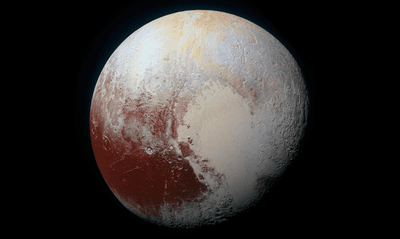


Monday, August 24, 2026 marks the 20th anniversary of the International Astronomical Union (IAU) vote to adopt a formal definition of a planet. Two decades later, the event is remembered almost exclusively for the decision to classify Pluto as a “dwarf planet”, along with Ceres and Eris, and still arouses controversy.
Recently memes and online petitions have been joined by state legislatures and NASA administrators demanding change.
Nevertheless, there are few signs that astronomers have changed their minds, and indeed heavy-handed external pressure may cause some to solidify their positions.
To know why Pluto’s reinstatement as a planet is unlikely, you need to understand why the decision was made in the first place.
How Pluto got demoted
The discovery of increasing numbers of objects in the outer Solar System of similar size to Pluto forced astronomers to wrestle with the definition of a planet.
The IAU is responsible for defining fundamental astronomical and physical constants, naming new astronomical bodies such as asteroids, and prominent features on existing ones, like Martian craters. If anyone was going to decide Pluto’s status, it had to be them.
The IAU could have shunted the matter off to a committee, but realized on such a topic it was best to have the broadest expertise, and put the matter to their General Assembly in Prague.
The meeting voted to approve a definition of planets that stated:
- The object must be in orbit around the Sun.
- It must have sufficient mass for its self-gravity to overcome rigid body forces so that it assumes a hydrostatic equilibrium (nearly round) shape.
- It must have cleared the neighborhood around its orbit.
Pluto fails the third criterion, partly for lack of mass, but also because it’s harder to clear such a distant neighborhood than territory closer to the Sun.
To make things absolutely clear, the same meeting passed an additional motion:
“The IAU further resolves: Pluto is a 'dwarf planet' by the above definition and is recognized as the prototype of a new category of Trans-Neptunian Objects.”
If the IAU thought that people who loved Pluto would be pleased for it to be considered the “prototype of a new category”, they were sadly mistaken.
The vote in favor was overwhelming, although opponents have continued to note the matter was dealt with on the last day of the conference, after some astronomers had gone home. The fact it was held outside the United States is considered somehow undemocratic by those who think American opinions should count for more.
Nevertheless, if those not present overwhelmingly disagreed with the decision they have had 20 years of chances to put the matter up for reconsideration. It hasn’t happened.
Why Pluto is no longer considered a planet
Maps of the Solar System can’t include every asteroid or Kuiper Belt Object, nor could all their names be taught in school. The universe may draw no sharp line between a planet and smaller objects, but humanity needs categories.
Having decided in the early 19th century that Ceres didn’t qualify as a planet, astronomers agreed the pool of planets had to be limited.
In 2006, none of the new discoveries were as large as Pluto, so deciding a planet was any object that directly orbits the Sun more than 2,350 kilometers (1,460 miles) in diameter would have created a temporary fix.
However, we know there are so many objects lurking in the Kuiper Belt and beyond that everyone expects examples larger than Pluto will be found soon. Indeed, Eris is more massive than Pluto, and was initially estimated to be slightly larger as well, bringing the issue to a head.
The fact that remeasurements brought Eris’s diameter down was not a long-term solution, which is why Professor Michael Brown, who co-discovered Eris, uses the social media handle @plutokiller.
Something had to be done, but that doesn’t mean dumping Pluto was the only option.
What were/are the alternatives?
Many other definitions of planets were proposed at the meeting, but most of these would have also left Pluto out in the cold, as it were.
One way to have saved Pluto’s status was to rely on history, rather than physics. Pluto could be grandfathered in, and we could have a stated list of planets, along with any future discoveries that passed a particular threshold.
That would have mollified the Pluto fans, but would look increasingly silly into the future, particularly when extrapolated to other star systems. Are we really going to say that all objects in the galaxy have to exceed certain thresholds to be considered a planet, except one? Since the reason for its inclusion would be that initial observations overestimated Pluto’s size, we’d be rewarding a mistake and freezing it for eternity.
It’s even less likely astronomers will want to revert to a historical definition now, as the period when Pluto was considered a planet fades in the rearview mirror.
One thing astronomers could do to make the Plutonists happy would be to revert to an original version of the definition, which left out the bit about clearing its orbit. That would not only save Pluto and vault Ceres and Eris to planetary status, it would add Charon as well, making Pluto-Charon officially a double planetary system.
In that case, any object with enough gravity to make itself approximately spherical would count if it directly orbited the Sun, rather than orbiting a planet. Unfortunately, even in 2006 there were a dozen objects out in the distant Solar System that may or may not have been spherical, depending on their composition and mass. Today there are even more.
This would leave a large and growing pool of possible planets, which could make things rather awkward. Nevertheless, that’s a price some astronomers might be willing to pay to make people happy.
However, if you want to get a solution like that approved, passing motions that Pluto should be included not on merit, but as a sort of nepo-baby, privileged by its place of discovery, is unlikely to be effective.
Equally, having someone who is demolishing scientific projects and apparently lacking the understanding required for his position lead the charge isn’t the way to win friends and influence people.
If Pluto is to be restored, it needs better advocates and a definition of planet that includes it, but still makes sense.