Nature
 PUBLISHED


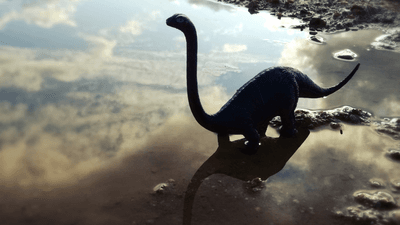


A series of “dinosaur death pits” presented something of a palaeontological mystery for scientists around 15 years ago. Inside these pits were the remains of at least 18 theropod dinosaurs seemingly stacked on top of one another.
These pits were deep, around 1 to 2 meters (3.5 to 6.5 feet), and they didn’t develop over time. Based on their formation, it appears they represent highly localized areas of liquefaction caused by something trampling the sediment. That’s right: These mass burial pits were, in fact, the footprints of an even bigger dinosaur.
A likely candidate is a sauropod, which represented the largest terrestrial animals the planet has ever seen – a title currently held by Patagotitan mayorum. The behemoth stretched 37 meters (121 feet) in length and weighed an estimated 70 tons, or 70,000 kilograms (154,323 pounds) – the equivalent of 10 African elephants. You can imagine, then, why these animals might leave quite an impression on the landscape.
We recently did a deep dive on how it’s possible for footprints to fossilize. Footprints are a kind of trace fossil – other examples of which include scratches, Tyrannosaurus rex swim strokes, and even butt drags. Trace fossils fall under a field of science known as ichnology, but it’s rare that these depressions become a mass burial site.
That was the fate of numerous small vertebrates, however. Among them were a number of a small non-avian theropod dinosaur known as Limusaurus inextricabilis. They alongside Guanlong wucaii, a T. rex ancestor, plopped into a muddy sauropod print one by one. Bigger dinosaurs might also have fallen in, but they had the oomph to get back out.
"It's very likely that other kinds of animals would have entered these pits but were able to get out," said geologist David Eberth of Alberta's Royal Tyrrell Museum to National Geographic. "We picture quadrupeds being able to get out of these pits because they essentially had a natural four-wheel-drive to pull themselves out."
As further dinosaurs fell in and died, they came to rest on top of the other dinosaurs that had died before them. That’s why we see this unusual vertical stacking of their remains.
Though some body parts fell away, possibly due to opportunistic scavengers, the dinosaurs remained largely intact. Falling into a giant muddy footprint isn’t a bad way to go if you want to become a fossil. It provides the rapid burial in sediment that’s famous for producing incredibly well-preserved dinosaurs.
A fine example is the recent study on mummified Edmontosaurus retrieved from Wyoming’s “mummy zone”. It revealed they had soft tissue details preserved thanks to something called clay templating, which was made possible because the dead dinosaurs were quickly submerged by floods in the days after their death.
The small dinosaurs within the sauropod footprints were also rapidly buried. The region today is the Gobi desert, but when the footprints were left behind 160 million years ago it would’ve been marshy and wet.
As for which sauropod was stomping around and making these death traps, Mamenchisaurus is a strong candidate. While not as big as Patagotitan, they boast the longest neck of any animal discovered at 15.1 meters (49.5 feet) long. Great for eating plants, less so for spotting all the tiny dinos you accidentally drowned…