Nature
 PUBLISHED
 7
7


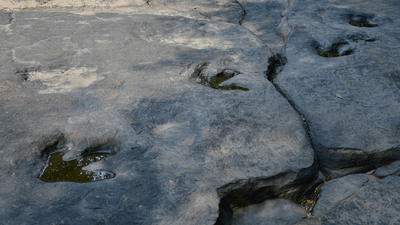


Dinosaur fossil footprints have yielded remarkable insights into these extinct animals’ behaviors, revealing evidence of everything from running speed to migration and even swimming. They’re a bit odd as fossils go, representing the memory of something rather than containing a bit of an actual animal. So, how is it that dinosaur footprints fossilize, enduring for millions of years?
Footsteps fall under an area of palaeontology known as ichnology, which looks at fossilized traces like trackways, butt drags, and lek scratches. Such fossils can reveal a lot about dinosaur behavior if you know how to read them, and the process that preserves their prints isn’t unique to dinosaurs.
“We think of footprints as things that don't last very long, but as someone even looking for dinosaurs walking around the desert, I can find footprints from people who passed the same way years before,” said science writer and palaeontologist Riley Black to IFLScience in an episode of The Big Questions about dinosaur sex. “They might not always be the highest resolution, but in the right situations, in the right circumstances, where you have a wet sediment that's able to take the shape of the foot that becomes dried out, then covered over, you're basically recreating a mold and cast naturally.”
Imagine yourself walking along a riverbank. The water has recently receded, leaving behind a muddy bit at the river’s edge. You look behind you and see a trail of your footprints. Probably not going to be there tomorrow, right?
But what if that patch stays dry long enough for the Sun to come out and dry it up. That mud could then hold its shape, and when it rains or the river’s levels rise again, it washes new sediment into the print you have made.
You basically wind up with a mold and a cast, much like you might make with plaster of Paris.
Riley Black
That fresh sediment could also get baked by the Sun and harden. Leap forward a few million years and through the process of being pressed, becoming rock, and getting raised, some keen-eyed citizen scientist finds the fossilized ancient footprint and its counterpart.
“You basically wind up with a mold and a cast, much like you might make with plaster of Paris,” said Black. “It's more or less the same concept."
“That's how so many of these traces become preserved. So, it's really remarkable that they can be preserved at all, that all these moments where these things would otherwise have eroded away and would just disappear most of the time, [that instead] that’s what happened.”
We’ve been lucky to uncover countless dinosaur footprints over centuries of exploration, some of which represent the largest dinosaur trackways known to science. Remarkable to think, then, that they represent such a miniscule snapshot of a period in geological time, as most animals that ever lived on this planet will leave nothing behind.
“It's the same thing as fossil bones,” said Black. “We think of bones and things as sturdy, but they still require relatively rapid burial. They still need to be protected within the sediment to be preserved, and the same principles are at play with ichnology as well.”
So, if you want to leave some footprints behind, best get stomping along some riverbeds. And if you want to become a fossil? Well, that’s going to require a bit more planning.