Nature
 PUBLISHED
 1
1


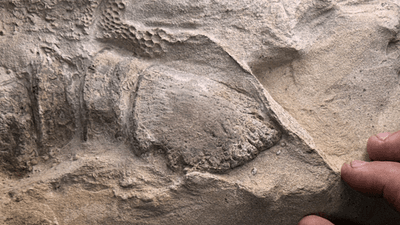


For the first time ever, we’ve been able to prove that some dinosaurs had hooves, thanks to two remarkably well-preserved mummified dinosaurs retrieved from Wyoming’s Badlands. The specimens are the duck-billed dinosaurs Edmontosaurus annectens that, thanks to a "fluke preservation event", are near-perfect 66 million years later.
Known as “clay templating,” that process essentially encased the dinosaurs shortly after burial with a mask of clay no thicker than 1/100th of an inch, or about 0.3 millimeters. “This is a mask, a template, a clay layer so thin you could blow it away,” said senior author Paul Sereno, PhD, Professor of Organismal Biology and Anatomy at UChicago in a statement. “It was attracted to the outside of the carcass in a fluke event of preservation.”
Using hospital and micro-CT scans, thin sections, X-ray spectroscopy, clay analyses, and examination of the discovery site, a team of scientists were able to figure out how that “fluke event” played out. After death, the dinosaurs were briefly baked under the Sun before a flash flood submerged their carcasses.
A thin biofilm then covered their fleshy surface and electrostatically pulled clay out of the wet sediment, forming a wafer-thin layer that would preserve them in three dimensions. The result is two unprecedented specimens that have already provided a glut of dinosaur firsts.
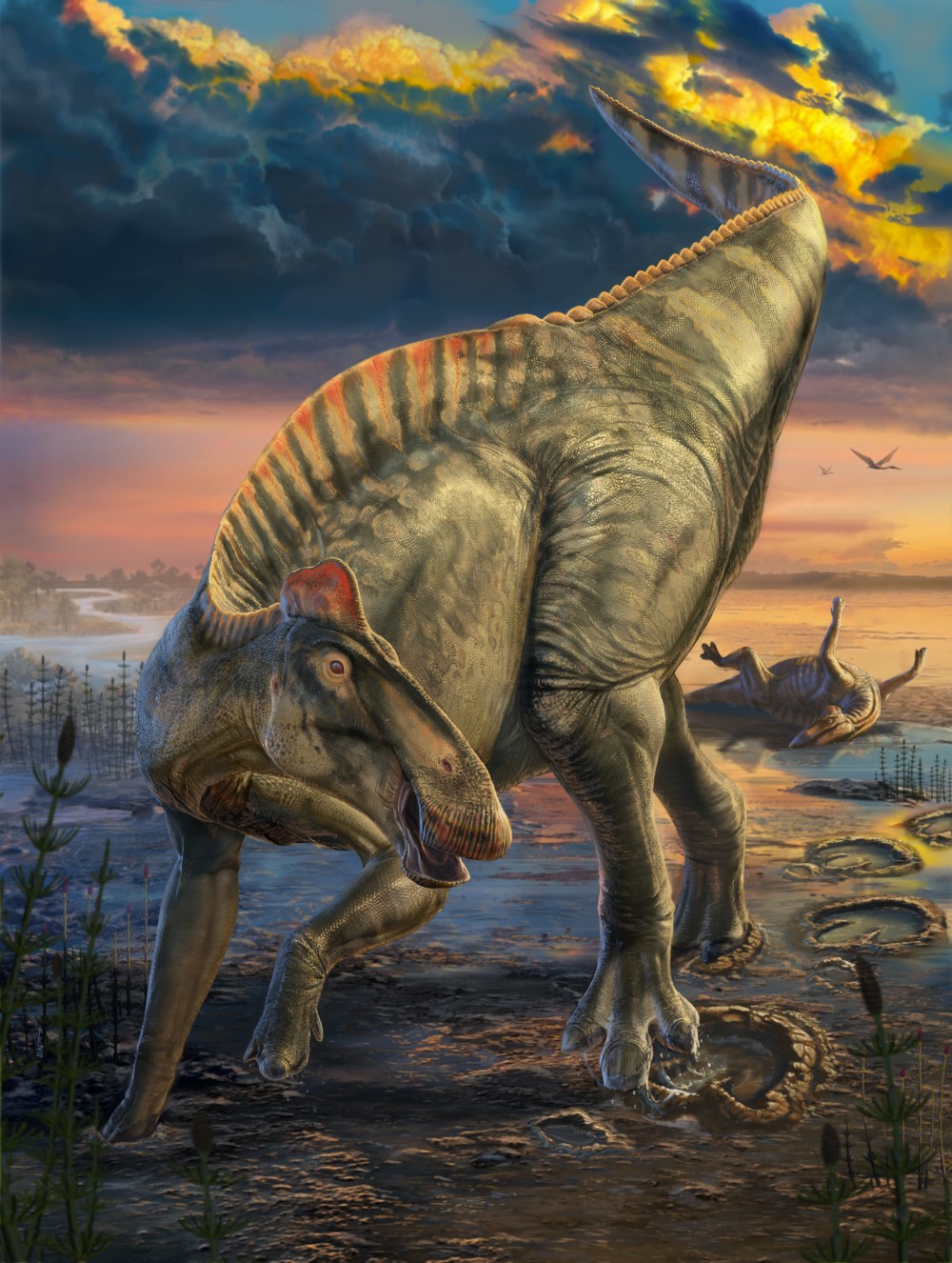
By combining the two mummies, a team of scientists have been able to reconstruct a complete, fleshy profile for Edmontosaurus annectens for the first time. It's a big step towards truly understanding what they looked like, but an even more staggering discovery was found on the hindfeet of the larger of the two mummies.
Yes, for the first time ever we’ve found dinosaurs with hooves. It seems these Edmontosaurus had three hind toes that were each capped with a hoof not too dissimilar from those of a horse.
“There are so many amazing ‘firsts’ preserved in these duck-billed mummies,” said Sereno. “The earliest hooves documented in a land vertebrate, the first confirmed hooved reptile, and the first hooved four-legged animal with different forelimb and hindlimb posture.”
The discovery marks a big day for palaeontology as well as fans of clippety-cloppety animals. Plus, if you’re looking for a unique costume idea this fall, I’m thinking of one that calls for a heavy heel.
“We’ve never been able to look at the appearance of a large prehistoric reptile like this – and just in time for Halloween,” said Sereno. “It’s the first time we’ve had a complete, fleshed-out view of a large dinosaur that we can really feel confident about. The Badlands in Wyoming where the finds were made is a unique ‘mummy zone’ that has more surprises in store from fossils collected over years of visits by teams of university undergrads.”
More surprises? Count me in.
The study is published in the journal Science.