Space and Physics
 PUBLISHED
 1
1


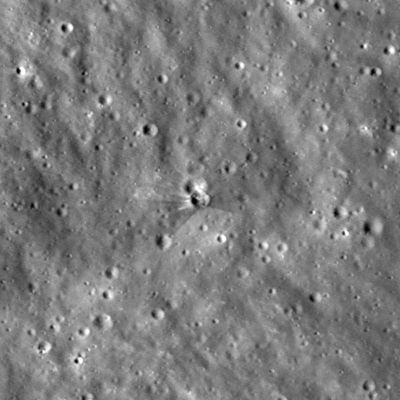


Early this month, on August 5, the upper stage of a SpaceX rocket impacted the surface of the Moon, just at the edge of the visible face of our natural satellite. NASA’s Lunar Reconnaissance Orbiter (LRO) was set on the case to find the crater and work out its properties. And researchers got pretty close with their predictions.
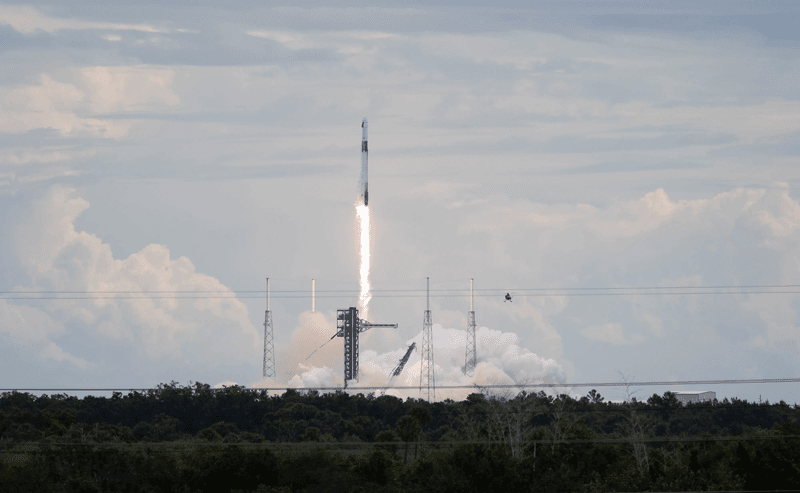
The piece of space junk was the second ever uncontrolled rocket to hit the Moon. It was traveling at around 8,700 kilometers (5,400 miles) per hour before the crash that ended its cosmic journey. It was left over from the launch of Blue Ghost; this was a private lunar mission from Firefly Aerospace that successfully landed on the Moon on March 2, 2025.
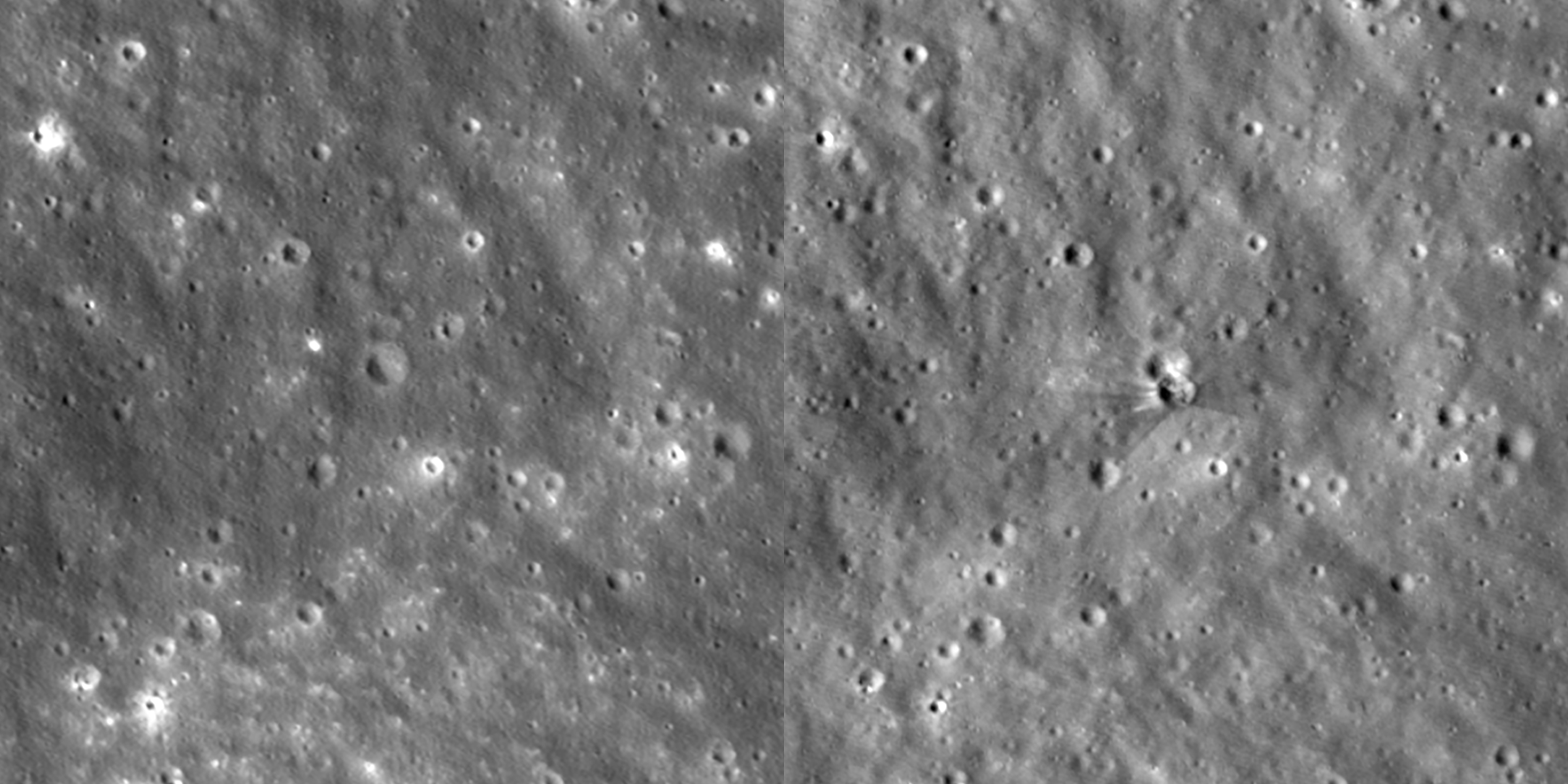
The rocket chunk was 13.8 meters (45 feet) long and weighed 4,000 kilograms (8,000 pounds), and was estimated to leave behind a crater of 20 meters (65 feet) in diameter. It was first spotted by the Korea AeroSpace Administration's (KASA) mission Danuri and then LRO took observations between August 11 and 12, just as the Moon was ready to eclipse the Sun.
The spacecraft captured the crater with the light at different angles, which allowed the researchers to estimate its size and depth. It is 18 meters (60 feet) across and 3 meters (10 feet) deep.
The crater also produced streaks of different colored material. The darker regolith (lunar soil) is the top layer of about half a meter (1.5 feet). This is weathered material affected by the light, micrometeorites, and radiation of space. The brighter material comes from deeper in the crater.
The crater looks peculiarly like a figure of eight. This might remind people of the previous piece of space junk that hit the Moon.
The booster from the Chang'e 5-T1 lunar mission left behind an unusually shaped double crater. China denied any involvement, but you can’t argue with celestial mechanics.
In this case though, one of the craters was already there, and the rocket just added another one.
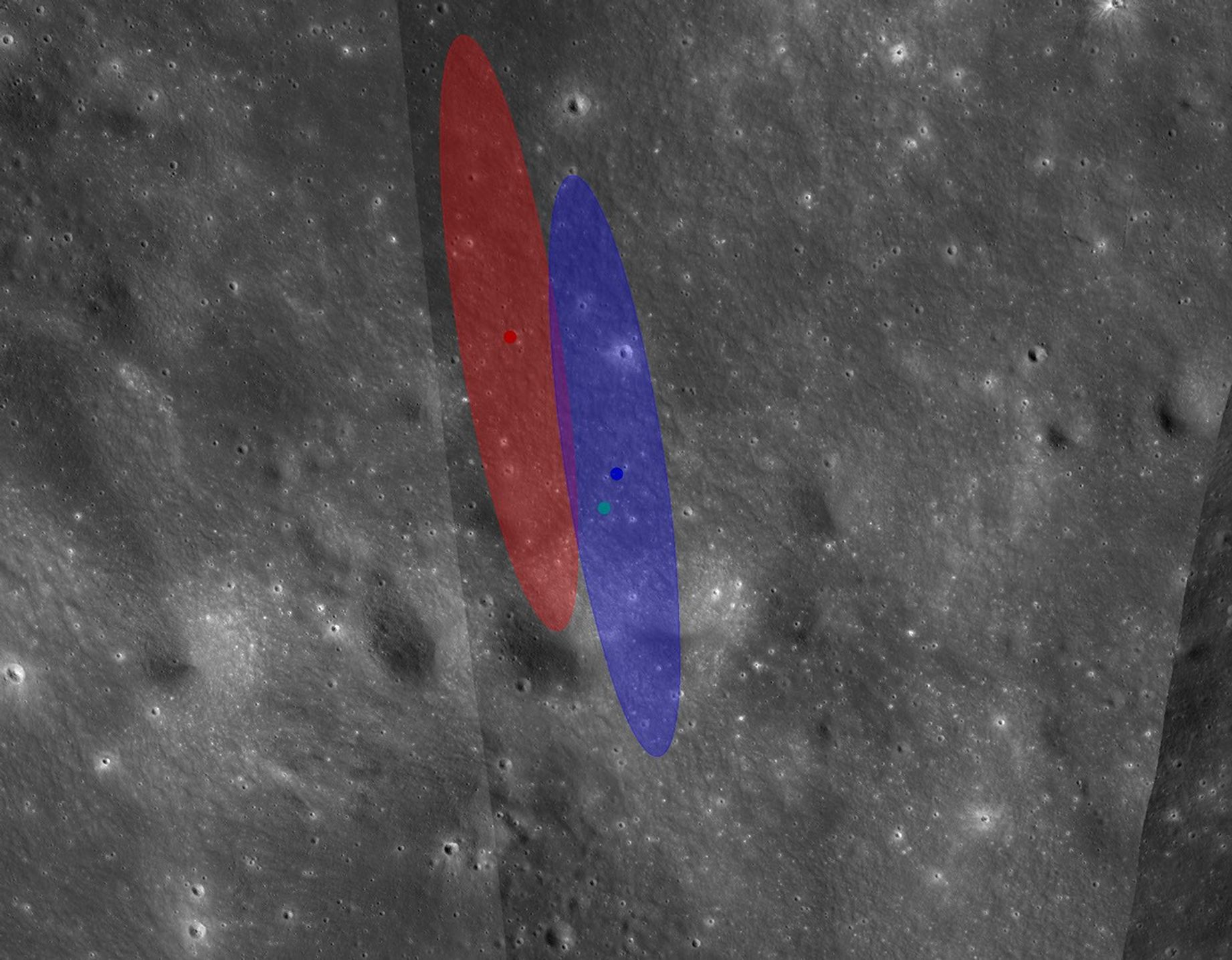
Very interesting, though, were the predictions about the possible locations of this event. Calculations by engineers with NASA’s Center for Near Earth Object Studies provided two overlapping ellipses for the possible impact. One saw the Moon as a smooth sphere.
The other one had a more realistic lunar terrain, and in fact, the impact took place within that ellipse. This predictive ability might be very important in the future.
While this event was not particularly dangerous and was, after all, just the second such collision, it raised the question of what will happen to space junk in a few years when a lot more rockets will reach the Moon to build NASA’s lunar base.