Space and Physics
 PUBLISHED



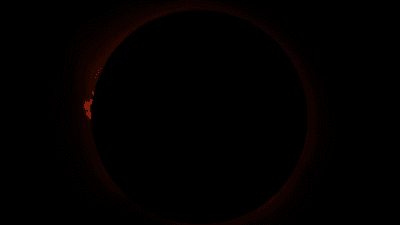


No other world in the Solar System has an eclipse like Earth; it might even be a rare event in the entire galaxy. If we lived in a universe like Star Trek, you’d have aliens holidaying to Earth just to see it, planning their trip as we might go to the Great Barrier Reef or the Grand Canyon.
This week, I travelled to Spain to see my third total solar eclipse, and it was just as spellbinding as the first.
The solar eclipse is only possible because, by pure chance, while the Sun is about 400 times bigger than the Moon, it is also 400 times farther away. This means that when the Moon passes in front of the Sun, it perfectly covers the Sun's entire face, creating a truly unique effect.
While my home in London was getting almost 92 percent of cover and my hometown in Italy was getting 65 percent at sunset, I knew I had to go see the totality again.
The difference between 99.9 percent and totality is not a fraction of a percent: it is a whole other experience.
I can describe what it is like, but words do not do it justice.
The color of the sky changes to a 360-degree mixture of dusk and dawn at the horizons, while darkness is ahead of you. The solar corona — the hot and wispy atmosphere of the Sun — becomes visible. And this time we even saw a large solar prominence, a tendril of plasma stretching for tens of thousands of kilometers from the surface of the Sun.
Hunting the Black Sun
Eclipse hunting is a peculiar hobby. On the one hand, you're dealing with something we know with extreme precision: the motion of the Earth, Moon, and Sun.
We can calculate eclipses for thousands of years into the future. In a matter of years and decades, we know their path to the fraction of a second and to the meter.
At the same time, each total solar eclipse is only seen on a small strip of the planet, often making them difficult to be seen by most people, and often occur across very remote areas (like the one last year enjoyed mostly by penguins).
There’s also the problem of weather. If you are spending money and traveling, you want to have the best chance to see the eclipse, but good weather predictions are only possible in the days (and hours) leading up to the event.
This makes for a peculiar mix.
Many friends and family find it funny that I planned my trip years in advance. I even have everything already booked for the eclipse next year, as it will be the longest in the century. I have a sketched-out plan for the annular (ring of fire) solar eclipse of 2028, and vague plans for the one in the 2030s (all, unfortunately, very far from where I live).
But this year, everything lined up perfectly, just like the Earth, Moon, and Sun.
The August 12, 2026, eclipse from Spain
My sister and her best friend joined me and my husband, Chris, on the hunt for this eclipse.
Chris and I had already seen the two Great American Eclipses. The first one in 2017 we watched from Nashville, Tennessee, but it was cut short by pesky clouds. The second was from Mazatlán, Mexico, in 2024, where we enjoyed the spectacle from a beach with tens of thousands of other people.
Our guests on this hunt were a tad skeptical of the event. We'd already included them on our booking for next year’s eclipse too, but at the time they were uncertain, saying “We’re not sure if we will actually come.” As I said, you do not know what it's like until you see it.
Now, they're very happy we booked already before prices get too high!
I had friends watching from across Spain, from the north coast down to the south and the Balearic islands. We decided to stay mobile with a car, and look for a place with as few clouds as possible. I was not going to take any chances.
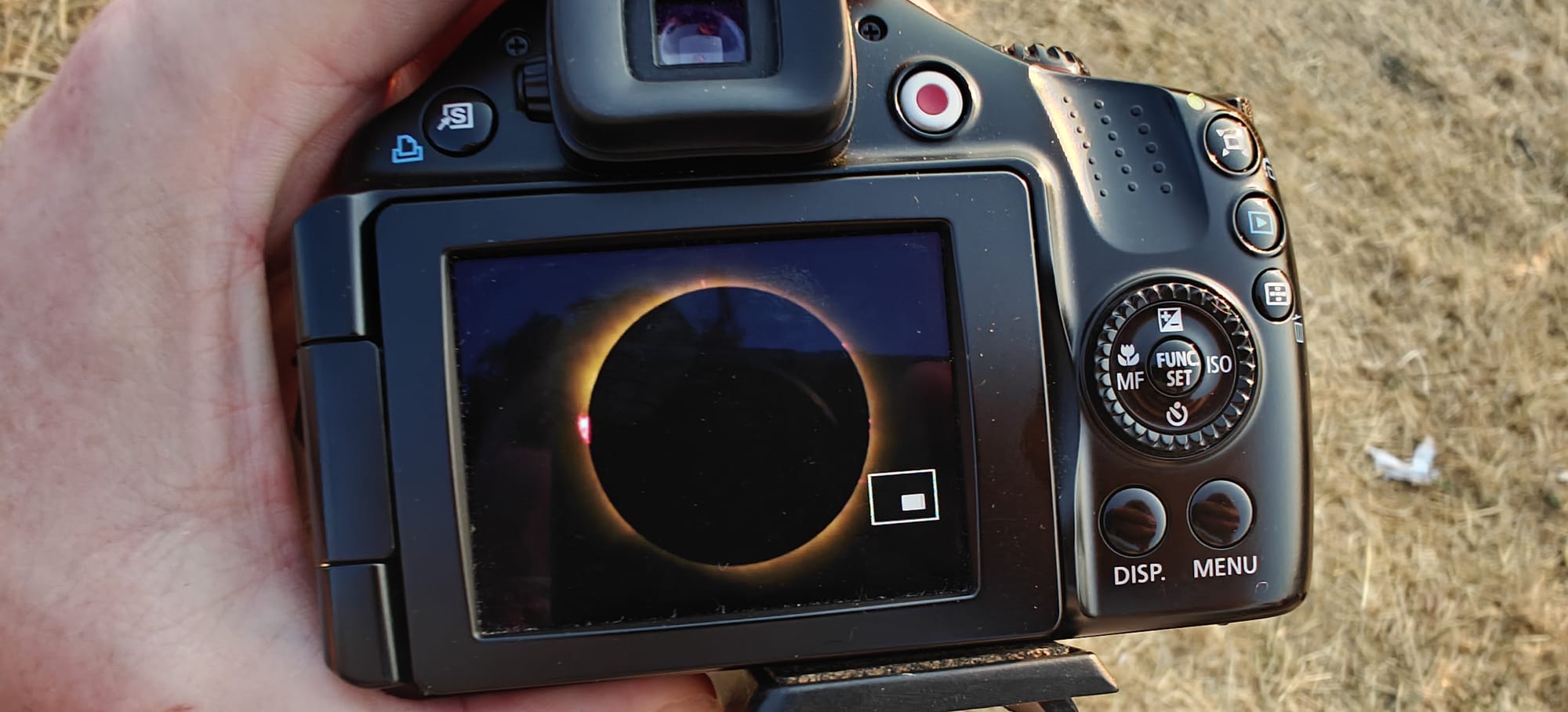
We picked the town of Lerma, just off the center of the path of totality, with a perfectly positioned churchyard looking towards the west (as old churches are known to do).
As I left my companions to enjoy some shade, I and many others positioned our cameras, telescopes, and chairs in the baking Spanish sun (36°C/97°F) and waited for hours for the eclipse to start.
It was worth every second of the sweltering wait.
"I was not expecting something like this," Francesca Carpineti, my sister, told IFLScience. "You'd think it a simple progression and that there shouldn't be much difference between 99 and 100 percent. Instead, everything changes."
"It takes your breath away for a few seconds, and you try to take it all in and enjoy that emotion that is so difficult to explain."
A victory for all younger brothers everywhere who try to convince their big sisters to take an interest in their hobbies.
My goal for this eclipse was to do a timelapse using my telescope, and despite a lady walking right into it, a very quick and easy version of it turned out very good!
I kept thinking of this eclipse as a dress rehearsal for next year: we will have almost five minutes of totality in Tangier, Algeria (it'll be over six minutes in Egypt!). I want to be able to do my observations, and then just experience it for many wonderful minutes.
In my head, I was like “this is number 3, I can focus on some observations and then I look.” But as soon as I got my shot and looked at it properly, I realized just how unique this eclipse was.
For the first two, the Sun was up in the sky. This one was almost at sunset, so thanks to the Moon Illusion it looked so much larger and so much more impressive.
I am well aware that eclipses repeat in the same place every 54 years and a month or so, but this one showed me just how unique these events can be in a personal capacity.
.png "several boat are in the sea and the setting sun looks like a crescent")
I feel extremely fortunate to be able to travel and witness these events with my own two eyes.
The Eclipse from elsewhere, connecting people to the sky
I do not think eclipse hunting is contagious, but I know for sure that family, friends, and acquaintances had the full “evangelical spiel” from me of how cool eclipses are, and were totally on board.
Here in London, my mother-in-law and some of the IFLScience team organized a little partial eclipse viewing party. I left them a small solar telescope, a spare pair of solar binoculars, and several solar glasses, and they had a great time.
Our intrepid staff writer James Felton had a slight scheduling mishap, but he also managed to see it (sort of).
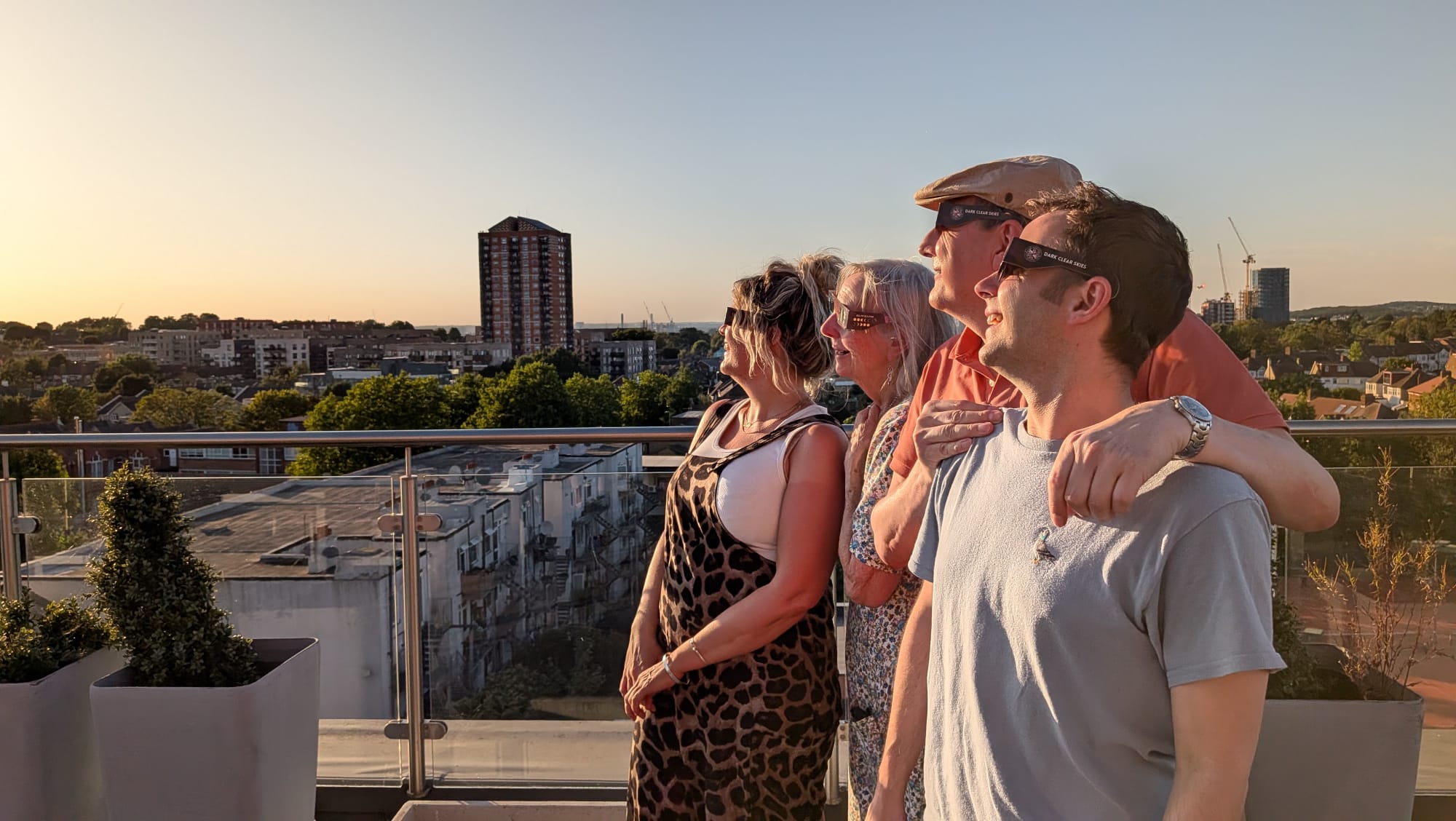
"I know I saw the total eclipse in 1999; I remember the party atmosphere, but I don't remember what the actual eclipse looked like," Katy Evans, IFLScience Deputy Editor in Chief, told me.
"I wasn't entirely sure what to expect this time, but watching in awe as the Moon took a chunk out of the Sun, I immediately turned to my friend and said, 'We're going to watch totality next year, right?'"
I sent my own tips for safe viewing to all group chats I’m involved in, from swimming clubs to a local corgi group, stressing the importance of being safe and smart when it comes to seeing an eclipse (and yet, still, some people did not follow the safety rules).
Down in my hometown of Anzio, Italy, the eclipse was not quite as dramatic as in Spain or Northern Europe, but it was happening until sunset, so my family and friends back home went down to the beach to see the spectacle.
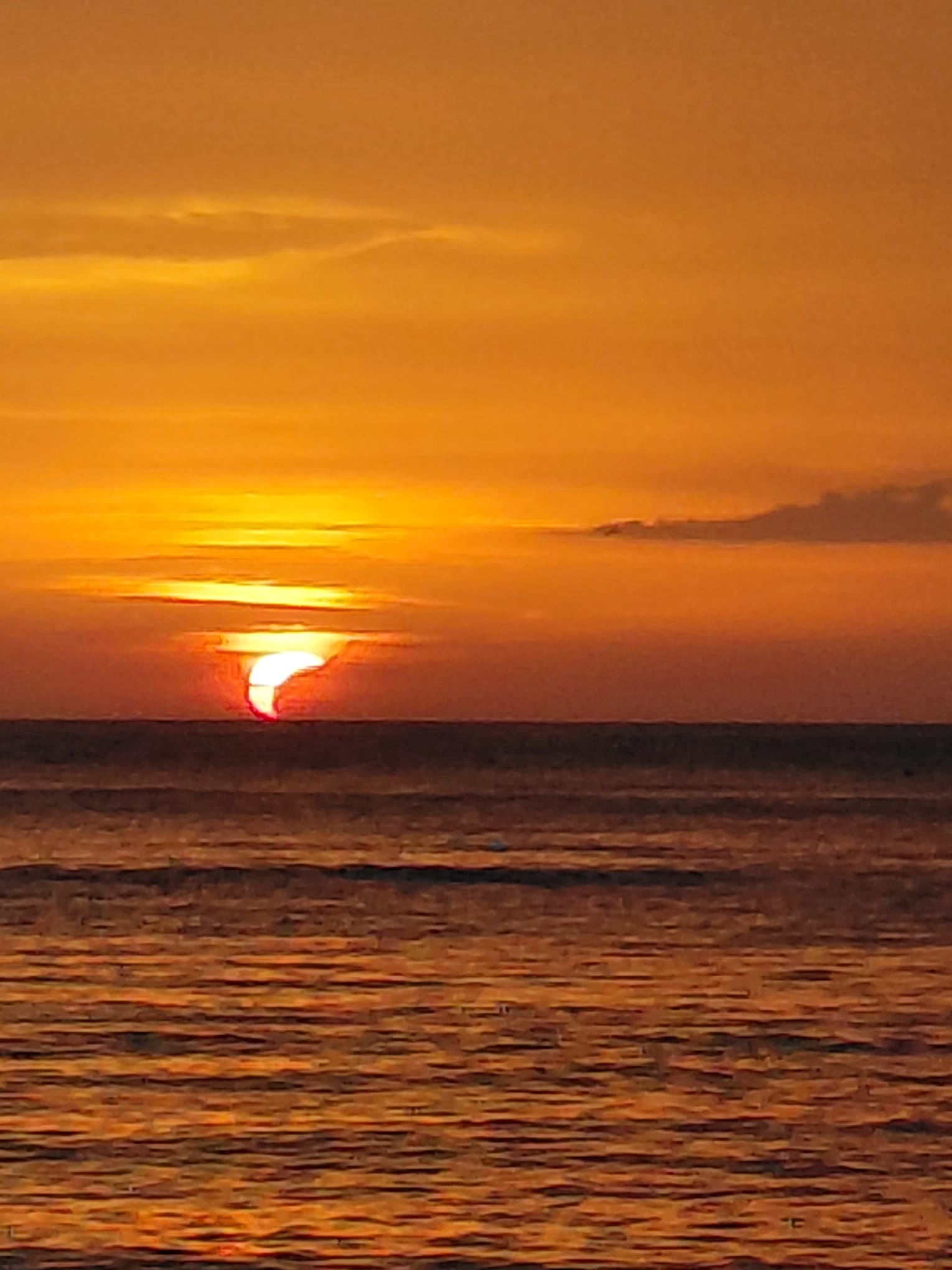
“It was so fascinating to see the eclipse at sunset all together! The colors were marvelous, and we were all in a prayer-like silence, enthralled by such beauty! Truly thrilling,” Lena Vitale, aka Mamma Carpineti, told IFLScience.
Due to light pollution, we are losing our connection to the sky. In the past, seeing the starry night was as common as watching TV. Maybe not everyone would have known every constellation, but it was common knowledge to know about the heavens.
We are now a lot more separated from those heavens than ever before.
Eclipses offer a chance to rekindle that relationship, reminding us how incredible it is that we are on such a planet with such an eclipse. We should not take this for granted.