Space and Physics
 PUBLISHED





As you might expect from a science website, many of the people working at IFLScience have a pretty keen interest in space. If there's an object out there worth gawping at, you can guarantee one of us has pointed a telescope at it and snapped a few photos.
Unfortunately for me specifically, I don't have much of an accompanying interest in planning and organization. The result of which is that, on the day of the solar eclipse, I was actually returning home from Spain, where I had been on the path of totality, to the UK, where I very much wasn't.
I had booked the holiday some time ago, without thinking about the date too much, and was looking forward to a nice vacation with my family. Then, as the eclipse loomed closer, resident IFLScience astrophysicist Dr Alfredo Carpineti began pitching stories around it, and I noticed I had timed things exceedingly badly.
Not only was I going to fly away from the path of totality on the day of the eclipse, but my chances of seeing a partial eclipse rested entirely on the efficiency of the baggage handlers at Birmingham airport. An airport that, two days prior, had experienced significant baggage problems.
As we got on the plane to come home, my hopes of making it to the UK in time to view the eclipse weren't high. Sure enough, the flight was delayed by a good 40 minutes, and my optimism sank lower than the prices of sangria in Catalonia.
In the end, we touched down with an hour to spare, but getting through the usual barriers was a pain. As the eclipse started, this was my best view of it.
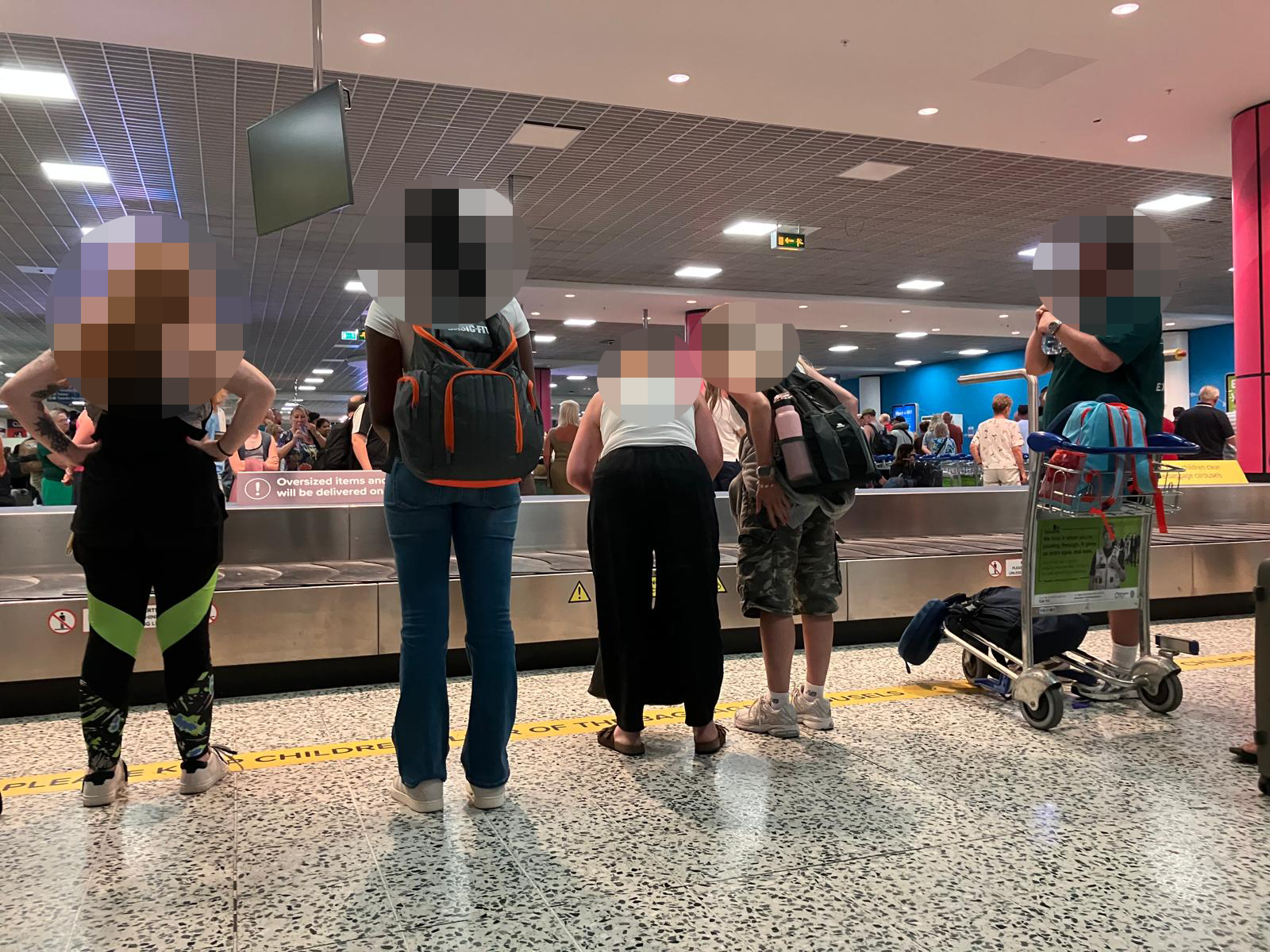
We did make it out of baggage claim in time to catch part of the eclipse, and praise where it is due; the baggage system was only very slow, rather than the usual incredibly slow. But with nowhere to really hang out to try to watch the eclipse, we decided we would have to bomb it down the motorway back home (though we chose different wording while discussing this plan in an airport).
As we were driving, however, the sky began to darken, and it became too tempting not to have a look. My kids, worryingly, began asking a lot of questions about whether it was safe to look directly at the sun (no), if they were allowed to have a quick look anyway (no), if they did so through the trees (no), and why everything looked purple now (aaaaaaaaaghhh).
It wasn't ideal, but we decided to attempt to make a quick eclipse viewer by poking a hole in a piece of paper and looking at the resulting shadow. With little resources around, this involved stabbing a hole through a car user manual with a Crayola, and projecting the eclipse onto the car door.
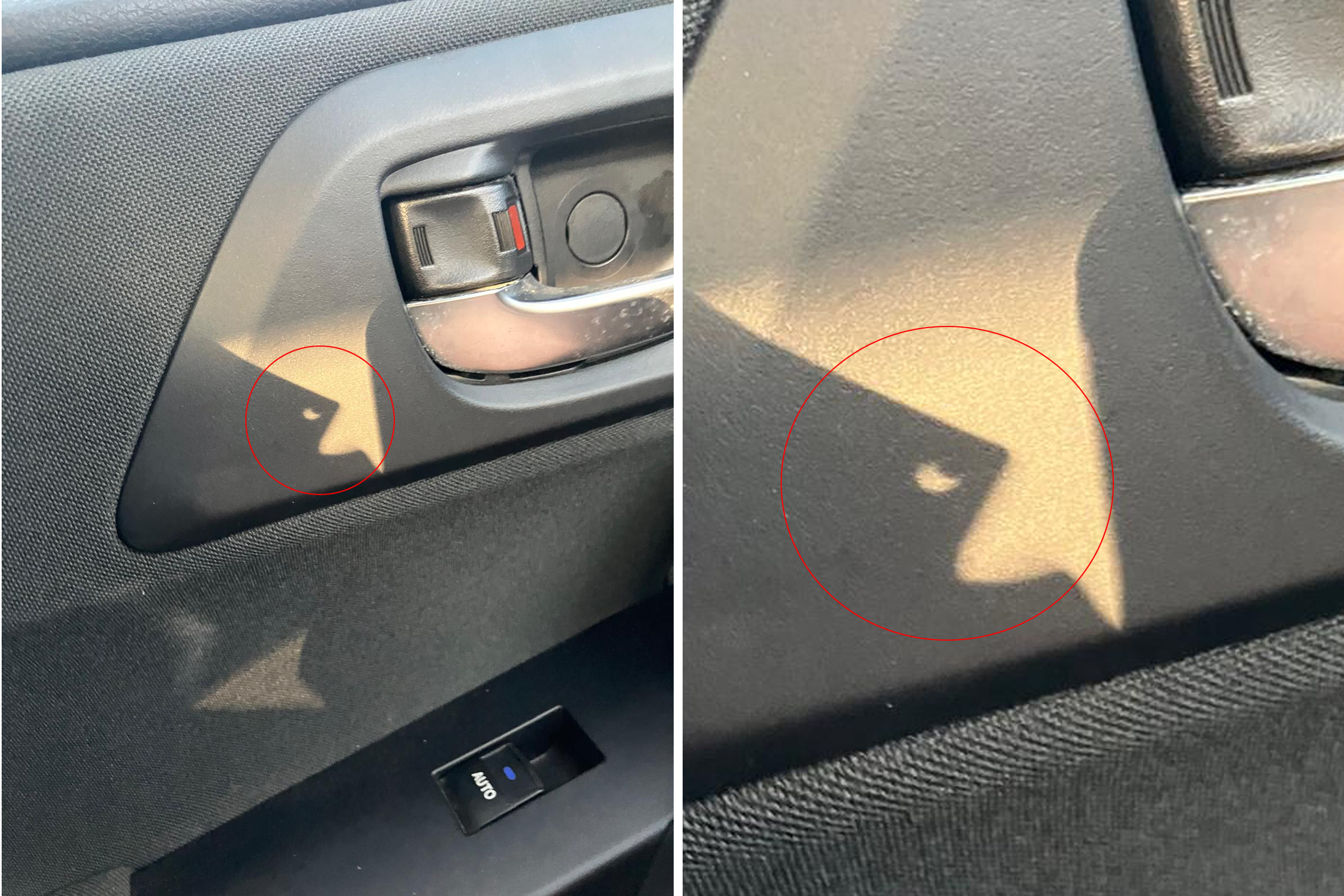
Look, this isn't the best way to view an eclipse. Colanders, while often lambasted as "shit sieves," at least project a large number of eclipses onto the background. Here I was projecting a single image of the eclipse onto a car door to stop the situation of one child seeing purple (he's fine, don't worry) becoming two children seeing purple.
It wasn't great, but it kept the kids amused, and they were actually pretty excited about the eclipse shape they could see on the door and car seats. More importantly, neither of them need to go to the eye hospital.
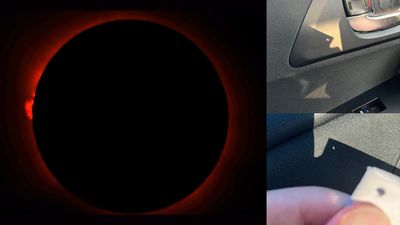
I was pretty pleased with myself, until the aforementioned Carpineti announced in a group chat that he had been invited on Sky News because his eclipse photo looks so goddamn good.
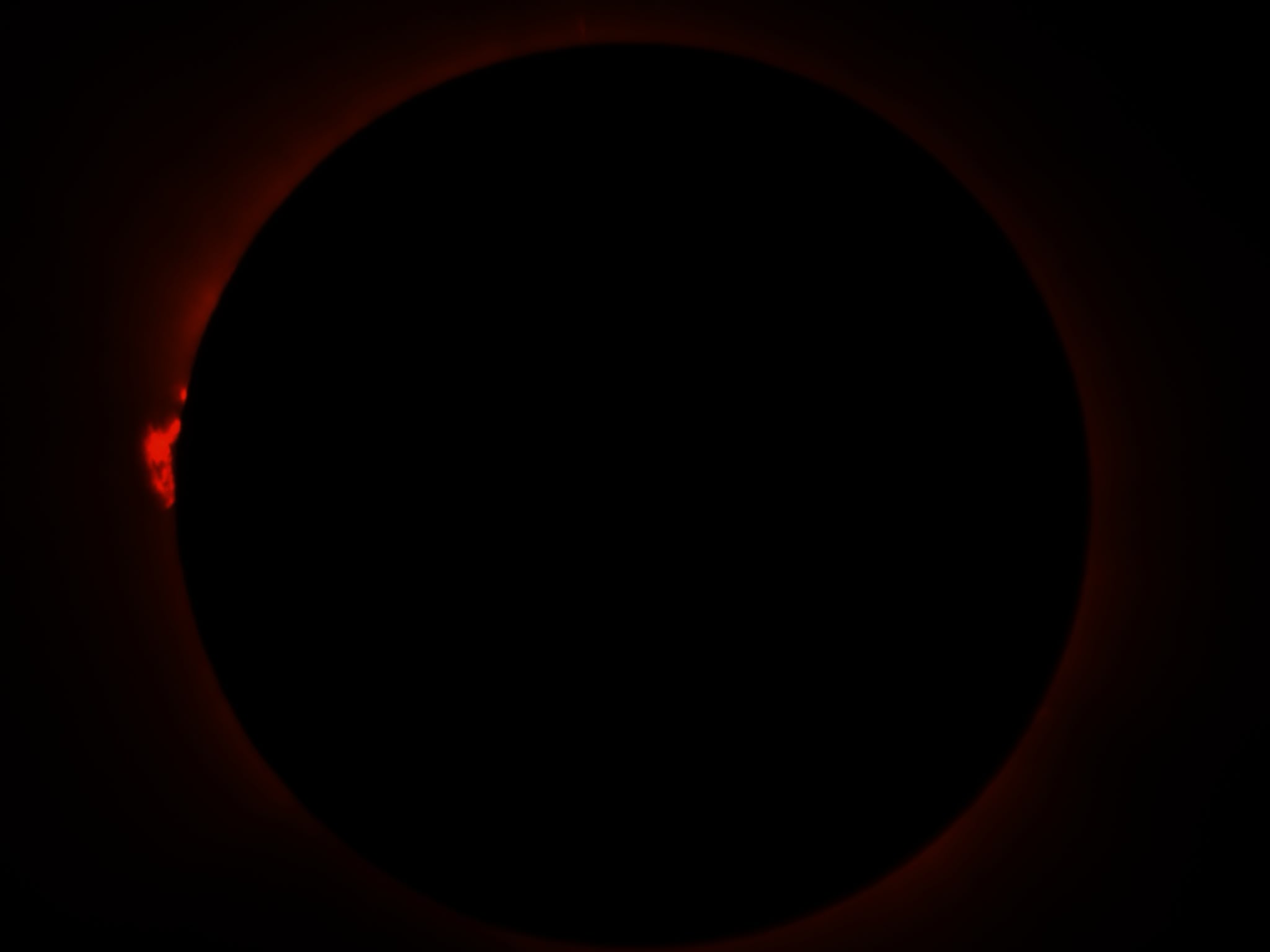
Meanwhile, back in Spain, friends with better awareness of dates sent back this image, taken from where we had been staying.
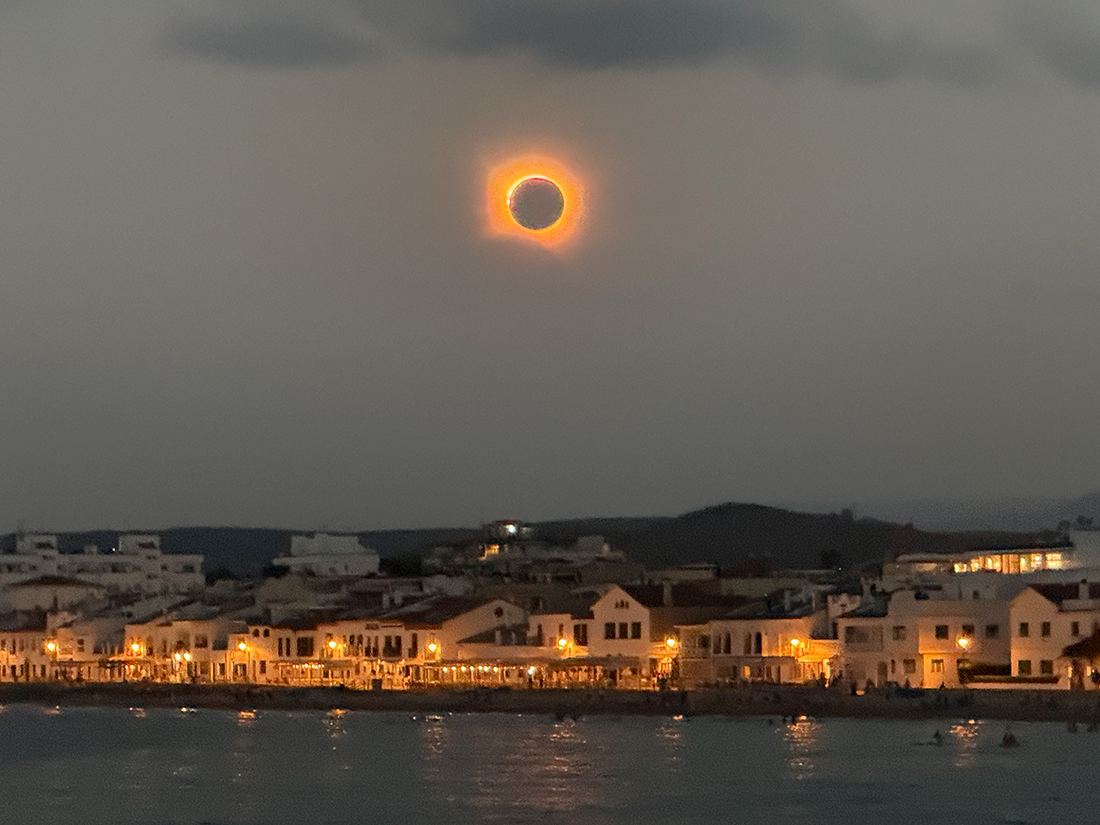
Alfredo, the bastard, was pretty pleased with his own results.
"It was incredible being able to witness this stunning eclipse! And the prominence was truly spectacular to see through the telescope and even with the naked eye," he told IFLScience, adding:
"I’ve been using my telescope to do a timelapse, taking a photo every few minutes. Unfortunately a few people walked into it so it’s a bit shaky. Will try to fix it when I’m back home."
To be fair, it is objectively as good as it is rage-inducing. Towards the left, he managed to capture a solar prominence, rarely observed during eclipses compared with seeing the solar corona. The earliest observation of a solar prominence, an account of which was recorded in the 14th century regarding what people witnessed during the 1185 CE solar eclipse, frightened people a little.
“On the first day of the month of May, on the day of the Saint Prophet Jeremiah, on Wednesday, during the evening service, there was a sign in the Sun," the account reads.
"It became very dark, even the stars could be seen; it seemed to men as if everything were green, and the Sun became like a crescent of the Moon, from the horns of which a glow similar to that of red-hot charcoals was emanating. It was terrible to see this sign of the Lord.”
We now know them to be giant loops of hot plasma, often extending thousands of kilometers above the Sun, held in place by its magnetic field, which doesn't make them sound much less terrifying when you really think about it.
"Prominences are anchored to the Sun’s surface in the photosphere, and extend outwards into the Sun’s hot outer atmosphere, called the corona," NASA explains. "A prominence forms over timescales of about a day, and stable prominences may persist in the corona for several months, looping hundreds of thousands of miles into space."
Also in the photo, you can see the solar corona, or atmosphere, glowing an eerie red. As you can probably tell, I'm pretty jealous of the shot he managed, not that I would have done any better had I had access to equipment a little more sophisticated than a crayon. But what does he make of my photo?
"James, tried," Alf told IFLScience. "And at least he didn’t look at the sun directly."
Excuse me while I go cry for a little while.

 1
1