Space and Physics
 PUBLISHED



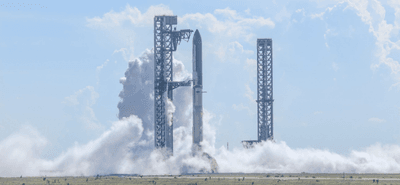


SpaceX will attempt to launch its Starship spacecraft into orbit for the first time today at 07:15 am Texas time (08:15 EDT/14:15 GMT), in what could be the most significant test yet for the enormous space vehicle.
Early Starship launches generally resulted in explosions, spun as “partial successes” and “rapid unscheduled disassemblies” by the company. More recently it has performed better, even managing to deploy satellites, but critics argue these small victories have yet to approach the firm’s lofty goals.
The 407-foot (124-meter) rocket has a 75-minute window to launch from SpaceX’s Starbase site in south Texas. If all goes well, Ship, the 171-foot (52-meter) upper stage of the craft, will separate from the Super Heavy booster before orbiting the planet six times and splashing down in the eastern South Pacific Ocean.
While in orbit, Ship will release 26 Starlink Version 3 satellites, part of Elon Musk’s proposed megaconstellation of 100,000 such satellites that will eventually swarm throughout low Earth orbit.
At less than 10 hours from launch to splashdown, the mission is closer in duration to the early exploits of Yuri Gagarin or John Glenn than today’s voyages to the International Space Station. On the other hand, it will be an order of magnitude longer, and many times further, than the suborbital flights of Starship’s previous missions.
Starship has been picked by NASA to carry the Human Landing System, the module intended to take Artemis IV astronauts to the lunar surface, although bets are now being hedged as to when exactly that mission will take place.
Beyond ambitions to establish a longer-term presence on the Moon, the idea of visiting or even colonizing Mars in the near future also depends on Starship living up to its claims (though it is far from the only obstacle in that case).
You can watch the launch at the link below, or here if you would prefer it without commentary.
Starship has two major features intended to bring an end to the past 50 years in which humans have barely ventured beyond low Earth orbit.
First, its maximum payload is far greater and designed for much more ambitious missions than other launch vehicles currently in use. Second, it is meant to be completely reusable, intended to dramatically reduce costs compared with rockets that need to be partially or completely rebuilt after every mission.
This mission won’t demonstrate Starship’s full capacity, and its payload will be considerably less than is required to carry a fully crewed mission. Demonstrating that Starship can work while carrying that extra weight will be a challenge for future missions.
Even if the ocean landing is successful and Ship is recaptured and towed to shore, as happened after Flight 13 earlier this year, extended ocean exposure is far from ideal. In the long run, SpaceX plans to have Ship captured by the “chopstick” arms of the launchpad, as it has demonstrated with the Super Heavy lower stage on some previous flights.
Starship has also drawn criticism because of the extreme cost of the project so far, which Reuters reported earlier this year had topped $15 billion. That’s over three times the original budget and over 30 times the cost of developing the firm’s most successful launch vehicle, the Falcon 9.
Nevertheless, getting to orbit, and successfully operating there and returning as planned, may quiet some of Starship’s doubters, at least for a while.