Space and Physics
 PUBLISHED
 1
1



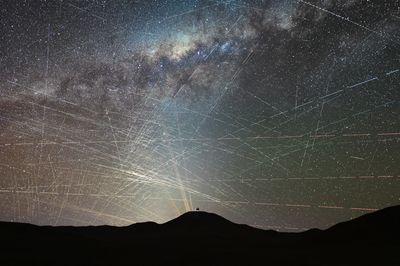


A new paper has estimated the impact megaconstellations of satellites could have on our ability to do astronomy. The results sound hyperbolic, but they are based on very real and sober estimations. There is a risk that the night sky changes forever within a decade and that astronomy from the ground is no longer doable.
Astronomy can probably claim to be the oldest science. Our ancestors looked at the sky and used it for navigation and timekeeping, placing myths and ideals in the heavens and linking them to occurrences on Earth. Since the invention of electric light, our relationship with the heavens has changed, as light pollution makes it ever more difficult to see stars and enjoy darkness in cities.
Even more concerning has been the increase in the number of satellites in space. They have brought light pollution to places where there is no artificial light on Earth, and in recent years, their number has skyrocketed. Of the over 15,000 currently in orbit, half of them belong to SpaceX’s megaconstellation Starlink. Elon Musk’s company has since put forward a proposal for a 1-million-satellite megaconstellation that would act as a data center in space.
The concept of a space data center is currently being tested by China, though the idea remains somewhat limited and untested in its utility and feasibility. Whatever the future holds, it remains true that the number of objects required to be launched into space – perhaps some 1.7 million – would be disastrous for astronomy.
Disastrous can mean that we lose 100 per cent of our data; basically, it kills the telescopes.
Olivier Hainaut
Olivier Hainaut has crunched the numbers on what number of objects in the sky would be within the tolerance limits of telescopes. How many satellites can exist before they substantially degrade the data? He was able to estimate that as long as the satellites were faint, there could be 100,000 in the sky. That’s over six times the number of objects currently in space.
“Of course that's not, you know, a sharp limit: like 99,000 is good and 101,000 is bad. But if the total number of satellites goes above 100,000 that means that the big observatories like Paranal [where ESO’s Very Large Telescope is located] will start to lose a measurable amount of data,” Hainaut told IFLScience.
Faint is the keyword here. Basically, the suggestion is to keep the satellites at magnitude 7. This means they should be invisible to the naked eye. Even for the sharpest eye in the sky, such as the Vera Rubin Observatory, satellites under that threshold would be very easy to manage.
The problem is that proposals want to do the very opposite. US startup Reflect Orbital wants to launch mirror-like satellites to provide sunlight at night. The approach, which seems like a reverse of the classic Simpsons’ episode "Who Killed Mr Burns?", would bring light (and in this case light pollution) even in places beyond their expected 5-kilometer-wide beam.
As any child who has just learned about why the sky is blue would know, light scatters in the atmosphere, so those beams aren't staying in place. The Reflect Orbital proposal of 50,000 mirror satellites could lead to there being more light everywhere. Current dark-sky sanctuaries and large telescope sites might then have the brightness of suburbia. And in cities, those satellites could be the only “stars” visible in the sky.
“The natural dark sky background is our reference, and we consider that if light pollution goes 10 percent above that, that's at the limit of usability for an astronomical observatory,” Hainaut told IFLScience. “For the really best astronomical observatory, we want to keep the light pollution at the 1 percent level. This constellation would increase by 200 to 300 percent; it's really bad!”
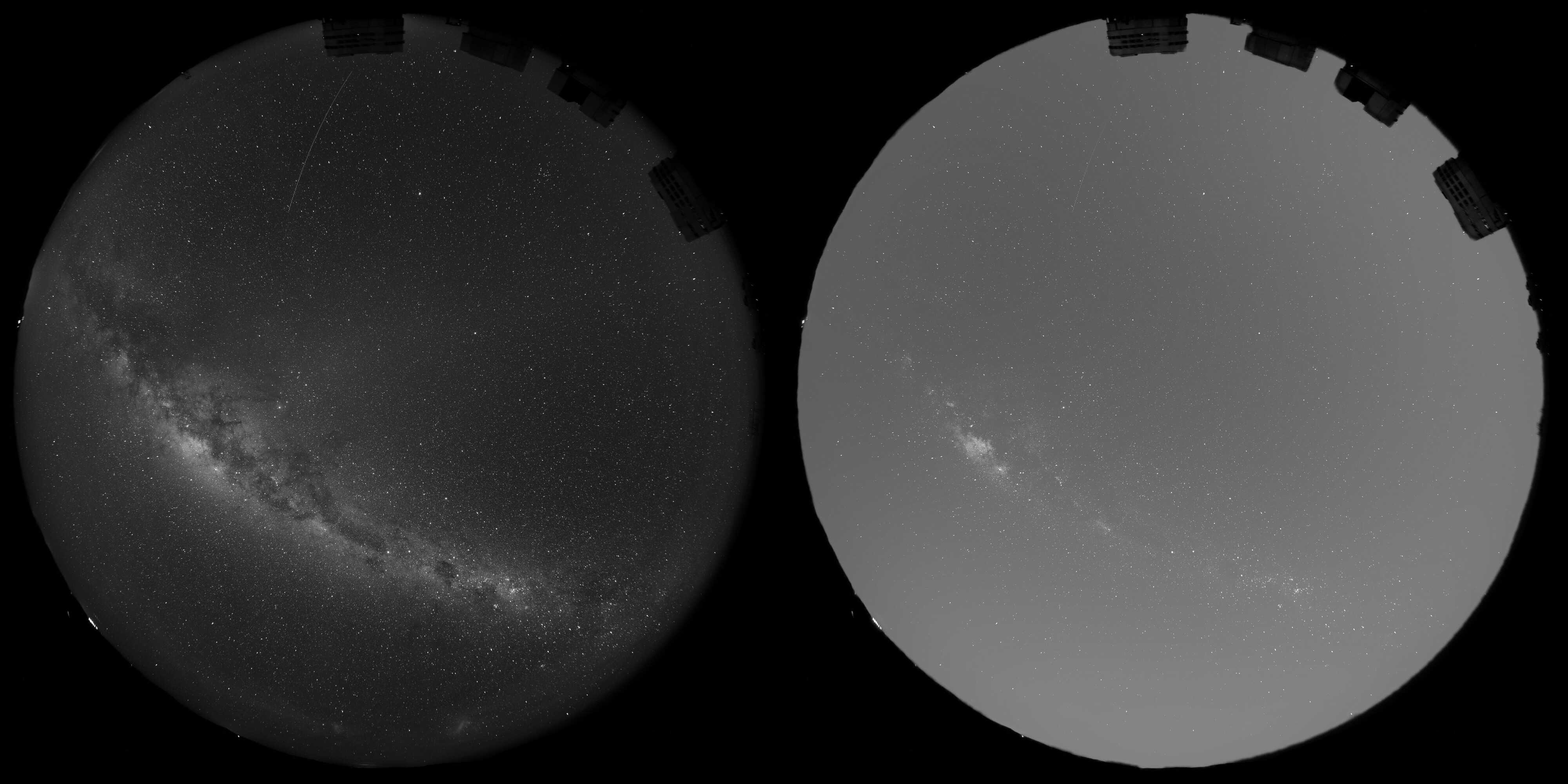
The simulation conducted by Hainaut shows a variety of scenarios. It shows that it is possible to have plenty of objects in space and not affect the night sky. It also shows that without international, national, and industry standard regulations to protect the night sky, we could lose it forever.
“Disastrous can mean that we lose 100 percent of our data; basically, it kills the telescopes,” said Hainaut.
Vera Rubin’s revolutionary Legacy Survey of Space and Time has just started. The Extremely Large Telescope and the Giant Magellan Telescope are under construction, with the promise of seeing better than any other telescopes before (maybe even directly imaging an earth-sized world). All of this, and yet our very connection to the night sky is in jeopardy.
Hainaut will present his findings at the Annual Meeting of the European Astronomy Society. The paper has been accepted for publication in the journal Astronomy & Astrophysics.