Space and Physics
 PUBLISHED



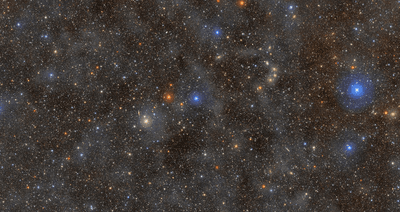


The day is finally here. The Vera Rubin Observatory, home to the largest digital camera in the world, is ready to start the work it was built to perform: the Legacy Survey of Space and Time (LSST). It will be revolutionary.
For the next 10 years, the telescope in Chile will create an incredible celestial movie, taking snaps of the sky like no other telescope before. Every few nights, Rubin will observe the whole southern sky in ultra-wide and ultra-high definition.
For the first time, an astronomical survey will catalog more objects than there are people living on Earth.
Dr Željko Ivezić
The survey will feature variable stars, supernovae, and other transient events. It will provide clues about the still hypothetical dark matter and dark energy, thanks to a vast catalog of never-before-seen galaxies. Closer to home, it will discover 3 to 4 million new asteroids, as well as hundreds, if not thousands, of new comets and even several (maybe up to 50) interstellar objects.
“Rubin's Legacy Survey of Space and Time is unique because it combines capabilities that no previous astronomical survey has achieved simultaneously: wide sky coverage (half the sky), exceptional imaging sensitivity, and repeated observations over a decade,” Željko Ivezić, the Head of LSST, told IFLScience.
“Individually, none of these capabilities is unprecedented, but their combination is transformative. For example, the combination of wide sky coverage and imaging sensitivity will enable LSST to detect and characterize about 40 billion celestial objects,” Ivezić continued.
“For the first time, an astronomical survey will catalog more objects than there are people living on Earth.”
Ten years might seem like a long time, but it's necessary. Rubin will return to each point in the sky 800 times. This will allow the survey to reach the sensitivity necessary to do all that incredible science as well as creating an extremely long baseline to see the variable objects, exploding stars, and all those solar system bodies (and occasional interloper) that move about.
We won't even have to wait until the end of the LSST to get the data. The team has already demonstrated their incredible alert timeline for variable and unexpected objects. The system showed it can send 800,000 alerts per night, and it might easily get to the millions. And that’s not all.
“LSST will produce two complementary types of data products," Ivezić told IFLScience. "Every observing night, newly detected changes in the sky will be reported through a real-time alert stream, with alerts issued within about a minute of each observation in Chile."
"In addition, all accumulated observations will be reprocessed approximately once a year to produce increasingly deep and accurate images and catalogs for the entire survey area."
And those images and the data won't just be for scientists. Everyone can have fun with it, and maybe even contribute to research. From the first incredible image featuring 10 million galaxies, it was possible to be the first person ever to see a particular galaxy. Imagine what it will be like as the LSST progresses!
“LSST data are intended not only for professional scientists but also for educators, students, and the general public,” Ivezić told IFLScience.
“From its inception, Rubin Observatory has made education and public engagement an integral part of its mission, developing an ambitious Education and Public Outreach program with hands-on activities, interactive tools, and authentic scientific investigations for learners of all ages and backgrounds.”
The survey has finally begun, and astronomy will never be the same again.