Space and Physics
 PUBLISHED
 1
1



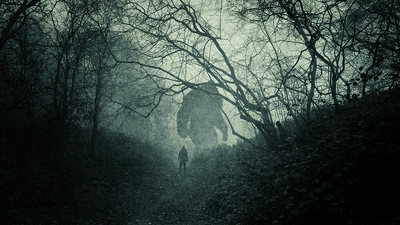


If someone attempts to tell you about ancient writings about giant humans, as a general rule your best option is to sprint away in the most convenient direction until they've lost pursuit. We're hoping you'll make an exception for us, as we explain how Galileo ruled out these (and other) massive creatures, long before well-publicized hoaxes and plenty of Internet conspiracy theorists would claim the opposite.
Galileo was as prolific as he was cantankerous, writing on a wide range of topics within astronomy, physics, and mathematics. His 1632 book Dialogue Concerning the Two Chief World Systems was aimed at popularizing the heliocentric view of the Solar System, while skirting laws that said he could not advocate on behalf of that viewpoint.
Of course, as you likely know, this landed him in a spot of trouble with the Catholic Church, especially after it specifically warned him not to argue that the Sun is in the center of the Solar System. Galileo really didn't help himself on this front, giving the heliocentric viewpoint to the smartest of the characters within the dialogues, while giving the stupidest (and Pope-aligned) views to a character named "Simplicio," slang for "idiot" in Italian.
As a result of the Galileo affair, the famed astronomer found himself under house arrest and banned from talking about the Sun being at the center of the solar system. He was banned before, of course, but when this comes with threats of imprisonment and torture, that's a good time to start taking it more seriously.
A matter of proportion
His work wasn't done, however, though it was a lot more difficult for him to publish. In Discourses and Mathematical Demonstrations Relating to Two New Sciences, Galileo published a sort of "greatest hits," going through his thoughts on key areas of physics and mathematics. It was in this work that he found room to discuss giant humans and animals.
The work begins simply by imagining cylinders of different lengths and widths. He notices that while increasing the width of a cylinder causes its strength to increase, adding to the amount of load it can bear, it isn't proportionally stronger. The load-bearing strength, Galileo observed, is based on the area of the cross-section of the cylinder, while the weight of the cylinder itself is based on the volume.
This is a bit of a problem for anybody, organism or cylinder, wishing to become gigantic (we're looking at you, Godzilla). If you double the dimensions of a cylinder, its area increases by a factor of four, but its volume (and weight) gets cubed and so increases by a factor of 8.
In other words, while the cylinder has increased its strength, it has gotten closer to collapsing under its own weight. Galileo then suggests that if you continue to increase the length of a cylinder, eventually it will reach a breaking point where it is no longer able to support itself..
From this, Galileo surmises that truly gigantic ships, palaces, oars, and animals would all be impossible to create, as their parts would simply not hold together.
"Nor can nature produce trees of extraordinary size because the branches would break down under their own weight," a translation of Galileo's work explains.
"So also it would be impossible to build up the bony structures of men, horses, or other animals so as to hold together and perform their normal functions if these animals were to be increased enormously in height; for this increase in height can be accomplished only by employing a material which is harder and stronger than usual, or by enlarging the size of the bones, thus changing their shape until the form and appearance of the animals suggest a monstrosity."
Small and mighty
As seen in larger animals like elephants, the bones are indeed much wider in order to support their ample frame. But proportionally, as Galileo also outlines, they are weaker than smaller animals, such as ants.
"If one wishes to maintain in a great giant the same proportion of limb as that found in an ordinary man he must either find a harder and stronger material for making the bones, or he must admit a diminution of strength in comparison with men of medium stature; for if his height be increased inordinately he will fall and be crushed under his own weight," Galileo explains.
"Whereas, if the size of a body be diminished, the strength of that body is not diminished in the same proportion; indeed the smaller the body the greater its relative strength. Thus a small dog could probably carry on his back two or three dogs of his own size; but I believe that a horse could not carry even one of his own size."
In short, if giants were to exist, they would need bones made of a stronger material than the rest of life on Earth, they would look monstrous with gigantic, wide bones, and they wouldn't be so tough, relatively speaking, despite (or because of) their stature. Not bad, for a thought experiment written down before early forms of Jack and the Giant Beanstalk were published.