Space and Physics
 PUBLISHED


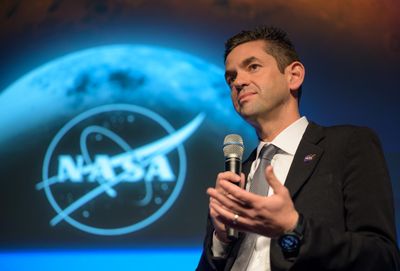


NASA’s Moon plans are already shifting, just two months after the new Artemis strategy was unveiled. NASA administrator Jared Isaacman announced at the end of February that Artemis III was no longer destined to land on the Moon in mid-2027. Instead, it was going to meet up with the privately built lunar landers in low-Earth orbit and test them there. This will no longer happen in the proposed timeline.
The human landing system (HLS) was assigned – after a legal battle – to Elon Musk’s SpaceX and Jeff Bezos’ Blue Origin. The original plan saw SpaceX’s Starship taking Artemis III in 2027, and then in 2028, taking Artemis IV to the surface of the Moon. In 2030, Artemis V would have instead used Blue Origin's Blue Moon to ferry astronauts to the lunar surface.
The plan put forward by fellow space billionaire Isaacman in February saw Artemis III focusing on a low-Earth orbit test of the landers in the middle of next year before having Artemis IV and Artemis V land on the Moon in mid- and late 2028. This was already seen as optimistic, and now Artemis III has been postponed to at least late 2027, which could have a knock-on effect on the rest of the schedule.
On Monday, April 27, the NASA chief was on Capitol Hill for a budget hearing by the House Commerce, Justice, and Science appropriations subcommittee. While Isaacman has been defending the White House's commitment to NASA, the Trump administration plans to cut 23 percent of the space agency’s budget. Congress is ready to go against Trump's wishes and argue for a bigger budget. During the hearing, Isaacman confirmed that both Blue Origin and SpaceX have assured him that the HSL will be ready for the test in late 2027.
While it is possible for that to happen, we need to contextualize that claim. Blue Moon has yet to be tested uncrewed in orbit. It was supposed to be delivered by 2030, so the timeline is massively accelerated. For Starship, the problem seems almost opposite. It has been tested multiple times, and things have not been going well. There were multiple explosions of the vehicle over the last several tests, and while there were recent successes, it is still behind schedule. Last year, Starship should have demonstrated refueling capabilities in space. It did not.
“The large-scale, Starship-to-Starship, cryogenic propellant transfer is a critical capability necessary for the Starship human landing system mission for Artemis III and Artemis IV,” a NASA spokesperson told IFLScience in 2024. SpaceX did not respond to our request for comment.
“The propellant transfer test is part of a series of tests, along with detailed design reviews, that will provide NASA data and evidence to certify the lander. Following the propellant transfer demonstration, NASA will review the test results and certify lander systems prior to the crewed demonstration missions to ensure astronaut safety and mission success.”
On top of all of this, last November a leak of internal SpaceX documents, reported by Audrey Decker at Politico, revealed that it wouldn’t be ready to land on the Moon until at least September 2028.
The Moon landing was first envisioned to happen in 2024, then in 2025, and then it was postponed to 2026. At the end of 2024, a mid-2027 date was agreed upon, but an analysis published almost two years ago by the Government Accountability Office suggested that the Moon landing mission was likely to be pushed back until 2028. If Artemis III is pushed further, even 2028 might become unlikely.