Space and Physics
 PUBLISHED
 1
1


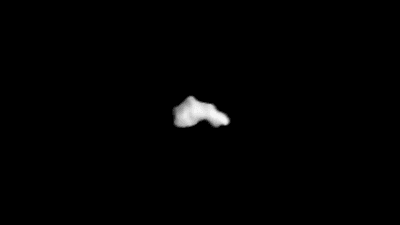


Asteroid (44) Nysa is bright, weird, and, it turns out, not alone. New observations reveal that this asteroid has an extremely peculiar structure. It's the first known asteroid in the Solar System with three lobes. Excitingly, it also seems to have its own moon.
Several objects in the Solar System are known to be contact binaries, such as Comet 67P and Kuiper belt object Arrokoth. In those cases, a valley or neck is seen between two large lobes, making them look a bit like a snowman.
In the case of Nysa, there is not just one neck but two, making it trilobate!
Located in the main asteroid belt, this object is the brightest and largest of the E-type asteroids. At its widest, it's 113 kilometers (70 miles), and preliminary analysis suggests that it is denser than a typical asteroid in the belt.
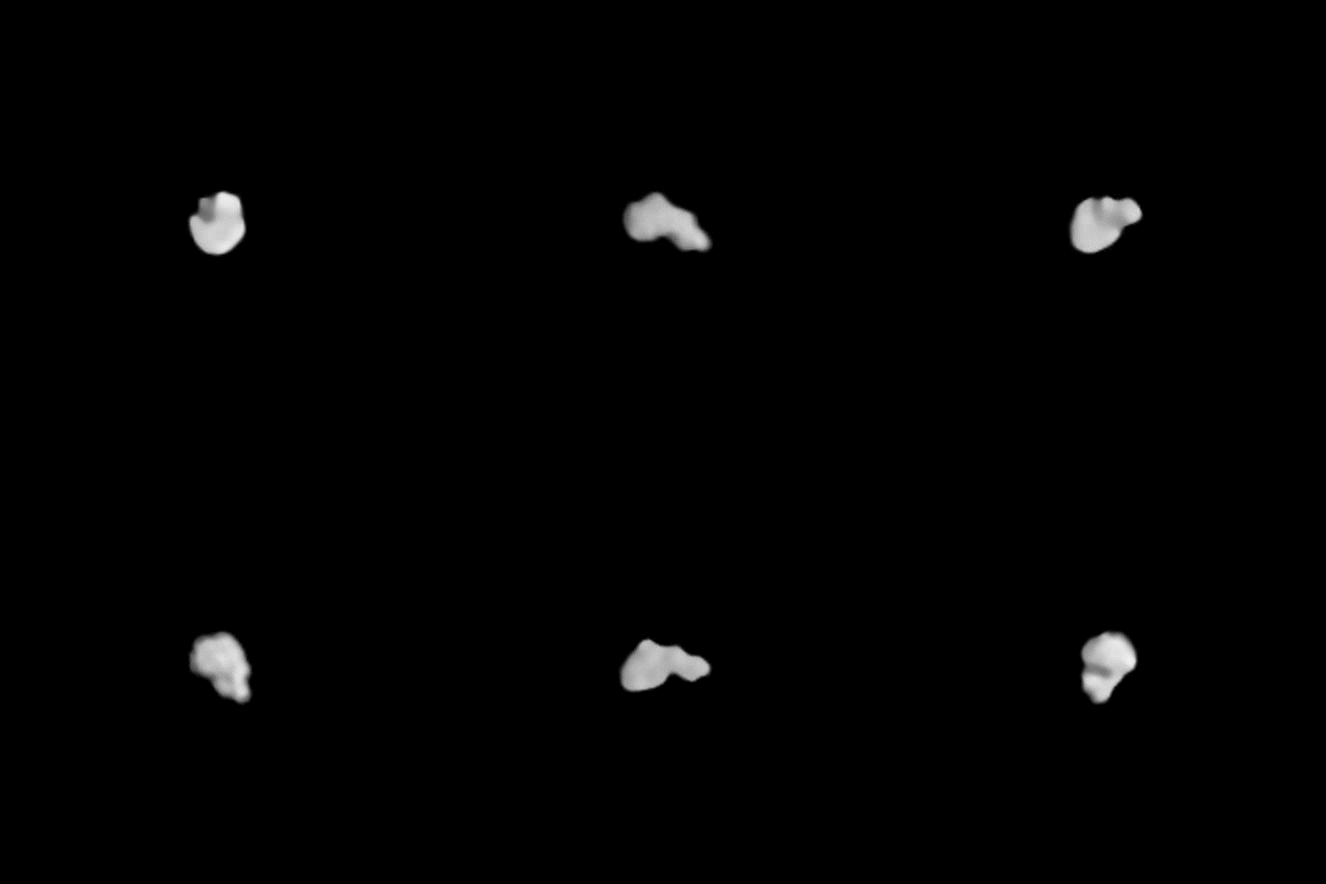
“The images reveal a remarkably unusual object,” lead author Kate Minker of Lowell Observatory said in a statement.
“The most likely explanation is that Nysa is either a contact trinary, consisting of three connected components, or an extremely irregular coherent body unlike anything we’ve previously observed.”
These are the highest-resolution views of Nysa ever taken, snapped by the Italian SHARK-VIS instrument on the Large Binocular Telescope in Arizona and the SPHERE/ZIMPOL instrument on the European Southern Observatory’s Very Large Telescope.
“These observations had to be combined with specially developed image processing techniques to further sharpen the images and remove the bright halo surrounding the asteroid, potentially hiding faint companions,” Anthony Berdeu, one of the lead authors of the study, explained.
“These observations likely represent the closest competition to spacecraft-quality imaging ever achieved from the ground, made possible by an exceptional combination of advanced instrumentation and sophisticated data-reduction techniques,” added Minker.
The three lobes were not the only thing discovered by this approach. Orbiting about 180 kilometers (112 miles) from the asteroid, there is a small moon about 1 kilometer (0.6 miles) across.
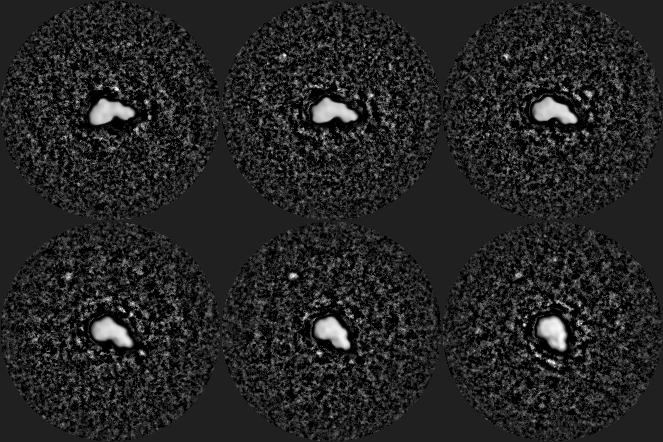
“We borrowed a specialized technique from another field of astronomy, known as ‘high-contrast imaging’, to detect the small moon whose faint light was overwhelmed by the intense brightness of the primary asteroid,” says Gianluca Li Causi of the SHARK-VIS team at the Italian National Institute for Astrophysics (INAF).
The presence of a moon is very exciting. In follow-up studies, the motion of this satellite will provide better constraints on the mass of the asteroid. With that, better constraints on the rest of the physical properties.
With that information, researchers hope to work out how this object came to be. Was it a collision and then a coalescence? Just a collision that created a mangled asteroid? Future work will hopefully tell.
The study is accepted in the journal Astronomy & Astrophysics and available on the arXiv.