Space and Physics
 PUBLISHED





By virtue of having the Perseids, August is always the favorite month in the boreal summer to look at the night sky. Recently, it's even had eclipses making it very unfair to poor September.
That said, you've now got a few weeks to prepare for some fun planetary observations.
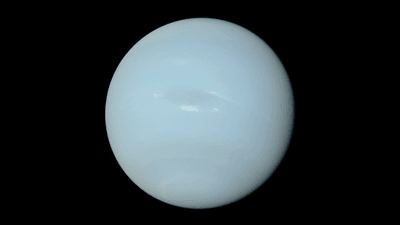
On September 26, Neptune will be in opposition. This means that moment when the planet is right on the opposite side of the Sun with respect to the Earth. When it comes to observations, Neptune will be at its brightest and closest to us, making this the easiest time of the year to look for it.
How to spot Neptune
Neptune is perfectly visible from your backyard, even in places that have some light pollution, though you usually need binoculars or a small telescope. Neptune, even at its brightest, is just below the level of visibility of almost all humans, even in the most perfect dark night conditions.
If September 26 doesn't work for you, then don't worry. Neptune will remain visible in the night sky for the rest of the year, and will move behind the Sun from February until April before reappearing in the pre-dawn sky.
You can easily spot Neptune using another planet, Saturn. The two are pretty close together in the sky this month. Saturn is visible to the naked eye, which makes it easier to recognize. And if you're unsure if what you're looking at is a planet or a star, then there is a simple trick to distinguish between the two: planets don't twinkle.
Stars twinkle because they appear to us as point-like, so the turbulence in the atmosphere creates the twinkling. Planets, however, are little disks, and that finite size allows for the shift to cancel out, making them less twinkly and more stable.
With a chaser of Saturn
There is another exciting reason to look up this winter. On October 4, just days after the opposition of Neptune, it will be Saturn’s turn to be in opposition. This will be your best chance to see the Lord of the Rings as bright as it will be this year.
Those of you with very good memories or a particular interest in planets at opposition might recall that Neptune and Saturn were also at opposition together last September.
The reason for this is simple: the outer planets in the solar system move very slowly around the Sun, so the Earth’s motion is the main player for the opposition. Saturn is at opposition every 374 days, while Neptune is in opposition every 367 days.
Finding Neptune on September 26 should be fairly easy: it will be in the East rising after sunset together with the full Moon.
We wish you glorious clear skies!