Space and Physics
 PUBLISHED





In Cloudy With A Chance Of Starships, author and astrobiologist Dr Seven M. Rasmussen explores the science behind our search for alien life. We caught up with her to find out more about the mission and received some lovely compliments along the way.
What inspired you to write this book?
STARSHIPS actually started the same way IFLS (long-time fan here) did! My friends on Twitter and I were prolific science shitposters – that is to say we were always trying to write jokes that were a) extremely niche b) topical/absurd, and c) weirdly accessible.
I gained a big following that way, and eventually caught the notice of Princeton U. Press. When they asked me what I wanted to write a book about, I knew I wanted to talk about alien life in the universe, but I also wanted to tell people that astrobiology isn’t just astronomy and biology – every science plays a crucial role in how we search for life in the cosmos.
The Drake Equation is the Jurassic Park Jeep in which we can take a mostly velociraptor-free journey through the lush jungles of astrobiology.
Dr Seven M. Rasmussen
What makes the Drake equation so fascinating?
The Drake Equation tells us how many civilizations we could talk to in the Milky Way right now. Its seven variables are conveniently arranged from “things we know pretty well” (the rate of star formation) to “things we might learn in a few decades” (how many habitable worlds per star) to “things we will almost certainly never know” (the average lifetime of a civilization).
Because we don’t know most of the numbers, it has no meaningful answer! Anyone claiming they’ve solved the Drake Equation has a bridge to sell you. Yet it’s still incredibly useful! The Drake Equation is the Jurassic Park Jeep in which we can take a mostly velociraptor-free journey through the lush jungles of astrobiology.
If you were to pick one of its terms to know with certainty, which would you pick?
Life, after all, came together from common ingredients in common circumstances, so it’s absolutely out there, waiting for us to find it among the stars.
Dr Seven M Rasmussen
I’m tempted to say the fifth one (the odds that life becomes intelligent), but to be real with you, it’s actually the sixth one (the odds that intelligent life becomes capable of interstellar communication), because that reads to me like “would aliens really want to talk to us?”
That’s what I want to know! Say you’ve been studying the Earth. You’re probably not right next door, so you’re on a time delay – maybe Planet X is 40 light-years away, so it’s 1986 in your telescope. Big hair, bigger hole in the ozone layer.
Would you want to talk to 1986 Earth? Would you wait it out? Would you slap a big “Do Not Feed The Humans” sign on the galactic door? I NEED to KNOW.
If money (or physics) was not a problem, where would you send a mission to search for life tomorrow?
OK, fun fact: We have yet to discover a single star system analogous to our own (ie, a Sun-like star with Earth-mass planets in the habitable zone).
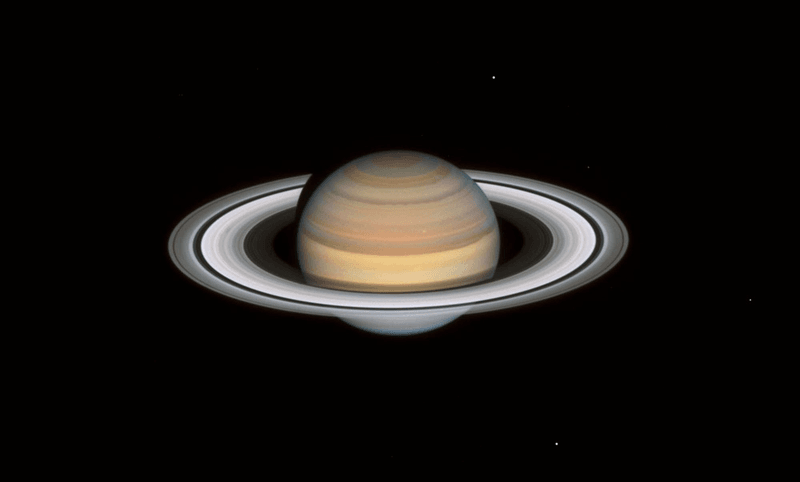
They’re out there, but our telescopes aren’t good enough to find them yet. That being said: Saturn’s moon, Titan, by a mile. It’s got an atmosphere! It’s got lakes! It’s got the building blocks of DNA just floating around willy-nilly, ready to go!
Sure, it’s outside the liquid water habitable zone, but (as readers will find out) life could easily evolve in Titan’s methane-ethane lakes. It feels like every day we find some new, even more complex organic molecules in Titan’s atmosphere or on the surface. If there’s life anywhere nearby, it’s there.
“Why not TRAPPIST-1e?” you ask. Because I am the number one hater of red dwarf planetary systems. Buy STARSHIPS to find out why!
What do you hope the readers will take away from the book?
I spent a lot of time making this book as accessible as possible. IFLS-ers will have a blast learning about all the cutting-edge astrobiology, but STARSHIPS is also a book you can buy your grandma because it doesn’t assume the reader knows what an atom is.
So I hope that these kinds of readers will have a “wait – maybe I am the kind of person who enjoys science” moment. Of course, I hope everyone will come away with awe for the incredible chain of events that brought us all to the living, technological world we live in today.
Life, after all, came together from common ingredients in common circumstances, so it’s absolutely out there, waiting for us to find it among the stars. We’re at the precipice of an incredibly exciting age of science.
I also hope that the reader will conclude that we can and must destroy capitalism for the good of the planet.
In this excerpt from Cloudy With A Chance of Starships, Dr Seven Rasmussen looks at the complex questions of what the crucial elements needed for life to exist are, where it started, and how these elements went from simple chemistry to biology.
Life's Ingredients
To make a long and messy story short, there are six elemental ingredients and five steps that must happen between “some atoms” and “a living creature.” It’s pretty easy to tell which elements are needed — we can just look at our own bodies. We are 65% oxygen, 18% carbon, 9.5% hydrogen, 3.2% nitrogen, 1.2% phosphorus, and 0.2% sulfur.
Now, our bodies have some stuff that the first cell did not, like calcium bones, which are a relatively recent invention in the grand scheme of things. We also have some potassium, which conducts electricity and helps our cells communicate signals to our brain. But the first cell didn’t need any of that stuff yet, so that just leaves SPONCH: sulfur, phosphorus, oxygen, nitrogen, carbon, and hydrogen.
Since no one has ever created life from scratch in a lab, it is impossible to know exactly the order, likelihood, and physical location of the five steps. Like many fields facing an absence of hard data, this void has been filled largely by computer models and heated debate.
Here are the five steps toward a single-celled organism:
1. Atoms must come together to form simple molecules known as amino acids.
2. Amino acids must link together to form long chains known as “proteins.”
3. Proteins must come together in a way that extracts energy from the environment for the cell to use.
4. The cell must isolate itself from its environment.
5. The cell must be able to reproduce and evolve.
What is most interesting about these five steps is that it appears that they cannot all happen in the same location. Scientists spend a lot of time trying to come up with ways that they could, and these efforts have resulted in a great schism of the field into two major camps: the “Warm Little Ponds” camp and the “Deep-Sea Vents” camp. This division is not just a matter of location but a broad philosophical disagreement over the definition and purpose of life.
In the Warm Little Ponds view, life is about making more life. To be a little more scientific, life is defined as that which can reproduce and evolve toward beings better adapted to their environment. This model aims to explain the rise of RNA, a complex molecule that functions similarly to the DNA in our bodies by acting as a blueprint for the creation of new cells. Physically speaking, the surface of a Warm Little Ponds world must contain shallow pools of water that experience a wet–dry cycle. The wet–dry cycle is a well-understood mechanism via which long chains of molecules can be created, which is key for many of the processes necessary for life.
The Deep-Sea Vents paradigm is about “metabolism,” or extracting energy from the environment. To a Deep-Sea Vents scientist, life is about eating snacks. Their science is all about the act of turning available chemicals into fuel. In the ocean, the unique chemistry around high-pressure “smokestacks” at the bottom of the ocean are the drivers of the five steps.
But the truth is that we can never really know which, if either, of these hypotheses is correct, because all of our evidence of that very first geologic era in which life evolved has been lost to geological processes. With that in mind, let’s take a closer look into the five steps.
Cloudy With A Chance Of Starships is published by Princeton University Press and available now.
To access exclusive CURIOUS content first and receive the quarterly digital magazine, become an All Access Member.