Space and Physics
 PUBLISHED



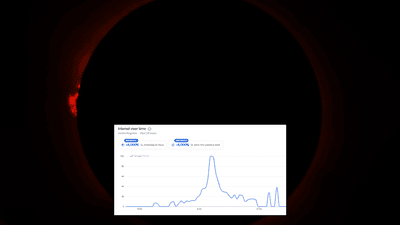


If you happened to be in the eclipse's path, it probably did not escape your attention that on August 12, 2026, the Moon took a big bite out of the Sun. It was also the first time in recorded history that an eclipse took place at the peak of the Perseid meteor shower.
While the astronomical event has been hyped up by the media, with all the usual warnings about how you shouldn't look directly at the Sun, this year has been no exception to the "ah surely a little glance couldn't hurt" trend.
Judging by Google's trend data, showing what people have been searching for during and after the eclipse, there were plenty of people in the UK willing to risk a cheeky little peek at our host star.
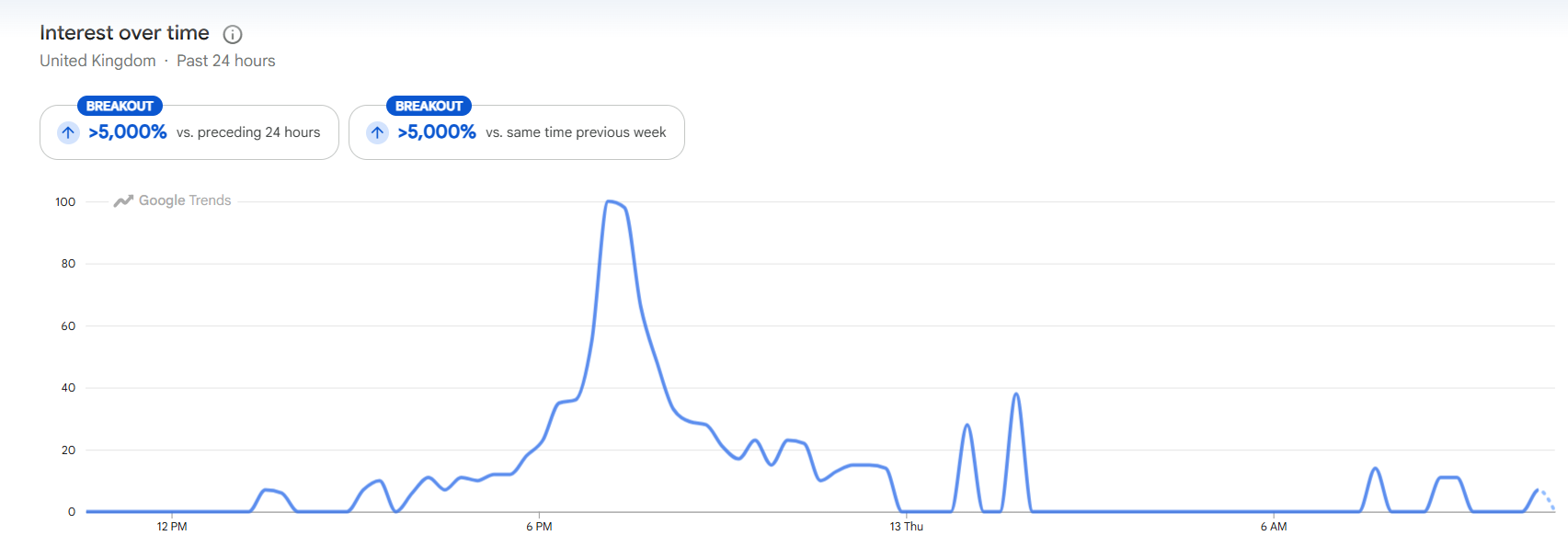
If you're thinking it could just be an unrelated spike in eye pain, an ocular coincidence, similar spikes were seen for the less ambiguous search term "my eyes hurt solar eclipse" and "my eyes hurt after eclipse".
Exacerbating the problem in the UK, there had been a bit of a shortage of eclipse-viewing glasses in the run-up to the event. Nevertheless, there are other methods of viewing an eclipse beyond gambling away your retinas.
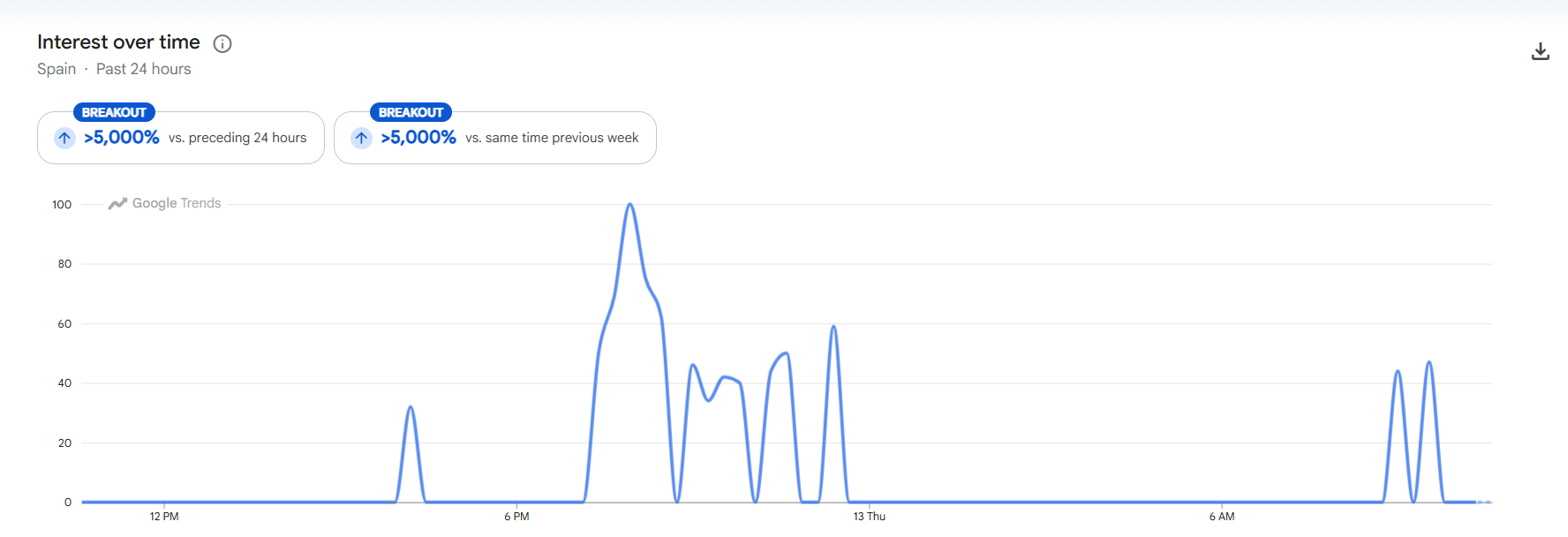
Before you go thinking that this is UK-specific, a quirk of the UK character to ignore all safety advice and gawp at the Sun, you should know that in Spain the term "dolor de ojos" or "eye pain" saw similar spikes.
So, what happens if you do view the eclipse without wearing glasses, should you be one of those people who just couldn't resist a little looky-loo?
The main risk is to your retina. The retina is the light-sensitive layer at the back of your eyes. When light hits the retina, it triggers chemical reactions which ultimately allow you to see objects.
Your eyes are effectively concentrating all that lovely, powerful light into a tiny patch at the back of your eye, meaning that if you expose the retina to too much light, it starts to get a chemical burn known as solar retinopathy. Because there is usually no need to feel pain in your eye, it also contains no pain receptors.
"Solar retinopathy can develop after only a short period of exposure. The damage may not be painful, so people often do not realise there is a problem until hours later," Alex Ionides, consultant ophthalmic surgeon at Moorfields Eye Hospital, explained to NHS Foundation Trust.
"Symptoms can include blurred vision, distorted vision, reduced colour perception, difficulty reading, or a dark spot in the centre of vision. In some cases, the effects improve over time, but permanent vision loss can occur in some cases."
In short: maybe stock up on glasses for the next one now, rather than searching eye damage terms afterwards.