Space and Physics
 PUBLISHED




SpaceX's Starship achieved orbit for the first time yesterday, deploying 26 Starlink satellites before its mission was brought to an early close, ending with a dramatic explosion in the North Pacific.
This milestone test was also the rocket's first revenue-generating launch, with its payload of satellites representing millions of dollars' worth of equipment and the first members of Elon Musk's proposed 100,000-strong constellation of Version 3 Starlink internet satellites.
The 124-meter (407-foot) rocket successfully launched at 07:48 am Texas time (08:48 EDT/13:48 BST), with its 52-meter (171-foot) upper stage separating cleanly from the Super Heavy booster 2 minutes 30 seconds into the flight, despite one of its 33 booster engines cutting out during the launch.
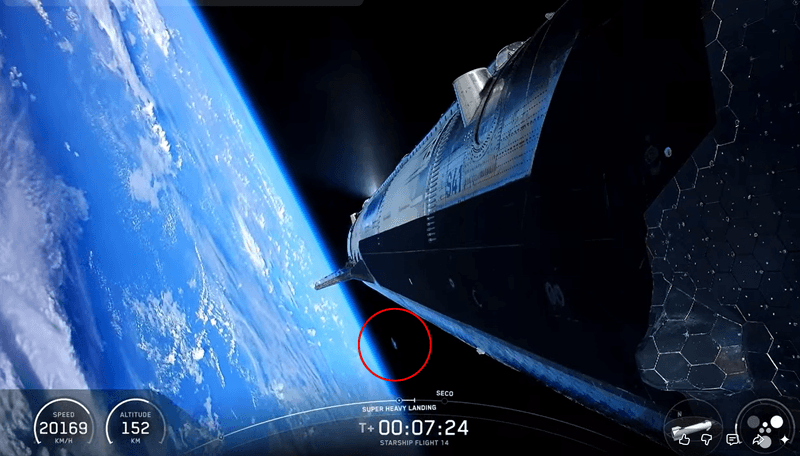
At 7 minutes and 18 seconds into the flight, however, as the upper section (called Ship) climbed into its suborbital position, one of its three Raptor Vacuum engines also cut out early, leading to questions over whether the vehicle would be able to attempt an orbital insertion.
Speaking on the SpaceX livestream of the launch, SpaceX spokesperson Dan Huot initially said the insertion burn was called off, but a few minutes later Starship was given the "go" for orbit. At roughly 25 minutes after launch, the rocket ignited a single sea-level Raptor engine for about 20 seconds, pushing it into orbit 276 kilometers (171 miles) above Earth.
"First orbital flight of Starship successful!" said SpaceX CEO Musk on X. "Starship is orbital," confirmed mission control on the livestream.
Also speaking on the livestream, Huot said: "We were being extremely conservative with going to orbit today, we were only going to go if we were very confident in the core systems that have to work to get you out of orbit once you're up there."
"[We] took some extra time, added some extra drama, but we were able to clear the sea-level raptors, the three center engines, and do our first ever successful orbital insertion burn."
Following the successful insertion into low Earth orbit, Starship re-oriented to an upright position and began releasing its payload of 26 Starlink Version 3 satellites over the course of about 30 minutes, with all 26 successfully deployed at just over an hour into the flight.
The satellites appeared to drift sedately out of the side of the ship, exiting through a hatch in the vehicle's hull, though in reality the craft and its payload were moving at more than 26,000 kilometers per hour (16,000 miles per hour) at the time.
After the last satellite had been deployed, Ship continued its orbit around Earth, completing nearly two full revolutions before splashing down into the ocean (skip to around 1:28:00 in the video below).
This was a much shorter mission than had originally been planned, cutting nearly 7 hours of flight time and failing to achieve the six orbits of Earth the firm had hoped for.
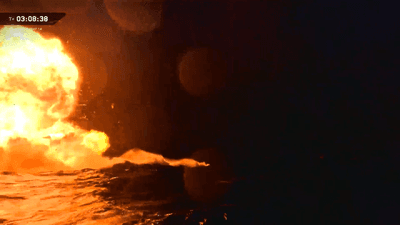
The vehicle splashed down in the northern Pacific at 3 hours and 8 minutes post-launch, after re-orienting to a vertical position and slowing its descent. It was initially intact, but slowly toppled and exploded in an enormous fireball, something SpaceX has previously referred to euphemistically as a "rapid unscheduled disassembly."
"Not quite a soft, extra-soft splashdown like we had on the last one, but Starship is in the water nonetheless," said Huot on the livestream.
Posting on X, NASA Administrator Jared Isaacman took an effusive tone: "Congrats @SpaceX! Gorgeous launch, getting Ship to orbit and managing every step in a safe, responsible, and especially inspirational way. @NASA, along with the rest of the interested public, is excited to help where we can and for Starship missions to become routine!"
The market response was less positive, with SpaceX shares falling 2 percent according to Reuters. Clearly, the specter of engine problems has yet to be fully banished, and the failure to recover Ship intact adds to the many hurdles the company must overcome before Starship can be considered truly reusable and safe to transport a human crew to the Moon.
With NASA aiming to return astronauts to the Moon's surface in 2028 – and Starship vying with Blue Origin's Blue Moon to be the lander that gets them there – there's not much time left for the already three-times over-budget project to achieve mission-readiness.