Space and Physics
 1
1



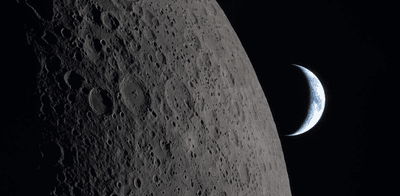


A huge chunk of an abandoned SpaceX rocket smashed into the Moon earlier today. There's no official confirmation yet, nor any images of the crash, but here's what we know so far.
For several months, astronomers have predicted that the upper stage of a Falcon 9 rocket was set to crash into the lunar surface.
Based on its trajectory and the Moon's gravitational pull, the collision was due at around 6:35 am UTC (2:35 am ET) on August 5, 2026. Since that time has now passed, the impact has most likely occurred.
What we know about the rogue debris
The piece of space junk – around 13.8 meters (45 feet) long and weighing 4,000 kilograms (8,000 pounds) – comes from the launch of Blue Ghost, a private lunar mission from Firefly Aerospace that successfully landed on the Moon on March 2, 2025.
The crash wasn’t originally part of the plan. After deploying Blue Ghost, SpaceX's Falcon 9 upper stage was supposed to fall back through Earth's atmosphere, burning up in the process. Instead, it got caught in the Moon's gravity and was drawn steadily closer over the months leading up to today's collision.
This morning’s crash is believed to have occurred near Einstein crater, on the Moon's western limb, at a speed of roughly 8,700 kilometers (5,400 miles) per hour – faster than a bullet from a sniper rifle. That's according to information released by NASA and an early version of an article by physicists predicting the nature of the crash.
All of that will have caused quite the bang. Physical modeling from that early-stage article suggests it will have carved out a fresh crater somewhere between 20 and 30 meters (66 to 98 feet) wide and around 5 meters (16 feet) deep, throwing more than a million kilograms of lunar dust above the impact site.
Where are the images of the crash?
Confirmation, however, is going to take a little longer. None of the spacecraft currently in orbit around the Moon was in a position to catch the impact live. Even if one had been, the flash of the collision – if there was one – would have been very faint, since the Falcon 9 stage is a hollow structure rather than a solid chunk of rock or metal.
So far, the European Southern Observatory (ESO) is the only observatory to have shared its detection, which would appear to confirm the crash. Its Very Large Telescope (VLT), based in Chile, had been waiting to detect the collision as part of a coordinated campaign.
It detected spectral lines of sodium and lithium gas in the impact plume that lasted up to 10 minutes after the impact. So no direct images, but the closest we have to impact confirmation so far.
NASA said it would attempt to view the incident from ground‑based telescopes but noted ahead of the impact time that “weather and lighting conditions may make viewing difficult.”
Fingers crossed they get the money shot. But if they don’t, it should be possible to identify the impact crater after the fact with a before-and-after comparison of the crash site.
This is a rare opportunity for astronomers
Crashing space junk into the Moon probably isn't something humankind should make a habit of since it will disturb the pristine lunar surface, which holds an important record of natural impacts from eons past. But it will provide some cool science in the meantime.
Because we know almost exactly what hit the Moon, scientists will be able to see whether their collision models are any good at predicting the result of debris slamming into the lunar surface.
This is only the second time a substantial piece of human-made space debris is believed to have crashed into the Moon by accident, rather than as part of a deliberate mission. The first was in March 2022, when a discarded rocket booster from China’s Chang'e 5-T1 mission slammed into the far side and left a strange double crater.
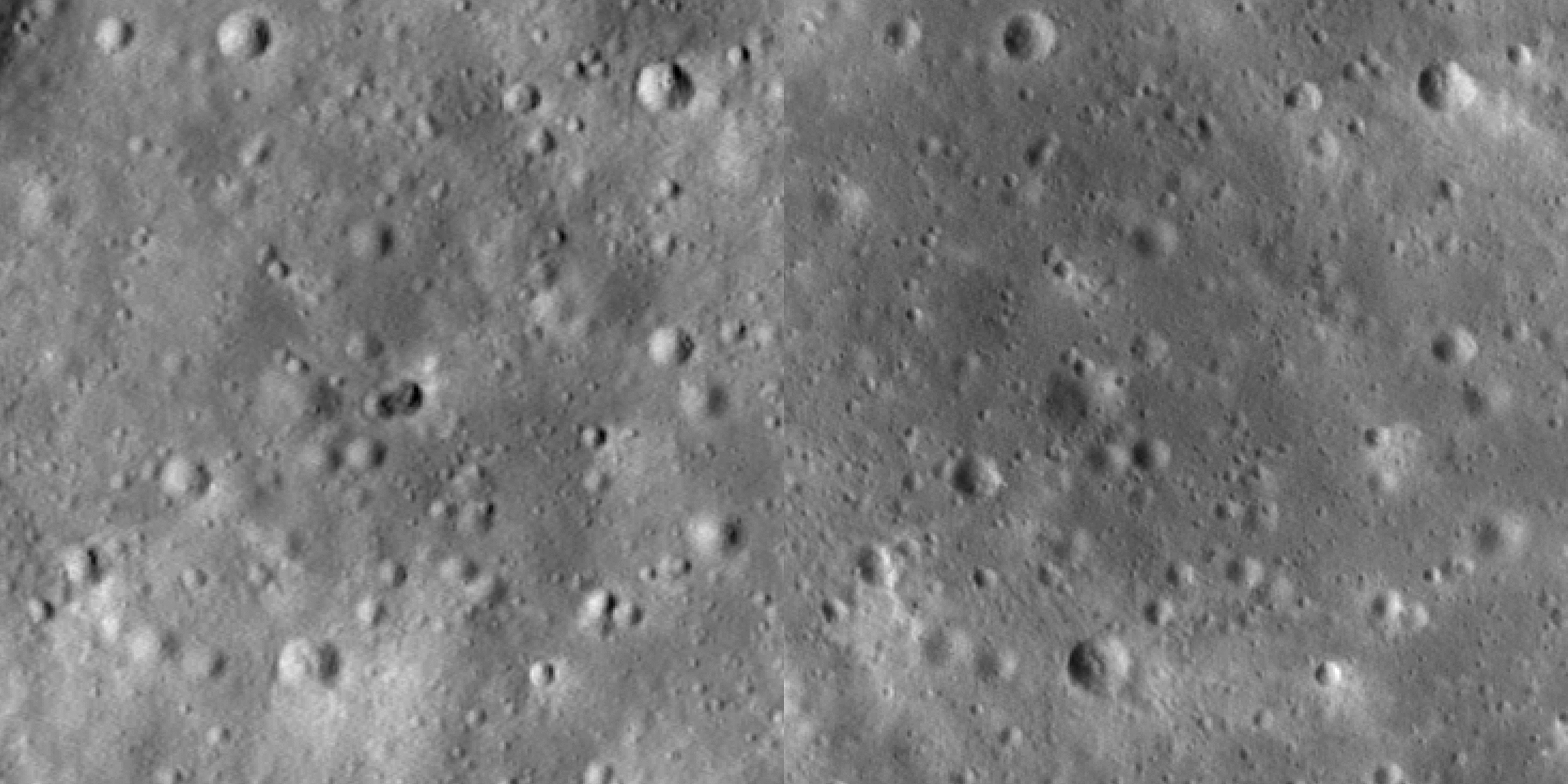
However, this latest SpaceX crash is unlikely to be the last one you hear about.
Lunar traffic is only set to increase as NASA, SpaceX, and a growing list of private companies send more hardware towards the moon, increasing the chances of rogue rocket boosters and other debris being caught by its gravity and crashing.
This article was updated to include the ESO posts shared on social media at around 4pm UTC that appear to confirm the lunar collision.