Nature
 PUBLISHED


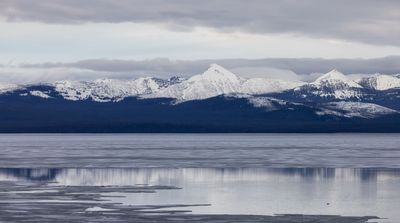


Yellowstone Lake, the largest body of water in Yellowstone National Park, has been impressively resilient in the face of climate change. In the last century, the length of time that the lake has been covered by ice each year has not changed, despite increasingly warm temperatures in the region.
In the midst of a climate crisis, most lakes around the world are experiencing shorter periods of ice cover. “Lakes are sentinels of environmental change,” the researchers write in their new study. As things get hotter, they tend to freeze later and melt earlier – but not Yellowstone Lake.
“Contrary to expectation, the ice phenology of Yellowstone Lake has been uniquely resistant to climate change,” they add. “Indeed, despite warming temperatures in the region, no change in the timing nor duration of ice cover has occurred.”
Yellowstone Lake, with a surface area of 341 square kilometers (132 square miles) and sitting 2,357 meters (7,733 feet) above sea level, is North America's largest high-elevation lake. Such lakes were thought to be particularly vulnerable to climate change, but few long-term records of their phenology – the timing and duration of ice cover during winter – exist.
To rectify this, the team behind the new study quantified Yellowstone Lake’s ice phenology over 95 years (1927-2022), comparing it to seven similar lakes in northern Europe.
Typically, the lake is ice-covered from late December through May – and this has stayed surprisingly consistent over almost a century, even with the 1°C (1.8°F) increase in temperature the Greater Yellowstone Ecosystem has seen since 1950. Other lakes in Europe, meanwhile, have not seen the same consistency.
“The unchanging ice phenology of Yellowstone Lake stands in stark contrast to similar lakes in the Northern Hemisphere,” the researchers write.
Which begs the question: Why is Yellowstone Lake seemingly so invulnerable to climate change?
The team believe that the lake’s secret weapon may be increased snowfall, which has likely acted as a shield against spikes in temperature. “Shifts in local precipitation, especially increases in fall and spring snow, appear to be buffering the lake’s ice phenology against warming temperatures,” they explain.
It’s simple thermodynamics: a thicker layer of ice takes more energy to melt, so a quicker build-up of snow in fall, followed by an extra sprinkling in spring creates a thick covering that can withstand increasing air temperatures – at least for now.
Climate projections suggest that there will be continued warming and a shift from snow to rain in both fall and spring in the high Rocky Mountains, which could be detrimental to Yellowstone Lake’s enduring ice cover. The researchers think a “tipping point” may be on the horizon, which could bring about abrupt changes in the lake’s ice phenology.
The tide may be turning for Yellowstone, and it could really shake things up for the lake’s whole ecosystem, affecting its hardy inhabitants and impacting everything from nutrient cycling and lake productivity, to fisheries and recreation.
The study is published in Environmental Research Letters.