Nature
 PUBLISHED
 1
1


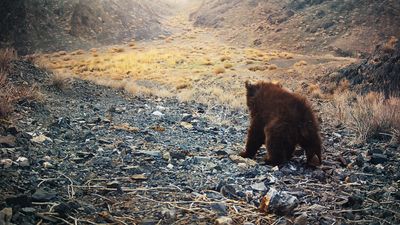


Gobi bears are the most endangered of Earth’s eight bear species. Just 40 individuals are thought to be left surviving in the Gobi Desert in Mongolia, a place of extreme temperatures and little water. Recently, a film crew captured sight of Gobi bears in this environment, and they even have a little one in tow.
While filming for the Apple TV+ series The Wild Ones, the team set up camera traps in this remote landscape, hoping to catch a Gobi bear on camera. Their efforts pay off in the form of not one but two Gobi bears, but the most joyful moment comes as the presenters review the footage and discover the pitter-patter of tiny bear cub paws as an adorable youngster makes it onto the recording.
The remaining Gobi bears (Ursus arctos gobiensis), which are a subspecies of the brown bear, live in the Gobi Desert in south-west Mongolia, and are known as Mazaalai by the Mongolian people. They are the only bear species to have evolved to live in such extreme hot desert climate conditions. The bears primarily live around three oases within an area called the Great Gobi Strictly Protected Area (GGSPA), which was established in 1976 to protect the flora and fauna of this region.
The diet of gobi bears may seem somewhat unusual, but these large omnivores mostly eat parts of wild rhubarb plants, grasses, and even wild onions. Only around 1 percent of their diet is thought to be made up of animal matter.
Gobi bears also featured in the BBC's natural history program Asia, which showed an adult bear trekking 160 kilometers to find water across the desert.
“Life here, in the arid heart of Asia, has turned them into one of the toughest animals on Earth – they are clinging to existence,” says narrator David Attenborough in the above clip. “In Mongolian, Gobi means 'waterless place' and therein lies the bear’s greatest challenge: sources of water may be 100 miles [160.9 kilometers] apart – they face a gruelling trek across the desert.”
The six-part series The Wild Ones is on Apple TV+ now.