Nature
 PUBLISHED


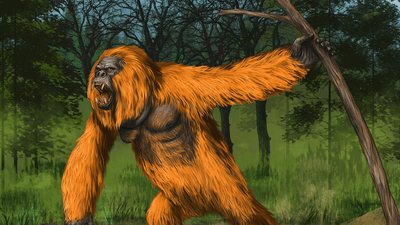


The largest species of great ape to ever walk the Earth was Gigantopithecus blacki. Standing over 3 meters (nearly 10 feet) tall and weighing up to 300 kilograms (661 pounds), the extinct species would have easily dwarfed the gorillas, orangutans, chimps, and bonobos of today.
What is a Gigantopithecus?
G. blacki is sometimes called the “real-life King Kong” owing to its gargantuan size, although it is more closely related to orangutans from the Ponginae family. If you’ve seen the 2016 remake of The Jungle Book, the figure of King Louie is said to have been based on Gigantopithecus.
“The Jungle Book basically made him a large orangutan. We don't know how much G. blacki would have looked like an orangutan but it was definitely a Pongine, so in the right family. As for the orange fur – we really don't know,” Associate Professor Kira Westaway, a researcher at Macquarie University who has researched the extinction of G. blacki, told IFLScience in January 2024.
Part of the reason we know so little about this prehistoric giant is the lack of physical remains; the only evidence of their existence is a few thousand fossilized teeth and four jawbones. Scientists have deduced the scale of Gigantopithecus based on the size and proportion of these remains compared to those of other great apes that still live on planet Earth today.
The first evidence of Gigantopithecus came to light in 1935 when anthropologist Ralph von Koenigswald found an unusual specimen in a traditional Chinese drugstore in Hong Kong. Labeled as "dragon teeth," von Koenigswald discovered the molars belonged to an unidentified species of extinct ape he called Gigantopithecus.

When did Gigantopithecus go extinct?
The current consensus says that Gigantopithecus lived in eastern Asia around southern China from roughly 2 million years ago until it fell into extinction during the Early to Middle Pleistocene, sometime between 300,000 years ago and 100,000 years ago.
The extinction of Gigantopithecus was most likely caused by climatic change in the region, according to a study published in January 2024. Around 600,000 years ago, the environment of East Asia became more variable due to the increase in the strength of the seasons, causing a change in the types of plants growing in the forest.
The more seasonal climate created dry periods when it was difficult to find to find fruit. Orangutans were able to switch to eating other “fallback food” like shoots, leaves, flowers, nuts, seeds, and insects, but Gigantopithecus struggled to make the transition. Ultimately, they were not mobile enough and too inflexible to stomach the change.
The real Bigfoot?
It's often been suggested that Gigantopithecus may have been the inspiration for the ape-like creatures that inhabit humans’ folklore, such as Bigfoot, the Yeti, and the Sasquatch.
There are a handful of folks who believe Gigantopithecus never fell into extinction. They posit that the animal crossed the Bering Land Bridge into North America, just like prehistoric humans did, and became known as the Sasquatch. Of course, there’s no real evidence this adventure ever occurred, nor any evidence that the Sasquatch has ever existed.