Nature
 PUBLISHED
 1
1




Wouldn’t you just love to slap a dinosaur like a big bag of topsoil? Of course you would, you’re only human. A mere slave to the “if not friend, then why friend shaped” order of thinking.
Petting a T. rex would likely go the same way of Jurassic Park's Man On Toilet scene, but there were plenty of other dinosaurs (read: smaller, herbivorous) that might have been more amenable to a tickle on the tummy. So, if we allowed ourselves to dream for a moment, what animals alive today might they have felt like?
Because the scales on the duckbilled dinosaur are so small, many modern lizards would have a comparable feel.
Professor Paul Sereno
It’s an unfortunate fact that we’ll never find a frozen dinosaur because there's no ice on Earth that's old enough. That means, unlike the woolly rhinos or mammoth that sometimes ooze out of melting permafrost, any frozen dinosaurs would've thawed out long ago.
What about mummified remains, then? After all, mummified dinosaurs are surprisingly common.
Here, things get interesting, as just recently it was announced that two remarkably intact dinosaurs had been discovered in Wyoming’s “mummy zone”. The region was subject to the perfect storm of flash floods and dry weather that meant a pair of Edmontosaurus were rapidly buried after death.
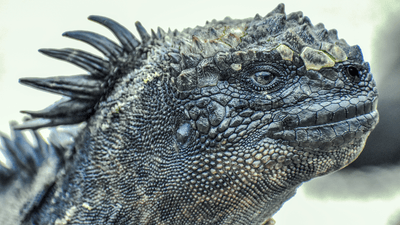
The spikes on the back had some texture and might be similar to spikes on an iguana lizard.
Professor Paul Sereno
What came next involved a process known as clay templating, which locked into the fossil record intricate details about these animals’ soft tissues. So, what would they have felt like? We asked the University of Chicago's Professor Paul Sereno, who was a lead investigator on the research.
“Because the scales on the duckbilled dinosaur are so small, many modern lizards would have a comparable feel,” Sereno told IFLScience. “The hooves would be similar to hooved mammals like a taper or rhino. The spikes on the back had some texture and might be similar to spikes on an iguana lizard.”
Deciding which living animal makes a good analog for dinosaur skin very much depends on the dinosaur you’re talking about, of course. We know some had scales, while others had feathers, but we’ve also found dinosaur remains that had a bit of both.
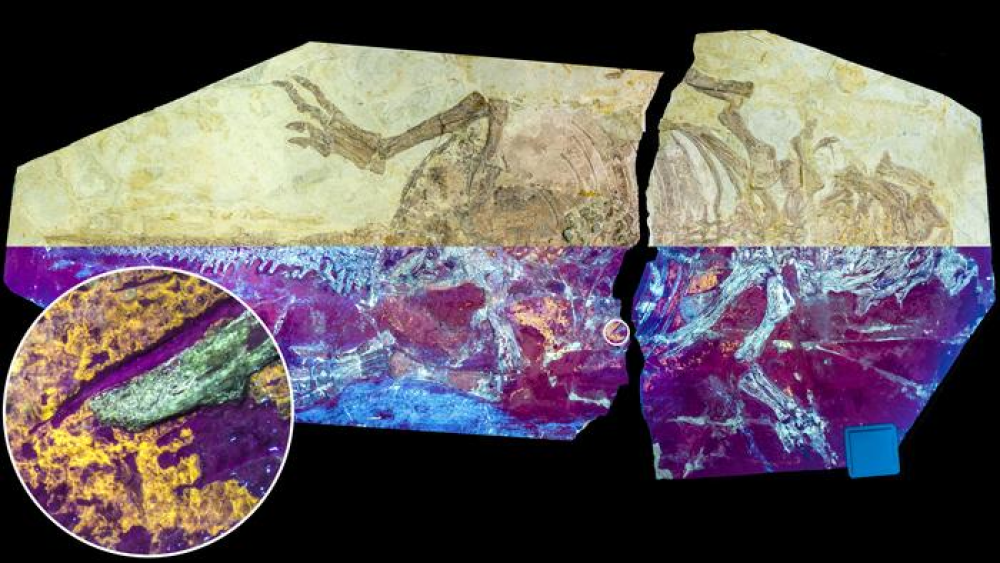
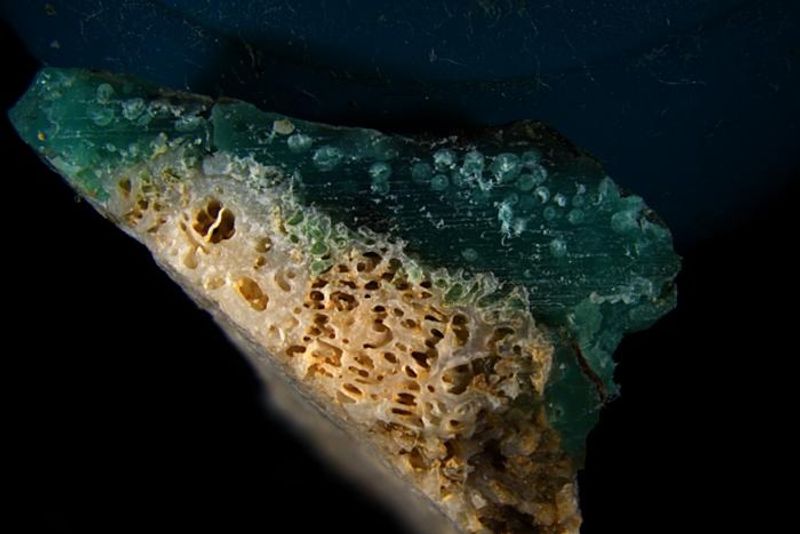
That discovery involved using UV light to reveal the chemistry of some fossilized dinosaur skin that was composed of silica – the same as glass. “This type of preservation has never been found in vertebrate fossils,” said University College Cork palaeontologist Dr Zixiao Yang in a statement. “There are potentially many more fossils with hidden soft tissues awaiting discovery.”
The team working on the silica fossil suggest that bird-like skin only developed in select, feathery patches of dinosaur skin, while the rest remained scaly and reptile-like. Skin is a large organ that carries out many functions, and so it could be that in developing specialized skin specific to feathered and bald regions, these dinosaurs were better able to protect themselves against injury, dehydration, and parasites.
So, perhaps petting some dinosaurs might’ve felt like a mosaic of bird and reptile. Finding it hard to imagine such a hybrid? Say hello to Archaeopteryx.