


 Nature


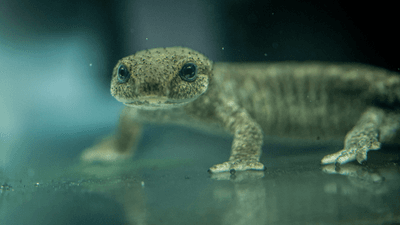


A small newt just got a big population boost in northern Spain where conservation experts have released 32 captive-bred individuals into the wild. Thought to be down to their last 1,000, things were looking bleak for the Montseny brook newt.
Now, thanks to an international conservation effort, their future just got a little brighter.
Big moves for little newts
Until 2017, the Montseny brook newt (Calotriton arnoldi arnoldi) had never strayed outside of its native home in the Catalonian massifs of Spain. Then, they went airborne.
[T]he male will lasso the female with its tail and contort their bodies until their cloacas are touching.
Ellie Bland
At the request of the local government, 24 individuals made the journey to Chester Zoo in the UK as part of an ambitious conservation effort to boost their numbers. I say ambitious, because it’s not easy figuring out how to help a rare newt make babies – let alone keeping track of their eggs.
As a species that lives in fast-flowing water they've evolved to hide their eggs in tiny crevices, so finding them even in captivity isn't easy. Then, there's all the distracting shenanigans they get up to.
“They're very visual animals and will follow feeding pipettes around the aquarium," Ellie Bland, Chester Zoo’s Ectotherms Keeper, told IFLScience. "They are also very food-oriented, as even when they are in amplexus both male and female will readily feed."
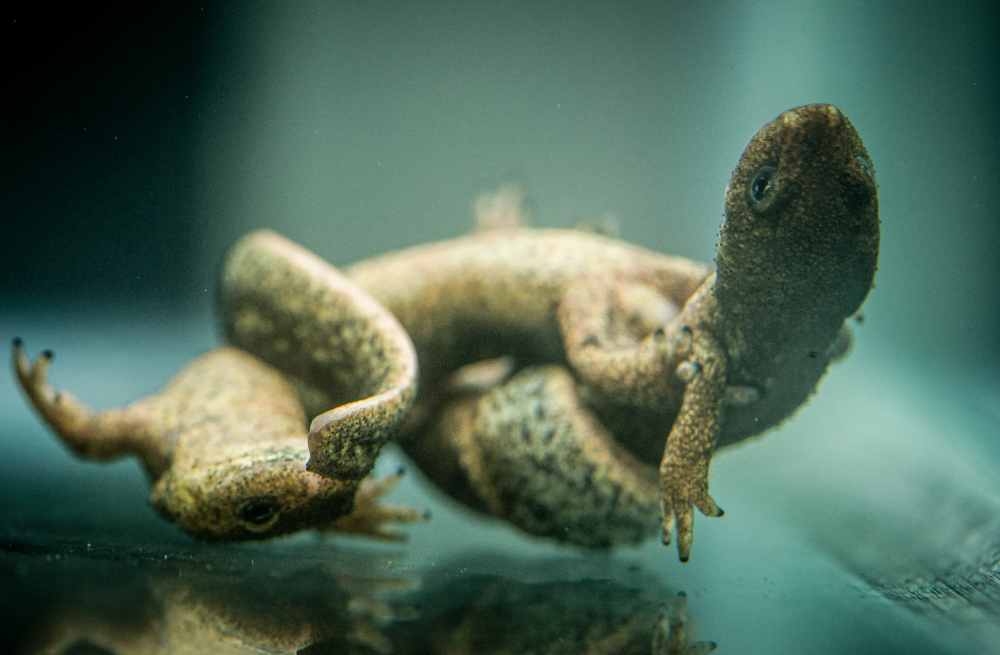
"The way they perform amplexus is pretty unique, as the male will lasso the female with its tail and contort their bodies until their cloacas are touching, so he can pass a spermatophore directly to her."
Quite the day at work, then.
Swerving genetic bottlenecks
The breeding program has successfully established 12 breeding pairs that will remain at Chester Zoo. Meanwhile, 32 individuals have been released into a top-secret location within a mountainous habitat near Barcelona, Spain.
Though their numbers have dipped to around 1,000 in the wild, conservationists were encouraged to find that they have maintained reasonable genetic diversity. It’s a long road ahead with habitat disturbance, fungal pathogens, and the pet trade posing significant threats, but hundreds more are expected to follow this initial return to the wild.
“These newts are fascinating, and also quite cute,” said Dr Gerardo Garcia, Animal & Plant Director at Chester Zoo, who has been involved with the Government of Catalonia’s Montseny Brook Newt Recovery Plan since its beginning, in a statement sent to IFLScience.
“But they are extremely vulnerable. Their habitat is fragmented by roads, they are highly sensitive to water quality, and they face the constant threat of illegal wildlife trade."
“Usually when numbers get this low, you'd expect genetic diversity to plummet. But research shows it's surprisingly good. That gave us a strong foundation for the project.”
Montseny brook newts gone wild
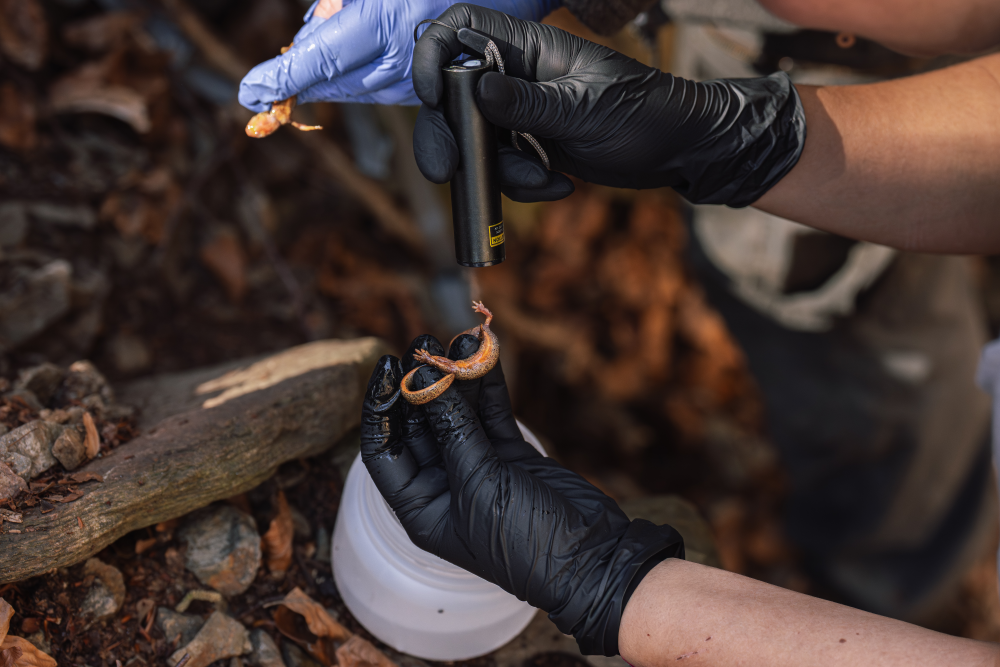
Tiny UV markers will enable the newts’ progress to be monitored, but there’s still much we don’t know about the secret lives of these elusive amphibians.
[M]any other species that occur in the same area will benefit from the protection of this species.
Ellie Bland
As larvae, they’re easy enough to find in the wild, but then they seem to disappear only to reemerge as adults. Conservationists suspect they may sneak off to an underground river system beneath the Montseny mountains.
A mystery we’ve yet to solve, but it's hoped that by boosting their population, the reintroduction can help not just the newts, but their wider ecosystem, too.
"The newts, like many amphibians, are a good bioindicator for the ecosystems they occur in," said Bland.
"The success of the newt's reintroduction requires careful habitat management and preservation, which in turn means many other species that occur in the same area will benefit from the protection of this species."
This article has been updated to include original comments from Ellie Bland, Chester Zoo’s Ectotherms Keeper.


 1
1