Nature
 PUBLISHED





Look, we don't want to be those neighbors who tell you it's hot out when you obviously already know it's hot out. But over in Europe it has been extremely hot, definitely hot enough to be worth talking about, and it has been for much of the summer.
While wildfires rage across the continental mainland, the UK has faced its own succession of heatwaves. Often being stereotyped as a wet and drizzly nonsense island, it has instead become an extremely hot and dry nonsense island.
This year's heatwaves have been record-breaking, with the UK seeing its highest May temperatures on record at 35.1°C (95.2°F) in Kew Gardens in London on May 26.
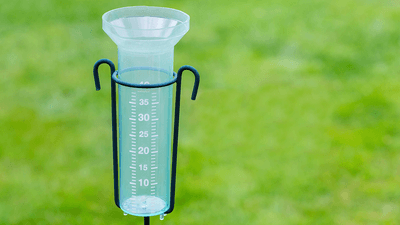
The records keep coming, with July expected to be the driest month since records began. In England specifically, the country is expected to have received around 7 percent of its usual July rainfall, while southern England is expected to have seen just 1 percent of its usual allotment of sky juice.
Bar a few showers, the capital has been especially parched. For the first time since the botanic gardens at Kew started collecting weather data, its weather station has reported a full calendar month without registering any rainfall at all.
Per The Times, King George III initially ordered an astronomical observatory to be built at Kew in 1769, and daily weather observations began four years later in 1873.
As time went on, Kew became an important weather observatory, and in 1867 it became the center for the Meteorological Office, now better known as the UK Met Office. As well as being a center for testing new meteorological instruments, Kew kept regular records of the weather, including rainfall.
Rainfall at Kew has fallen pretty low before, with just 2.5 millimeters in July 1999 and 3.7 millimeters in July 1921.
According to an analysis by weather blog Dan's UK Weather Updates, however, this is the first time 0 millimeters has been registered in a calendar month. Perhaps more worrying, though, is the overall trend.
"Of top 6 driest July's 5 of them have occurred since 1990," Dan noted on BlueSky.
"You can also get an indication the late 1800s featured extreme weather volatility, floods and drought and some extremely bitter winters clustered," he added. "Arguably more extreme times than now just without extreme heat, it was a nightmare being a farmer, that's for sure."
Climate data is something that takes time to collect and analyze, as demonstrated by the fact Kew has been collecting its data since the late 19th century. The data for Dan's analysis came from a site called Starling's Roost, which collates near real-time data from MET Office observatories, but we may have to wait for an official statement from Kew to officially confirm this new record.
As noted by news site London Centric, however, the official records at nearby Hogsmill weather station also registered no rainfall in July, with the last rain being a measly 0.19 millimeters on June 27.


 1
1