Nature
 PUBLISHED
 1
1


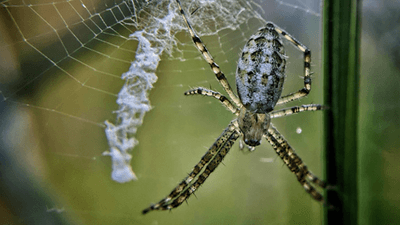


Ever walked past a spider’s web and noticed it’s got zigzags woven through it? Congratulations! You have observed stabilimenta, a kind of “extra touch” that spiders weave into their webs that's made out of silk.
Thing is, for a while there, we didn’t really know what they were for. Now, new research has shown how these decorations could serve a functional purpose in helping a spider to detect the vibrations of ensnared prey from a greater number of detection points across its web.
Spiders’ webs come in all shapes and sizes, from funnel webs to sheet webs and the classic orb web – the sort you imagine for Halloween decorations. A fairly common feature in orb webs is stabilimenta: threads of silk that bridge the gaps between the web's “spokes”.
The intricate geometries of spider webs have long inspired the design of hierarchical metamaterials, prized for their unique acoustic properties.
Gabriele Greco
Previous theories as to their purpose have included temperature regulation, water collection, or perhaps a means of defense as a way to deter predators while still enticing insects. A new study decided to explore another theory: that stabilimenta could alter the way vibrations spread across the web when prey lands in a spider’s trap.
To do so, they looked at the webs of wasp spiders (Argiope bruennichi) to observe how they built their stabilimenta. They were then able to run numerical simulations to explore how the geometries of those silken decorations could alter vibrations within the web and the detection points where a spider might be able to feel them.
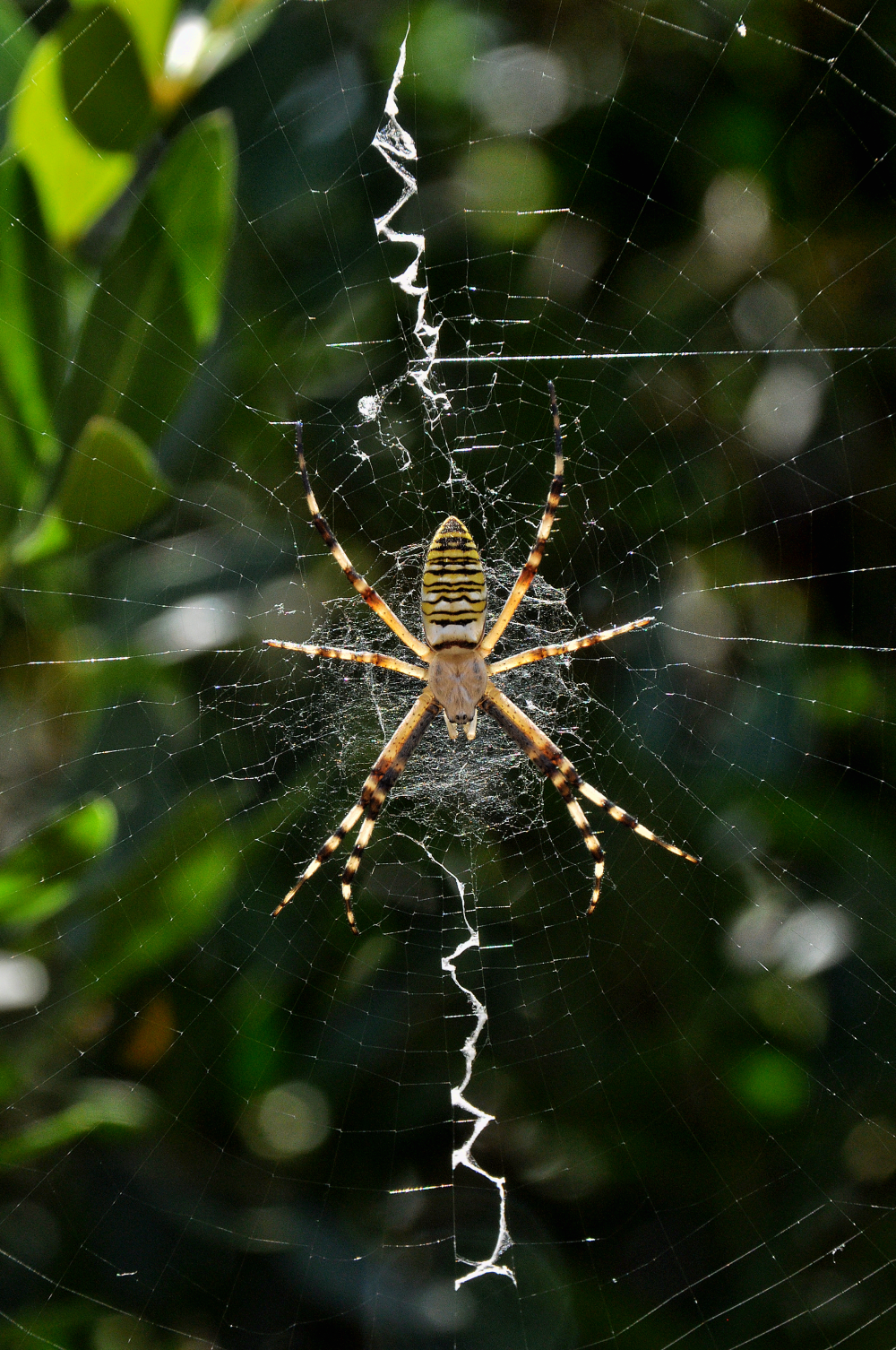
The results showed that the significance of stabilimenta in altering vibrations depended on their shape and position. For example, web decorations that ran perpendicular to the web surface or central threads caused minor delays; meanwhile, those that ran in the same direction meant vibrations could be detected from a great proportion of the web.
“This study reveals that the decorative stabilimentum in Argiope bruennichi webs is more than just ornament, for it subtly changes how certain vibrations travel through the web,” said the authors in a statement. “By combining field observations and simulations, the work discusses the mechanical role for stabilimenta and inspires designs for bio-inspired materials with tunable elastic properties.”
So, it could be that these decorations are akin to installing a few extra doorbells so you don’t miss the takeout delivery driver. However, there’s still much we don’t know about the function of stabilimenta, and much we could stand to learn from them.
“The take-home message is that the stabilimentum does influence vibration propagation in orb webs, but its effect is far less straightforward than one might expect and deserves more detailed investigation,” said study author Gabriele Greco of the University of Agricultural Sciences Uppsala to IFLScience.
“The intricate geometries of spider webs have long inspired the design of hierarchical metamaterials, prized for their unique acoustic properties. The stabilimentum, in particular, demonstrates how decorative silk structures can actively broaden a web’s sensitivity to certain vibration types (i.e. the ones tangential to the spiral). I hope to dedicate my future work to this and try to understand better how stabilimenta work!”
The study is published in the journal PLOS One.