Nature
 PUBLISHED
 3
3




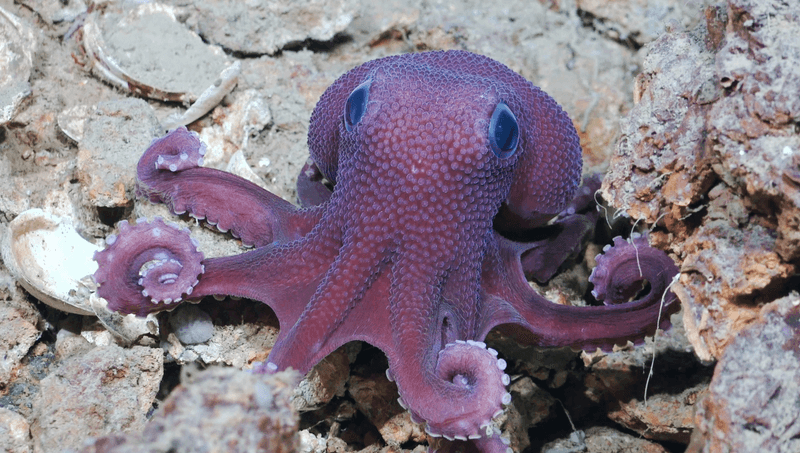
We get it okay, the ocean is frankly one of the weirdest habitats the Earth has to offer, with everything from tiny octopuses to giant whales swimming below the surface. While you might have come across scallops on the menu at the local seafood restaurant, what exactly are they and what do they get up to before they reach your plate?
What are scallops?
Scallops are marine bivalve mollusks, usually of the family Pectinidae, which includes around 50 genera and subgenera and more than 400 species, according to Britannica.
What do scallops look like?
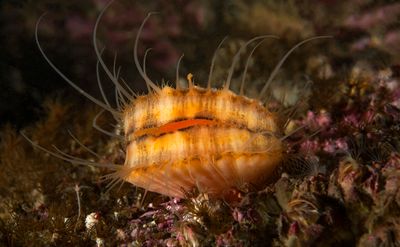
The shell of a scallop consists of two parts, typically in a fan shape with a hinge and two wings on either side. These shells can be rough or smooth and often wash up on the beach in a range of colors.
The animal lives inside the shell. The body of the scallop inside the shell consists of a white adductor muscle and a bright orange section called the coral. While both sections are edible, it's the white muscle that is typically served in restaurants.

Scallops also have around 200 eyes that can see in both peripheral view and narrow view at the same time by using a system of concave mirrors. A 2017 paper found that each eye has more than 100,000 square mirror tiles, and the eyes are all along the edge of the mantle margin according to the Carnegie Museum of Natural History.
Similar to other bivalves like mussels, which glue themselves to rocks in one place, some scallops prefer to remain on the sea bed or bury themselves in the sand. However, scallops can swim through the water quite quickly by snapping their top and bottom shells together, to escape from predators like fish and sea turtles.
What do scallops eat?
Scallops are filter feeders that sift phytoplankton, algae, and small organisms out of the water column.
Where do scallops live?
Scallop species are found all over the world but only in saltwater. Their location differs by species. For example, the Atlantic sea scallop (Placopecten magellanicus) is found at depths of 30 to 91 meters (100 to 300 feet) in the Northwest Atlantic Ocean, according to the National Oceanic and Atmospheric Administration. A 2020 study estimated that there were 34 billion individual scallops of this species living in an area of 70,000 square kilometers (27,000 square miles) on the Atlantic side of North America.
The largest scallop species are weathervane scallops (Patinopecten caurinus), which can grow to 30 centimeters (11 inches) in diameter, and can be found in sand and gravel habitats from northern Alaska to California, writes Central Coast Biodiversity.
How do scallops reproduce?
Female sea scallops can produce hundreds of millions of eggs in one year, which are released into the water column to be fertilized. Some scallops, including the bay scallop (Argopecten irradians), are both male and female and capable of producing both eggs and sperm.