Nature
 PUBLISHED
 2
2


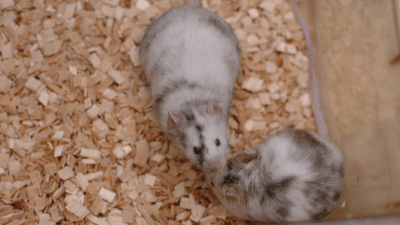


Scientists have successfully demonstrated that chromosomes from dead animals can be brought back to life by inserting them into mouse embryos. The novel approach resurrected chromosomes from frozen rats and created mice chimeras, with multiple tissue groups being influenced by the introduced genetic material.
Extinct animals and the search for lost chromosomes
There’s been a lot of talk of bringing back mammoths in recent years, primarily led by the de-extinction company Colossal Biosciences. It’s an ambitious goal because of the key ingredients needed to clone animals: intact cell nuclei, oocytes, and suitable surrogates. Something that's hard to come by for long-extinct megafauna.
To overcome this obstacle, new research wanted to investigate if it might be possible to resurrect frozen animals by instead transferring single chromosomes. So, naturally, some scientists put a bunch of dead rats in the freezer.
There they would stay for over a year at –30°C (-22°F) to try and mimic permafrost conditions, which is where we sometimes find mammoth remains. Then, it was time for some genetic tinkering.
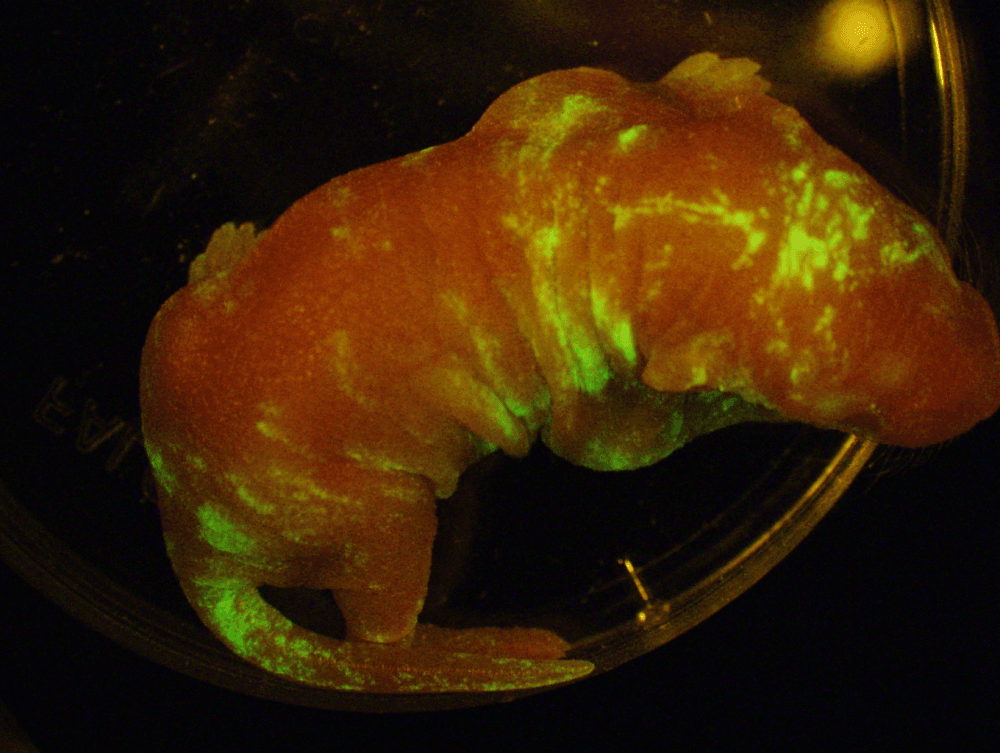
Creating rat-mouse chimeras
The researchers extracted cell nuclei from the frozen rats and injected them into a mouse oocyte. Once inside the egg, a process called premature chromosome condensation (PCC) effectively squashed down the donor nuclei into a condensed chromosome state. This made it easier to separate out single chromosomes, which were then manually selected and injected into a mouse oocyte before fertilization.
There are many mysterious aspects to this experiment, and we don't even know why it succeeded.
Professor Teruhiko Wakayama
Those fertilized eggs were allowed to develop into blastocysts – an early stage of embryo development – and their stem cells were screened to see which contained the rat’s DNA. Those that did were then introduced to a developing mouse embryo, creating chimeric mice.
Out of the 17 stem cell lines they produced, just two contained the rats’ genetic material in the form of Rat Chromosome 9. The resulting mice demonstrated multiple tissues types influenced by the chromosome, including brain, heart, muscle, lung, intestine, thymus, testis, and bone.
It's an impressive proof-of-concept that single chromosomes from dead animals can be functionally revived in living ones, and a result that even surprised the researchers.
“To be honest, I didn’t actually expect it to work,” said study author Professor Teruhiko Wakayama of the University of Yamanashi to IFLScience. “On the other hand, it’s strange that, so far, we’ve only managed to rescue Rat Chromosome 9.”
“If we can succeed with one, we should be able to do the same with other chromosomes. There are many mysterious aspects to this experiment, and we don't even know why it succeeded.”
De-extinction, one chromosome at a time
The fact that 'close relatives are required' has been a major obstacle to the rescue of extinct animals
Professor Teruhiko Wakayama
At this early stage Wakayama states their goals remain something of a pipe dream, but there are two key things they hope to achieve. Firstly, that it will be possible to resurrect the chromosomes of extinct animals and study their gene expression – something that could lead to the discovery of unknown genes that could be useful to humanity.
Second, that it could one day be possible to gather enough single chromosomes to then recombine them in a cell, making it possible to revive all the genetic resources of extinct animals. With regards to conservation, this could be used to revive species that have only recently gone extinct and – if returned to the wild – restoring the invaluable ecosystem services they carried out.
And then, of course, there’s that wily old mammoth. The team’s research remains in its infancy with many questions to answer before tackling extinct Arctic megafauna, but there is promise for its approach in overcoming a key obstacle in de-extinction.
“To clone a mammoth, a large number of eggs from elephants – a close relative of the mammoth – are required,” said Wakayama. “Additionally, a large number of female elephants are needed to carry and give birth to the offspring. However, elephants are an endangered species, and it is not possible to collect many eggs from them. In other words, the fact that 'close relatives are required' has been a major obstacle to the rescue of extinct animals.”
“Since this method uses mouse eggs to rescue chromosomes from any extinct animal, it does not require a close relative of the extinct species. Furthermore, because the chromosomes of the extinct animal are transplanted into mouse ES [embryonic stem] cells to study gene expression, there is no need for a female mouse to carry the pregnancy to term and give birth.”
For now, the team is focused on expanding their retrieved chromosomes from No. 9 and their source material beyond rat cadavers, but it’s the start of an exciting new avenue to study the chromosomes and genes of extinct animals.
The study is published in the journal Scientific Reports.