Humans
 PUBLISHED






As humans expanded out of Africa and extended our dominion over the remaining continents, large animals began to go extinct wherever we reached. Known as the Late Quaternary Extinctions (LQEs), this wave of megafaunal demise saw the likes of mammoths, cave lions, and giant sloths disappear, raising uncomfortable questions about whether humans are destined to destroy everything we touch.
Addressing the debate, biologist Andrea Cardini at the University of Modena and Reggio Emilia in Italy points out that researchers are still unsure about how much we should blame Palaeolithic hunter-gatherers for this.
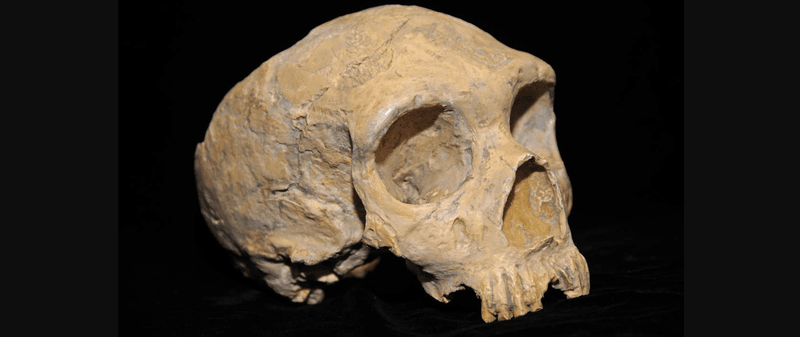
On the one hand, he says, it’s pretty clear that large species like steppe rhinoceroses, thunder birds, giant marsupials, and even Neanderthals vanished shortly after we entered their habitats. However, the role of climate change can’t be disregarded, as these extinctions also coincide with the end of the last glaciation, which is commonly called the last Ice Age.
In a newly published review, Cardini works on the assumption that humans played some role in “tipping the balance” that resulted in these extinctions, even if we may not have directly exterminated all of these megafauna. From this starting point, he explains how it might be argued that “human destructiveness starts in the Stone Age and is part of what we are”.
Fast forward to today, when six of the nine planetary boundaries for a habitable Earth have been crossed and global extinction rates are through the roof. If humans are “destructive by nature”, was it always our fate to trigger such a global catastrophe?
Not according to Cardini. While acknowledging that the potential for widespread ruination has always been within us, he points out that the vast majority of the damage has been done since the Industrial Revolution some 200 years ago. “The most profound changes for us and the planet are much more recent and mostly driven by culture,” he writes.
As such, Cardini asserts that our current penchant for mass consumption is responsible for the destruction of the planet. Moreover, he argues that industrialization has led to the creation of a particular ecological niche, in which humanity has come to see itself as superior to the rest of nature.
Despite our long history of ruffling feathers, there is no genetic underpinning for this cultural development, he says, which means that the current socioeconomic system was never a biological certainty. Or as Cardini puts it: “We may have wiped out the mammoths and mastodons, but human destructiveness is not fate."
Moreover, if our ecological impact is defined more by culture than biology, then Cardini says there’s no reason why we can’t change course and restore the balances we have disrupted. To achieve this, he says, we must create a new culture based on the understanding that humanity is a part of an interconnected ecosystem, rather than existing apart from and above the natural world.
“The end of human dominance should be, for us, the beginning of the next ecocentric cultural revolution of H. sapiens sapiens,” he writes.
The study has been published in the journal Cambridge Prisms: Extinction.


 1
1