Nature
 PUBLISHED



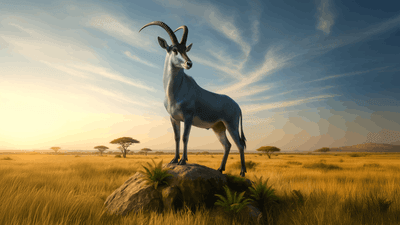


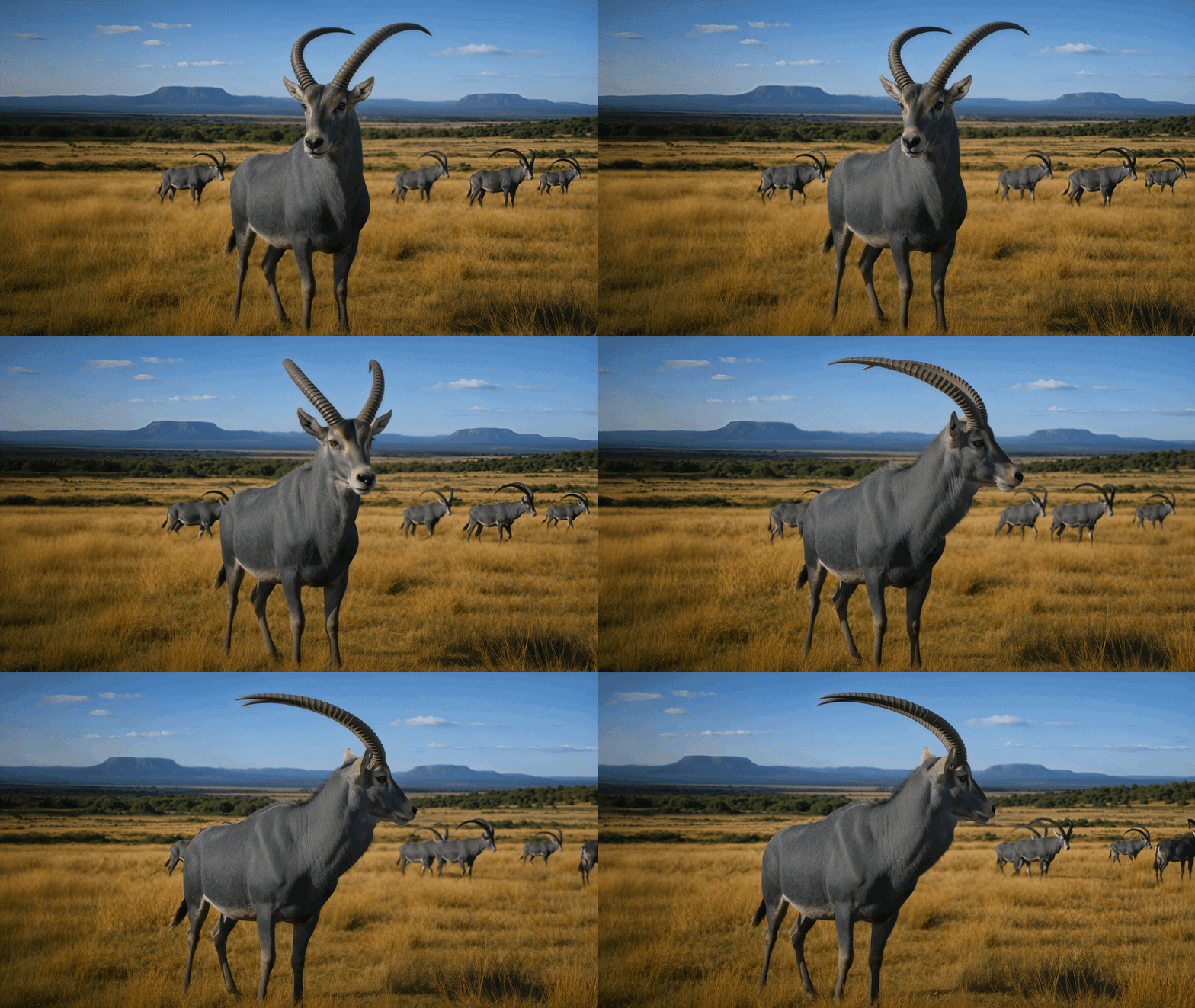
Colossal Biosciences has announced the latest species joining its de-extinction roster. Adding to the already impressive list of woolly mammoth, dodo, moa, thylacine, and dire wolf is the bluebuck, an antelope species that went extinct around 1800.
Like the thylacine, the bluebuck (Hippotragus leucophaeus) was also hunted to extinction, in its case by European settlers in South Africa.
In fact, the species, which had a distinctive blue-grey coat, curved horns, and striking facial markings, was only formally recognized by German zoologist Peter Simon Pallas in 1766, just 34 years before it went extinct.
By adding an antelope species to its portfolio, Colossal hopes its de-extinction toolkit could eventually have practical applications for some of the world’s current living antelope species, such as the saiga, addax and dama gazelle, which are all listed as critically endangered by the IUCN.
The company sees the bluebuck as a good candidate because it is closely related to the sable antelope and roan antelope.
Though there are no photographs, and most of the available descriptions are thought to have inaccuracies, bluebucks are thought to have been smaller than both their living cousins, standing just 1.2 meters (4 feet) at the shoulder. The estimated size gives hope that a surrogate roan female could be used to carry a bluebuck embryo when the time comes.
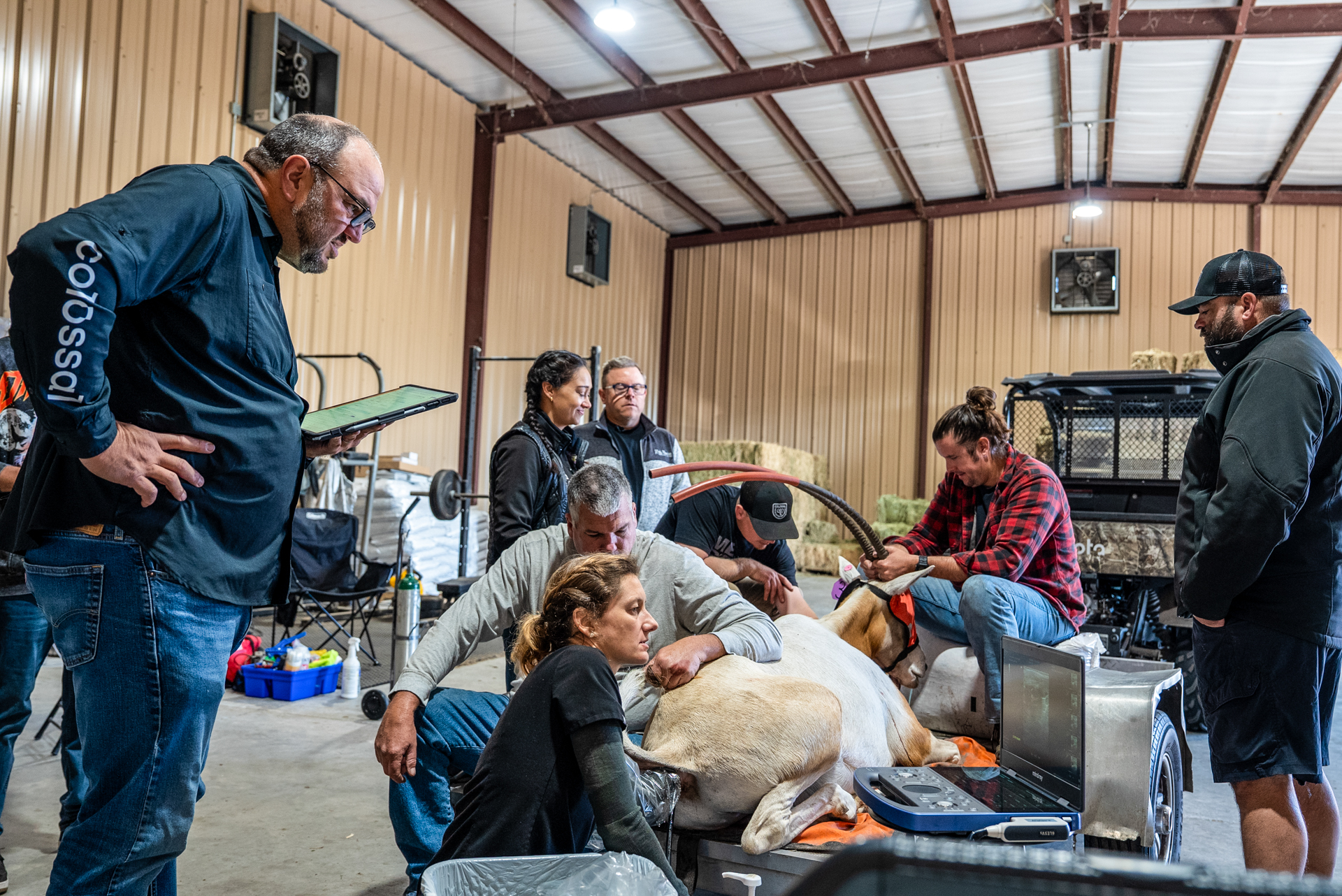
To make this a reality, the team has developed a new technique to collect egg cells from living roan antelope that can then be combined with genetically edited DNA to give the resulting embryo bluebuck-like traits. Colossal calls the technique Ovum Pick Up or OPU, and it has already proven successful in both the roan antelope and the scimitar-horned oryx.
“It's almost like a microsurgery where you use the ultrasound to guide a needle into the roan's ovary, exactly into an emerging follicle,” Matt James, Chief Animal Officer at Colossal Biosciences, told IFLScience. “And then you can flush fluid into it and then suck the fluid out of it. And it comes with the oocytes out of that ovary.”
“So it is a revolutionary technology for things like antelope because it gives us this ability to leverage great reproductive technologies like in vitro fertilization, somatic cell nuclear transfer, in ways that we can help improve things like gene flow between highly fragmented populations.”
Colossal has also created the world’s first induced pluripotent stem cells from roan antelope, allowing them to differentiate the cells in a large variety of tissue types from the body. It also provides a genetic testing canvas so the team can tinker with the genetics, allowing them to see which bluebuck traits can be expressed without the need to use a live animal. This is especially helpful when the team are planning what Lamm calls a “cargo load of edits.”
“We had to identify those targets with this large cargo thing that we're working on,” Ben Lamm, CEO and Co-Founder of Colossal Biosciences, told IFLScience. “You know, it'll probably be a pretty big [functional] step, probably 100-plus edits in the bluebuck versus, you know, 20 in the dire wolf and eight in the [woolly] mice.”
“Our mammoth project, we're doing about 150 edits. So, we're scaling up the multiplex editing.”
With the bluebuck only known about as a species for such a short time, true bluebuck DNA is in short supply. In fact, there are just five bluebuck specimens in museums around the world. Using a specimen from the Swedish Museum of Natural History, Colossal has created a 40-fold coverage nuclear genome for this extinct species.
This work has also established the long-term population history of the bluebuck, suggesting the species has a relatively low but stable genetic diversity over around 400,000 years.
"Our initial genomic work with Colossal scientists on bluebuck specimens two years ago demonstrated that viable DNA could be recovered from this extinct species and placed it within the evolutionary context of other African antelopes,” Colossal Scientific Advisory Board member Michael Hofreiter, Professor for Evolutionary Adaptive Genomics at the University of Potsdam in Germany and author of a paper on the bluebuck palaeogenome, said in a statement sent to IFLScience.
"These data points are now the foundation for an actual restoration project. The technological advances Colossal has made transformed what was possible even a few years ago, taking us from reading ancient genomes to rewriting them for conservation."
For Colossal, it seems the goal is to create an animal that could be rewilded into the African bush habitat the bluebuck was killed in. The company is working with South African conservation organization the Endangered Wildlife Trust to restore the Cape Floristic Region and create a habitat cascade that would benefit current species in the long and short term.
The concept might seem far-fetched, but it could be closer than expected, given the team has embryos and are firmly in the editing stage, the last step before attempting somatic cell nuclear transfer and eventually IVF.
“The plan is definitely to make a living, breathing bluebuck. And the plan is then to take that and put it back into the wild in South Africa,” said James. “So we're working with amazing people at the Endangered Wildlife Trust as a conservation partner to help us begin to rehabilitate ecosystems and find places for the bluebuck to thrive again.”
This is, however, making some pretty large assumptions that IVF could even be successful. Current plans to produce a northern white rhino calf using a southern white rhino surrogate are still ongoing after six failed embryo transfers to date.
Will we see either a living bluebuck calf (or gene-edited roan antelope, if you prefer) or a northern white rhino calf in the next few years? Only time will tell.