Humans
 PUBLISHED



This week, we ask if the Moon is the best place to store samples from other worlds to avoid Earth contamination, the world’s first trial to “reprogram” broken cells in glaucoma has begun, and over 600 nuns have taken part in a huge study on brain aging since 1986, but what has it taught us? Finally, we visit the world’s largest and deepest artesian basin.
Create an IFLScience account to get all the biggest science news delivered straight to your inbox every Wednesday and Saturday.
Tiny Adorable New Walking Shark Discovered, Dubbed “Lazy Shark” By Locals Due To Its Unhurried Gait
A new species of walking shark has been discovered in the shallow waters off southeastern Papua New Guinea, the 10th member of a genus famous for using their fins like legs to amble across coral reefs and the first new species in the genus in 13 years. Dudgeon’s walking shark (Hemiscyllium dudgeonae) was found during a night dive in Milne Bay led by researchers from Australia’s University of the Sunshine Coast. Read the full story here
As We Collect Samples Of Other Worlds, Is The Moon The Best Place To Store Them To Avoid Earth Contamination?
A lot of planetary protection protocols worry about how we might accidentally spread terrestrial life to other places in the Solar System – after all, we are the one sending probes left and right. However, some of those probes come back with samples. What would happen if some of those samples contained lifeforms and started spreading on Earth? To avoid that scenario, Drs Frederick Moxley and Anthony Ricciardi have looked to the Moon to keep us safe. Read the full story here
Unearthing A 5,500-Year-Old Tragedy: The Oldest Known Outbreak Of Plague Has Been Found In Siberia
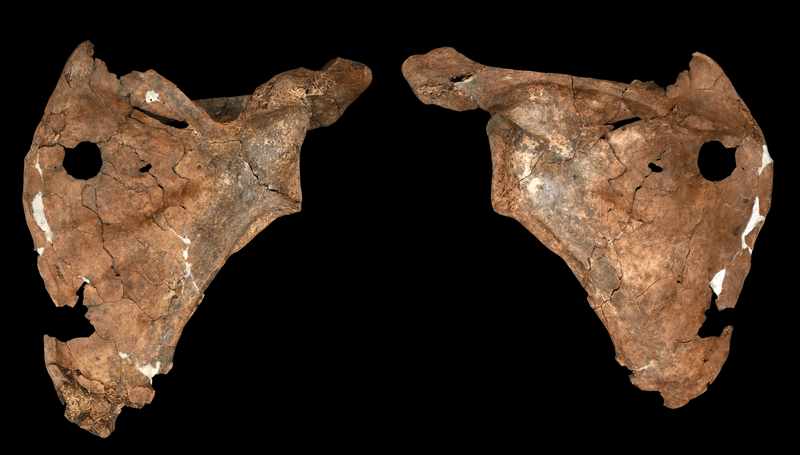
The oldest known outbreak of plague has been unearthed from a 5,500-year-old hunter-gatherer settlement in southeast Siberia. By combining archaeological evidence with genetic sequencing of the notorious bacteria, scientists pieced together the whole story of how the disease jumped into the population and wreaked havoc as it spread through the community. Read the full story here
World First Trial To "Reprogram" Broken Cells In Glaucoma Begins In Humans – But Is It Just Hype?
What would you give to be young again? For many, it’s the ultimate dream – one which, with an exciting and controversial new gene therapy, is about to be put to the test. At least, that is, for eyeballs. Only one person has received the treatment so far, but ultimately Life Biosciences, Inc, the biotech company sponsoring the trial, hopes to include as many as 12. The goal: to treat – nay, reverse – glaucoma, and eventually extend the therapy to include other conditions as well. Read the full story here
Since 1986, Over 600 Nuns Have Taken Part In A Huge Study Of Brain Aging. This Is What They’ve Taught Us
Much of what we understand about Alzheimer’s disease comes from a wide range of disciplines, from molecular neuroscience to large epidemiological studies. There is one study that occupies a special place in our search for understanding: the Nun Study. A 40-year study into Alzheimer’s disease based on a population of nuns in the United States has offered insights that have changed how we think about the disease, shifting it away from one focused only on brain pathology to a complex interaction between brain health and lifestyle factors. Read the full story here
TWIS is published weekly on our Linkedin page, join us there for even more content.
Feature of the week:
IFLScience Visits The World's Largest And Deepest Artesian Basin And Discovers Why It's So Wondrous – And Makes Great Baths
Under much of eastern Australia lies one of the wonders of nature, the vast underground lake known as the Great Artesian Basin (GAB). The GAB is key to life in regions where rainfall is among the world’s least reliable. IFLScience can also personally attest to the great hot water baths it provides. Read the full story here
More content:
Have you seen our e-magazine, CURIOUS? Issue 47, June 2026, is available now. This month, we asked, “Should You Clone Your Pet?” – check it out for exclusive interviews, book excerpts, long reads, and more.
PLUS, the We Have Questions podcast – an audio version of our coveted CURIOUS e-magazine column – continues. In episode 21, we ask, “Are There Plants That Can Photosynthesize By Moonlight?”
The Big Questions podcast is back for season 6! In episode 1, we ask “Should We Send Signals To Aliens?” Host Dr Alfredo Carpineti speaks to Dr Vishal Gajjar, an astronomer with the SETI Institute, about should we, not just can we, actively message aliens.
Our Break It Down podcast now has a new monthly format, coming at you in both audio and visual. So tune in each month to hear about some of the wildest science stories and adventures we’ve been on. Kick off this month with “Artemis II Records, Neanderthal Not-Hybrids, And Introducing ‘Moon Joy’”