Health and Medicine
 PUBLISHED
 1
1



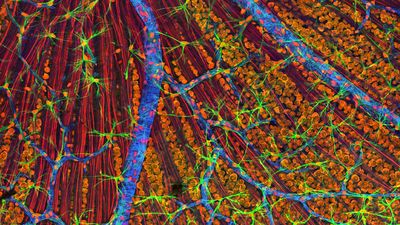


What would you give to be young again? For many, it’s the ultimate dream – one which, with an exciting and controversial new gene therapy, is about to be put to the test.
At least, that is, for eyeballs. Only one person has received the treatment so far, but ultimately Life Biosciences, Inc, the biotech company sponsoring the trial, hopes to include as many as 12. The goal: to treat – nay, reverse – glaucoma, and eventually extend the therapy to include other conditions as well.
It’s an idea which, if realized, would be game-changing for glaucoma patients. Damage caused by the condition – or rather, group of conditions, as glaucoma is more of a symptom than a disease in its own right – is currently irreversible, and can range from slight peripheral blurring to complete blindness.
It’s caused by damage to the optic nerve, which is mostly incapable of regeneration on its own. While we can often stem the progression of damage once we know glaucoma is there, there’s no way to regain what’s already been lost.
.jpg "A man is having an eye test, with the back of his retina visible on a screen.")
The new therapy, called ER-100, being trialed aims to use a combination of a virus and the antibiotic doxycycline to “switch on” three genes: OCT4, SOX2, and KLF4. Combined, the trio are being called OSK.
And these three genes seem to be, well, pretty miraculous, actually.
“Our preclinical studies have demonstrated that controlled OSK expression can reset epigenetic patterns associated with healthy cellular function, improve tissue performance, and restore visual function in animal models,” said Dr Sharon Rosenzweig‑Lipson, the chief scientific officer of Life Biosciences, in a statement provided by the company.
In other words: activate these three genes, and they seem tageo “partially reprogram” old cells, including, the company hopes, those in the optic nerve.
It’s a technology that’s seen some success in animal trials, but also some misfires. Tests in mice saw their aging organs rejuvenated so powerfully that they quickly died from sudden, aggressive tumors or cell malfunctions. “The technology is still really early,” Dr Matt Kaeberlein, co-founder of longevity-focused preventative medicine company Optispan, told Nature news last week, “and the potential for catastrophic side effects is high.”
With their virus-antibiotic mix, the Life Biosciences team hopes to avoid some of the more worrying effects of partial reprogramming. Concentrating only on the eyes is another safety measure, however inadvertent. Should things go wrong with the therapy, the chances of life-threatening or metastasizing consequences are lower there than with some other organs.
But it’s far from a foregone conclusion that the trial will see success. “Even under ideal reprogramming conditions (which no one knows in the human eye), [this gene therapy] will not lower the eye pressure of glaucoma,” pointed out Professor Paul Knoepfler, a stem cell biologist at UC Davis and founder of The Niche, in February this year. “So, if there is rejuvenation, it may not last.”
On top of that, there are practical problems such as how to deliver the virus efficiently to the right place – and only the right place – or how to protect the newly rejuvenated cells from the hostile environment of the diseased eye, he explained. It’s a delicate balancing act, and it’s very easy to topple. “I feel like what needs to happen in the […] trial participants is hitting a tiny bull’s eye with a bazooka,” Knoepfler wrote.
Even if this trial is a success, claims that it represents some more significant “age-reversal” technology are certainly not without criticism.
“In my view it’s more than a bit oversold within the longevity field,” wrote Knoepfler. “If we just focus on the more concrete trial at hand for ER-100 in the eye, it is still an extraordinarily high-risk study.”
“As a stem cell biologist, I find reprogramming of all kinds, especially to try to treat diseases, fascinating,” he added. “We just have to keep it real. A lot can go wrong.”