Nature
 PUBLISHED


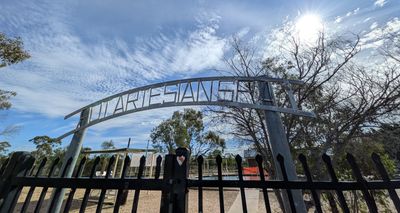


Under much of eastern Australia lies one of the wonders of nature, the vast underground lake known as the Great Artesian Basin (GAB). The GAB is key to life in regions where rainfall is among the world’s least reliable. IFLScience can also personally attest to the great hot water baths it provides.
For thousands of years people in certain parts of the world were grateful, but mystified, by water that rose to the surface without needing to be pumped. No doubt these waters were thought to have been charmed by some ancient wizard or saint, but physics provides another answer.
Despite appearances, water from specific wells is not exempt from the laws of gravity. When it flows from holes dug into the ground without human intervention, it is because the source is under natural pressure, created by the local geology. Although these artesian wells – named after Artois, France - occur in many parts of the world, the GAB truly earns the first part of its name by its size, as well as its location beneath areas that need it badly.
What makes an artesian well
For water to move upwards against gravity requires pressure. In an artesian well, the pressure is supplied not by a pump, but by the force of water elsewhere in the same aquifer.
This requires a body of water trapped by impermeable rocks above, below, and to the sides. That part alone is common enough – most of the world has pockets of groundwater if you dig deep enough, but artesian basins add an extra element. The land above the basin is uneven, so that water enters at a relatively high altitude and some remains well above ground level over other parts of the aquifer.
If the overlying rock is breached, for example by someone drilling a well, in one of the lower-lying areas of the basin, the pressure of the water in the hillier areas pushes the water up through the breach.
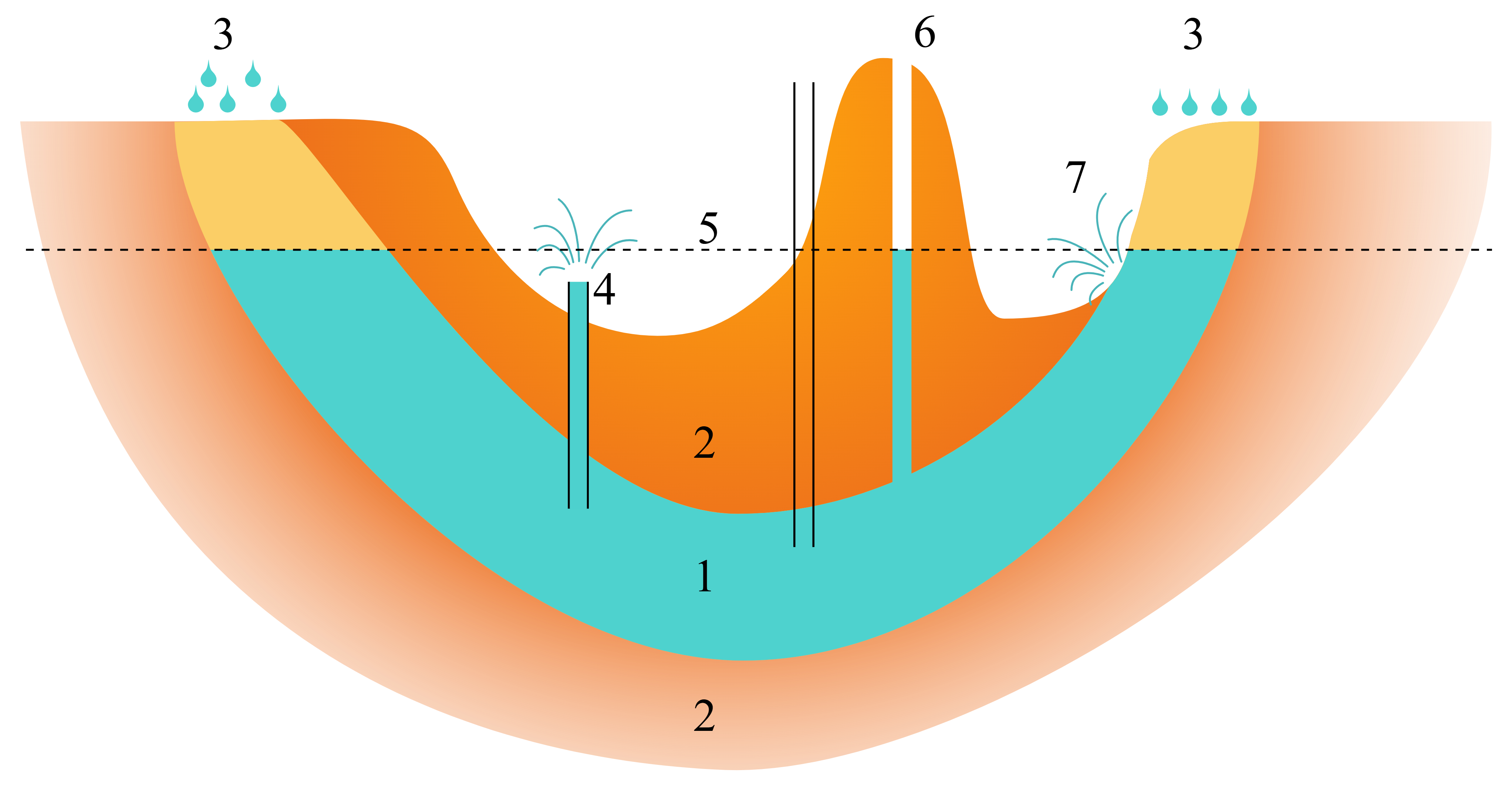
The same process can often be seen on the lower slopes of mountains when springs break through to provide water even when surface streams are dry. The process appears miraculous, however, when the basin is so large and the pressure so great that free-flowing wells occur on flat land far from the uplands that provide the pressure.
That’s not an aquifer, THIS is an aquifer
Although the underlying physics of the GAB are the same as those for other artesian basins, the scale is very different.
The GAB underlies 1,700,000 square kilometers (660,000 square miles) of Australia, 22 percent of the continent or an area larger than Texas, France, and Britain combined. With most of Australia being so flat, that means that water reaches the surface far out of sight of the mountains where it enters.
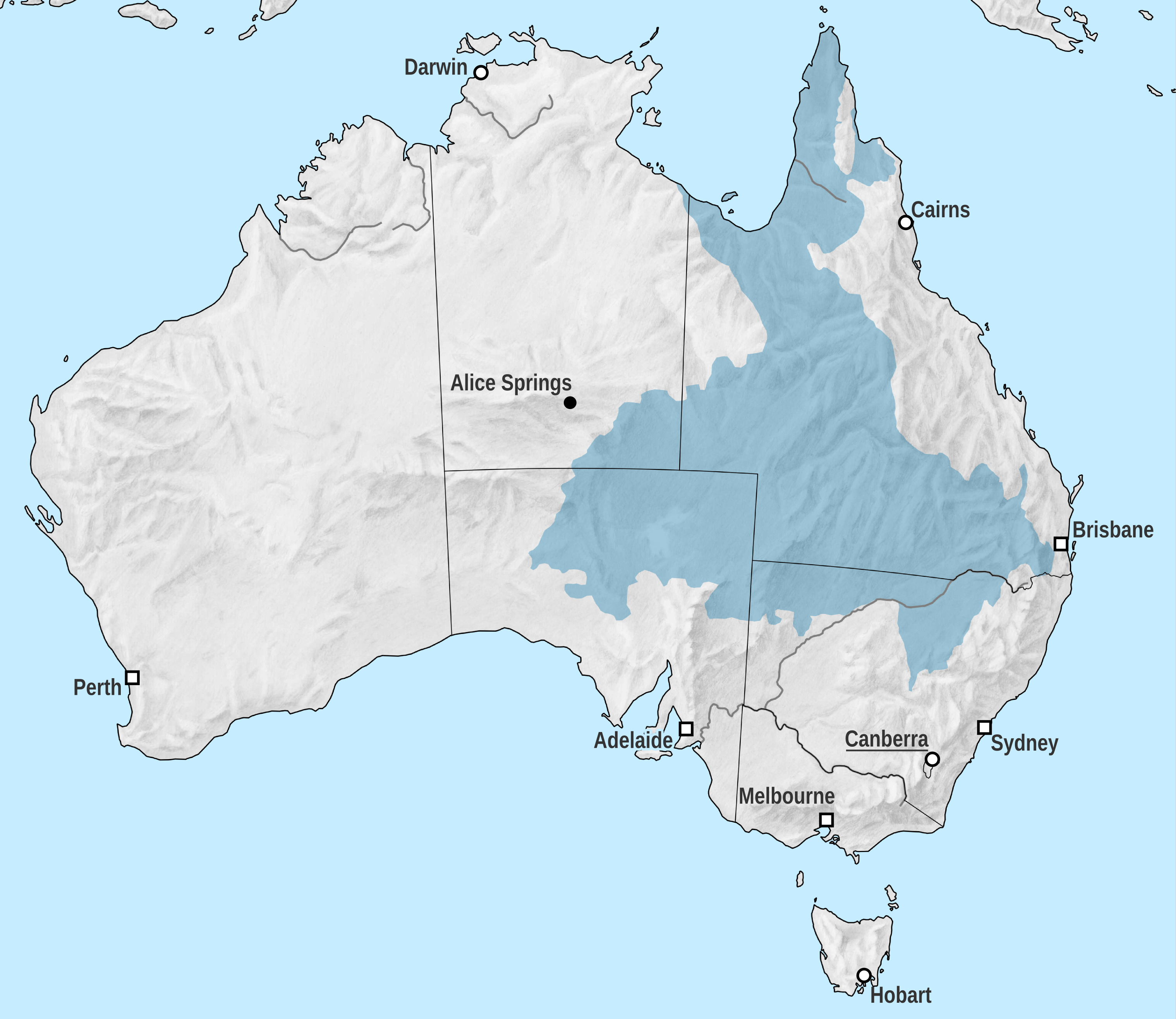
As well as being the largest, the GAB is also the deepest artesian basin in the world, so the 65,000-cubic-kilometer volume is even more out of proportion to smaller counterparts. Even non-artesian aquifers – such as the Ogallala Aquifer, which underlies much of North America’s great plains – are considered enormous if they store a tenth the volume.
Looking at Australia from the surface, it seems an unlikely place for such a vast artesian basin. Its mountains are relatively puny compared to those of every other continent.
Nevertheless, the Great Dividing Range, while eroded to modest heights over millions of years is still broad and runs the length of the continent. Rainfall is very high at its northern end, allowing a substantial flow to enter the GAB at its upper lip, and maintain pressure thousands of kilometers away.
The GAB is so big because during the Jurassic, enormous sheets of sandstone were laid down across Australia, which was part of the Gondwana supercontinent at the time. Water is effectively sealed below, and most of the time from above, preserving the basin.
Rather than a single aquifer, the GAB is subdivided into multiple aquifers by sheets of rock, creating separate water bodies with different compositions that often overlie each other. In some places you can reach water with different mineral content and temperatures depending on how deep you drill.
The Basin is so vast, and water moves through it so slowly, that radioisotopes reveal that some aquifers contain water that last saw sunlight two million years ago.
(Almost) endless hot water
For millions of years, water has reached the surface at springs where a break in the surface reaches the water below. In areas and eras with plenty of rain, the impact of this is small, but much of the land above the GAB has been dry for a long time. A steady source of water is a lifeline for plants, animals, and humans alike.
Ecosystems have sprung up around these springs, and evolved in relative isolation. Like islands, this leads to the development of species found nowhere else, since many lack the capacity to cross the great wasteland (from their perspective) between, but have been protected from the arrival of outsiders that would take their niche. The springs were vital to Indigenous survival over much of the GAB, and considered sacred.
More recently, water from the GAB has allowed agriculture and cattle farming in many areas that lack the rain to support such activities, and where the soil is too poor to make pumping economical.
.png "Most Great Artesian Basin bubble gently, but in 1898 Beel's Bore near Cunnamalla had so much pressure it spouted like a geyser")
Another use for the GAB comes from the fact that the water is often hot. Despite entering at local air temperature, the water in the GAB has slowly been heated up through proximity to rocks heated by the decay of radioactive elements. In some places temperatures approach boiling point, but 40-50°C (104-122°F) are more typical.
This has led to the creation of “bore baths” in towns across the GAB. With both the heat and the water provided without cost once the bath was dug, maintenance of the pools and associated facilities are cheap enough that local councils don’t feel the need to charge for use. The opportunity to bathe in the hot springs for free has created a substantial tourist industry.
Nevertheless, there’s no resource so great people won’t find a way to overexploit it.
The town of Artesia, New Mexico, got its name in the early 20th century from a local artesian aquifer. Twenty years later, few wells in the area still naturally reached the surface, because the pressure dropped as water was drawn off much faster than it was replaced. Similar artesian water booms have happened across the world, particularly in the US west, almost always with the same result.
The volume of water in the GAB is so vast it would take millennia to use it all at current rates, but the pressure is a different matter. Already it has fallen enough in parts of the basin to cause springs to run dry, with predictable effects for the local environment.
Bore baths are a tiny draw on the resource compared to agriculture, so visitors can enjoy with relatively clear consciences, but we should not assume they’ll be available forever without strict regulation of other uses.