Nature
 PUBLISHED




What you'll discover in this article
- The La Brea tar pits preserve way more than just mammoths, saber-toothed cats and dire wolves.
- Ancient frogs and toads can teach us more about what the climate was like 45,000 years ago.
- As Dr Emily Lindsey explained to IFLScience, a dire wolf fossil “doesn’t really tell you much about what the environment was like.”
Known for the large, charismatic animals such as mammoths and dire wolves, La Brea fossil site provides an astonishing snapshot of life 45,000 years ago. But it is some of the smaller residents of this ancient ecosystem that have got scientists excited.
Say hello to Spea labreae, a newly described Ice Age toad from the La Brea tar pits (yes yes, we know that’s tautological).
The fact that you find something like a dire wolf at a site doesn’t really tell you much about what the environment was like.
Emily Lindsey
“This is the first extinct amphibian in La Brea, and is only the second extinct amphibian in all of the United States,” Dr José Alberto Cruz, the lead author of the study, told IFLScience. “It’s very, very uncommon.”
“The problem is that bones don’t have [many] diagnostic characteristics in the case of reptiles or amphibians because the bones are very simple in shape. But in the case of the toad we found exactly the bones that have the diagnostic characteristics.”
This allowed Cruz and his colleague Dr Emily Lindsey to confidently identify S. labreae as a new species, adding an important piece to the ecological jigsaw and providing an insight into the changing climate.
It’s the little things that count
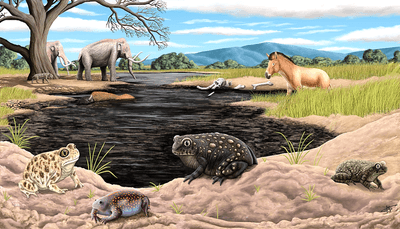
Cruz and Lindsey have been studying the animals that were trapped not only in the tar pits at La Brea, but also at another site in Peru called Talara. These fossil sites offer an incredible window into what these regions were like during the Pleistocene.
“They're very known for the megafauna, the large animals such as the saber-tooth cats, giant sloths, proboscidians, and dire wolves and things like that,” explains Lindsey. “But the really cool thing about tar pits is that they are one of the only sites on Earth that can actually capture those really big things and also a record of really smaller members of the ecosystem.”
“So everything from plant seeds and insects to snakes and songbirds and rodents.”
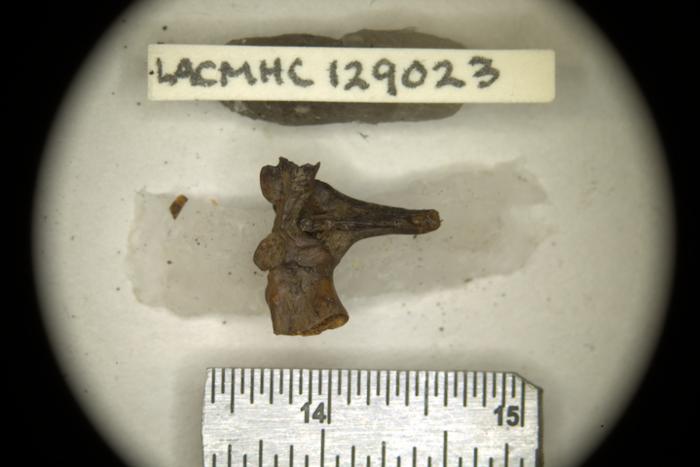
It was while looking through some of these smaller critters that Cruz came across something interesting. He was specifically interested in the collection of amphibian and reptile bones, many of which had been collected decades ago and were overlooked.
“I was revising a very ancient collection, and when I revised the material I separated out this [bone] and this one and this, to compare it with different material,” says Cruz. “But when I found these bones, they were very different to the other spade-footed toads that I know.”
At first, Cruz thought that maybe the differences in the bones were due to pathology. This can cause bones to distort or look a bit different to how they would normally. But after comparing lots of different bones, he became more certain.
“Then said, okay, I have a new species maybe.”
The extinct and the extant
But it wasn’t only S. labreae that the team were interested in. Alongside this valuable new addition to the fauna of La Brea is a range of other little amphibians. And these are helping the team understand things about the ancient past in a way that the bigger animals simply can’t.
“So the big animals are organisms that tend to have really broad ranges,” explains Lindsey. “We have dire wolves at the La Bea tar pits, it’s our most common animal. We also have dire wolves at the site in Peru.”
“They’re also in the northern United States and Canada, and then Bolivia. So the fact that you find something like a dire wolf at a site doesn’t really tell you much about what the environment was like.”
The key thing about the smaller animals and plants, however, is exactly that: they are smaller.
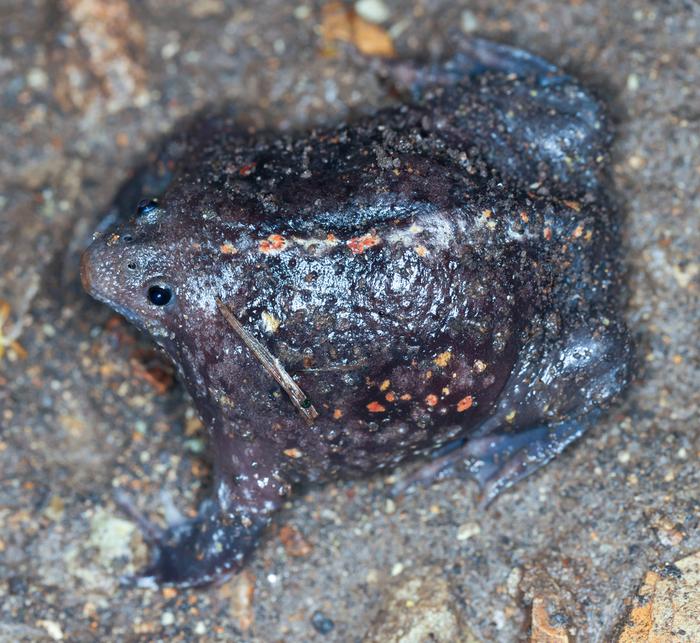
“Small animals like insects or lizards or rodents are very climatically sensitive,” Lindsey continues. “And so they’re generally associated with a particular type of ecosystem, particular type of plant community, particular type of precipitation regime and range of temperatures.”
“And they can't move that much. They don’t go very far during their lifetime so when you find a fossil of one of these animals, you know that it lived right there where it died, and it’s telling you something about what the habitat was like, because different species are associated with certain types of habitat.”
This gives researchers a much higher resolution picture of what the environment was like at this time. For example, they also describe the fossil bones of the Mexican burrowing toad.
This is a species that still survives today, but is currently found living some 2,500 kilometers (1,553 miles) away to the south of La Brea. It shows that the environment around La Brea used to be much wetter.
By using the information about how the distribution of these amphibians have changed in response to the climate in the past, and building on this in the future with other species such as snakes and tortoises, the researchers are hoping to better understand how living species will respond in the future.
The study is published in the Journal of Vertebrate Paleontology.