Health and Medicine
 PUBLISHED
 1
1


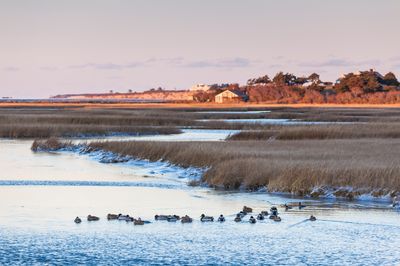


If your drinking water comes from an ancient aquifer, it could help protect you from Parkinson’s disease. A new study looking at rates of Parkinson’s in communities near different groundwater sampling sites in the US found that “newer” drinking water was associated with a higher risk of developing the disease.
The researchers, from Barrow Neurological Institute in Arizona, included over 12,000 patients with Parkinson’s and 1.2 million controls in their study. All participants resided within 4.8 kilometers (3 miles) of one of 1,279 groundwater sampling sites.
The team examined the type of aquifer each site was sampling from (there were 21 separate aquifers in total), the age of the groundwater, whether drinking water was obtained from privately owned or municipal systems, and any signs of toxic contaminants.
Most aquifers in the US are of the carbonate subtype, found across the Midwest, South, and Florida. However, some residents of the Upper Midwest and Northeast have access to drinking water fed from a glacial aquifer, meaning they’re hydrating themselves with much more ancient H2O. These aquifers formed more than 12,000 years ago when glaciers advanced and retreated.
“Newer groundwater, created by precipitation that has fallen within the past 70 to 75 years, has been exposed to more pollutants. Older groundwater typically contains fewer contaminants because it is generally deeper and better shielded from surface contaminants,” explained study author Brittany Krzyzanowski, PhD, now based at the Atria Research Institute in New York, in a statement. Exposure to certain environmental pollutants has increasingly been suggested to play a role in Parkinson’s.
Among the people with Parkinson’s disease, the majority got their drinking water from carbonate (3,463 people) or other aquifers (8,392 people), with only 515 of them getting it from glacial aquifers. Within the control group, the majority (860,993 people) accessed drinking water from other types of aquifers, with 300,264 drinking from carbonate aquifers and 62,917 from glacial aquifers – it's worth remembering here that glacial aquifers are rarer in general across the country.
The team analyzed the data, correcting for other factors that could affect Parkinson’s risk, like age, sex, and exposure to air pollution. When all that was done, they observed a protective effect of older groundwater versus younger, carbonate-aquifer-sourced groundwater.
Those whose drinking water came from a carbonate aquifer were found to have a 24 percent higher risk of developing Parkinson’s compared with all other aquifer types. When compared directly to glacial aquifers, the risk was 62 percent greater. The newest groundwater, laid down within the last 75 years, was associated with an 11 percent higher risk of Parkinson’s than 12,000-year-old glacial water from the Ice Age.
Importantly, the study cannot prove that drinking newer water directly caused people to develop Parkinson’s. The team also assumed that everyone living within a 4.8-kilometer radius of a sampling site got their drinking water from the same site, which may not be the case.
“This study highlights that where our water comes from, including the age of groundwater and the type of water source, could shape long term neurological health,” said Krzyzanowski. “While additional research is needed, bringing together knowledge about groundwater and brain health may help communities better assess and reduce environmental risks.”
.jpg "map of united states with the glacial aquifer system outlined in red, primarily in the northeast")
If you’re curious to know just how ancient your tap water might be, Krzyzanowski said that you can usually find out by asking your local water company, or through available state or county-level groundwater information. If nothing else, it would be pretty cool to learn that you’ve been casually chugging water that links right back to the Ice Age.
But if you’ve heard the tall tale about the geologist who found the world’s oldest water and drank it, on that we’re going to need to set the record straight.
The study was presented at the 78th American Academy of Neurology Annual Meeting.